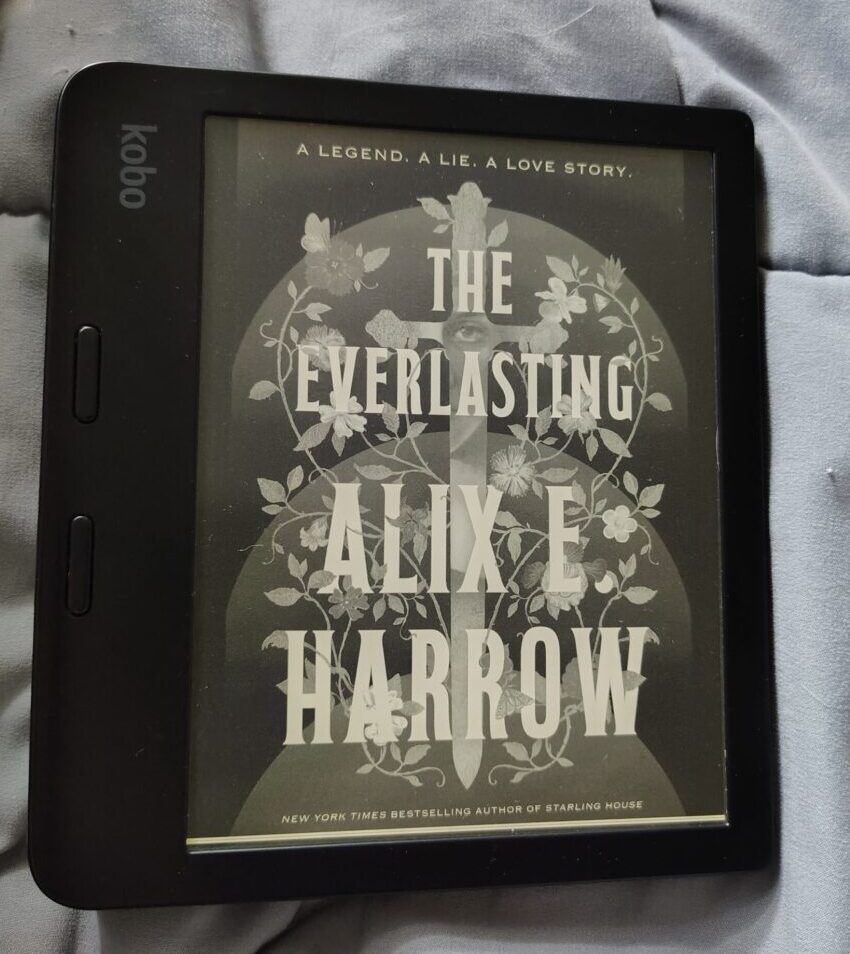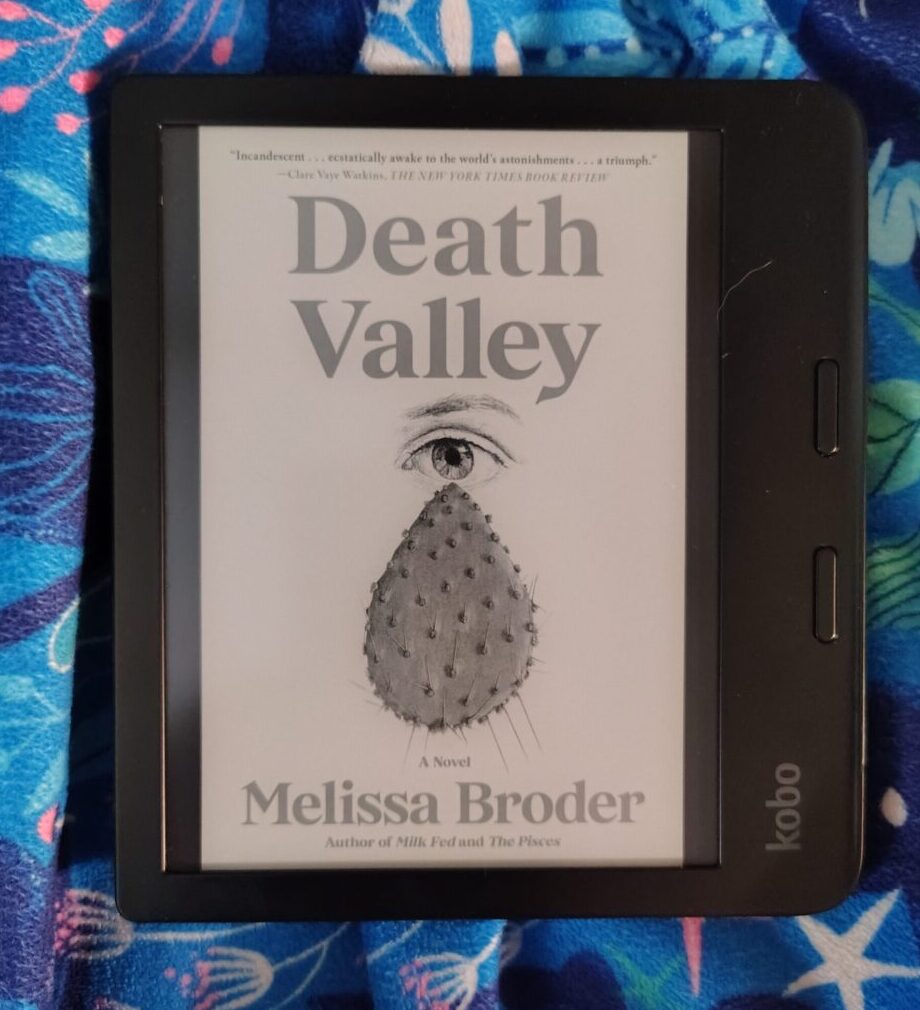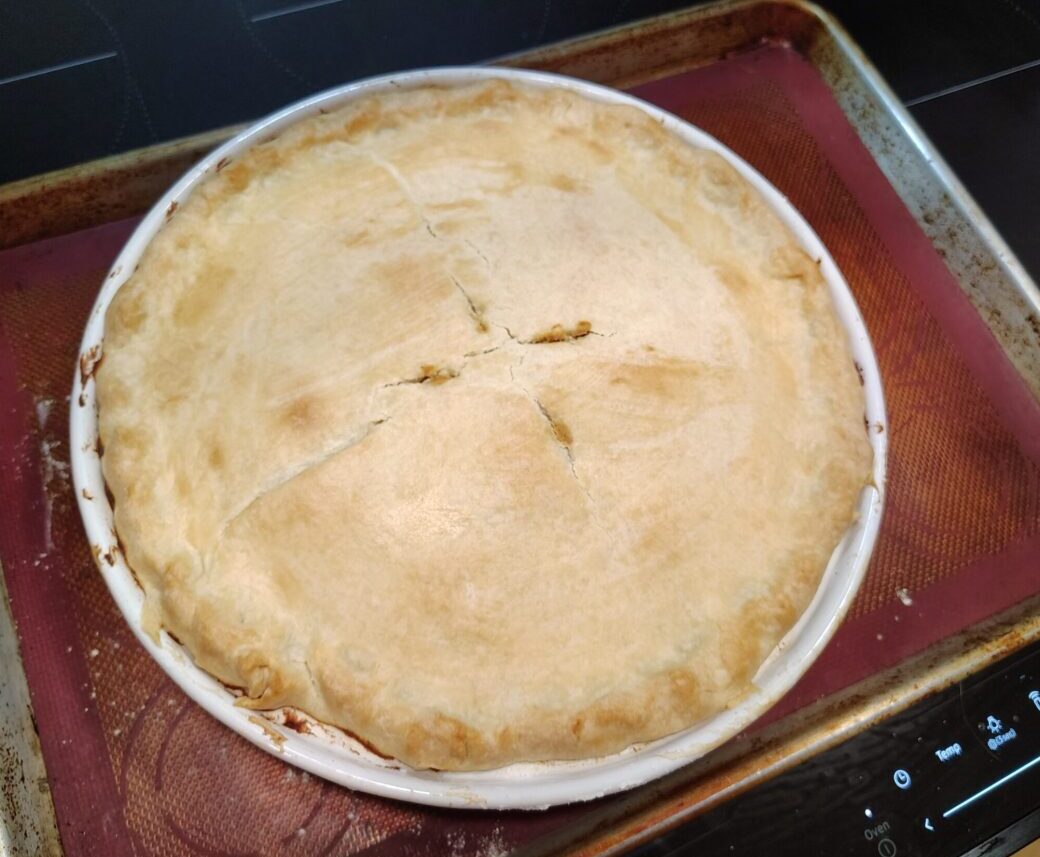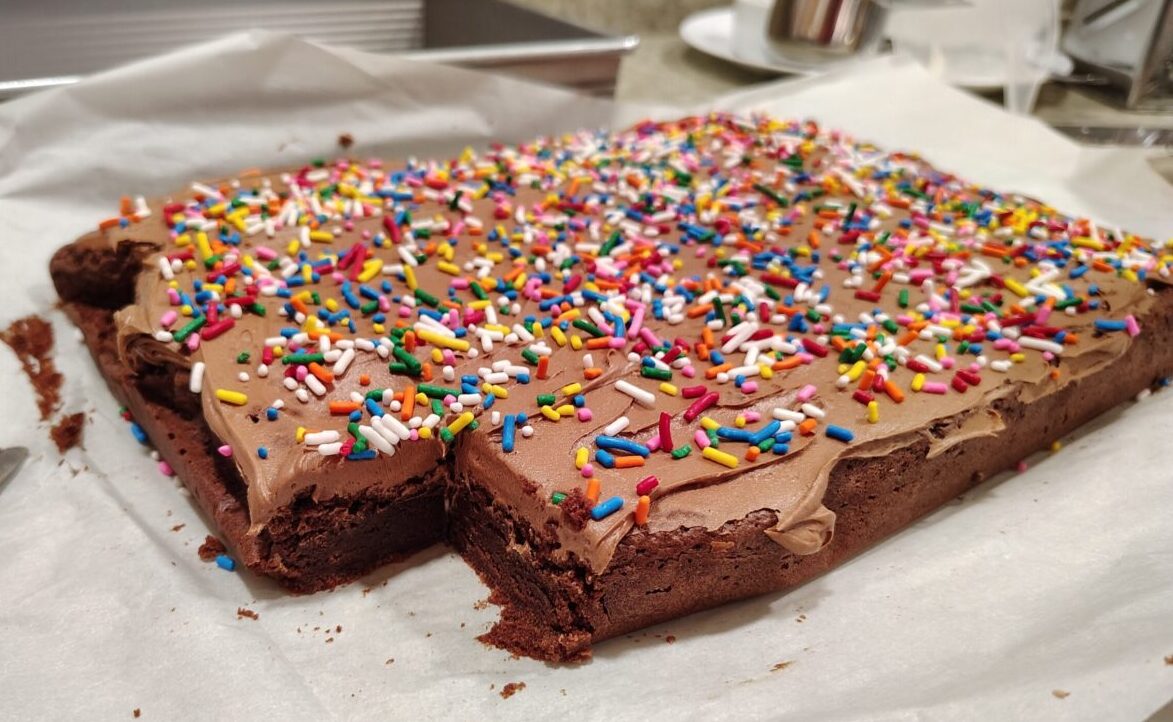
Hello, friends and enemies! Surprise, there’s a special election this year. We are voting on exactly one statewide proposition this year, just to keep things spicy. As usual, I have some information about the logistics of the election then my evaluation of the ballot.
Ballot drop-off locations will be open on election day, Tuesday, November 4 in all counties, and in many counties for the ten days before the election. See where you can vote or drop off your paper ballot: https://www.sos.ca.gov/elections/polling-place
Remember to sign your ballot envelope!
Disclaimer: I am not an expert on politics or government. I’m just a person who’s good at reading and looking things up. If you trust my judgment, you can vote how I vote. You can also use my guide as a starting point for your own research.
Proposition 50
My vote:Yes
AUTHORIZES TEMPORARY CHANGES TO CONGRESSIONAL DISTRICT MAPS IN RESPONSE TO TEXAS’ PARTISAN REDISTRICTING. LEGISLATIVE CONSTITUTIONAL AMENDMENT.
Proposition 50 is a completely partisan initiative that asks us to vote on a political strategy, rather than any sort of policy change. The Los Angeles Timesdescribes this proposition as “part of a spiraling national fight over redistricting … that could determine the balance of power in the U.S. House of Representatives after the 2026 election.” No pressure! If Proposition 50 passes, California will redraw the state’s congressional districts earlier than is typical. States normally adjust district boundaries every ten years after receiving updated population data from the census, and California’s current districts are based on the 2020 census.
Why is California interested in redistricting five years early? It has to do with the balance of power in Congress and political drama that started in Texas. In July, Trump let it be known that he wanted “Texas Republicans to redraw the state’s congressional maps to create more House seats favorable to his party, part of a broader effort to help the GOP retain control of the chamber in next year’s midterm elections.” Traditionally, the president’s party loses control of Congress during midterm elections (this year’s election is a midterm election) and Trump is deeply unpopular. This is a serious risk for Trump and the Republicans because they only narrowly control the House of Representatives with 219 congresspeople compared to Democrats’ 213. Texas is having a special election this year too with the goal of gaining five congressional seats for the Republicans (and eliminating five for Democrats). In response, Governor Newsom and California Democrats proposed redistricting California to counteract Texas, developing a redistricting plan that would result in five additional seats for Democrats (and five fewer for Republicans).
Passing Proposition 50 would create new congressional district maps for elections between now and 2030, and then, assuming there isn’t a change to the law in the meantime, control of mapping the districts would return to California’s Independent Citizens Redistricting Commission, which has been mapping the state’s congressional districts since 2010. You can see maps of the current and proposed districts on the California Legislative Analyst’s Office website. CalMatters also has a handy tool to check if your district will change if Prop 50 passes.
Something I always like to consider when evaluating how to vote is who is spending money on this. According to Ballotpedia, basically all the major Democratic party groups are paying in to support Proposition 50, as well as various trade groups like teachers and nurses. The biggest contribution from either side has come from Charles Munger, Jr. who has spent over $30 million opposing the legislation and seems to be buddies with former governor Schwarzenegger and with Trump.
I think the big ethical question here is whether Proposition 50 is just a fun new way to gerrymander. Even if it is, is it worth potentially making voting less fair to prevent Republicans from solidifying control in the House of Representatives for the rest of Trump’s presidency? In less than a year, Trump and his allies have already implemented about half of the policies laid out in Project 2025, the 900-page conservative policy fantasy that calls for things like eliminating foreign aid and ending no-fault divorce. How much more damage could Trump do with a large Republican majority in Congress? There’s no way to know at this point, but considering the speed at which the Trump administration has moved this year, it seems like the results could be dire. I do feel somewhat nihilistic and wonder if keeping some Republicans out of congress is even going to help us. Are we past the point of being able to vote our way out of the current troubles? I am inclined to think we are. However, if this has the possibility to stanch the bleeding, I do think it’s worthwhile. Any opportunity to limit suffering is one we should take.
Hello, friends and enemies. It’s been a very long two weeks, but we are finally free of my father-in-law’s dogs. I really tried to give these guys the benefit of the doubt but they have driven me INSANE. They had me completely overstimulated from constantly running around, panting, and licking me, not to mention having to take them outside every hour (if not more frequently) because they are bad at understanding how going outside to pee works. Fortunately, they returned to their home on Thursday and I am no longer responsible for them. They are cute and loving dogs but holy shit I am not built for this.
Kirk has recovered from covid and I, despite all odds, never tested positive or had any symptoms. We did work very hard to keep me from getting it, but it’s still shocking that I avoided the virus. I really thought this was going to be it for me. I’m not going to start slacking on masking but it does make me wonder if I’m just not going to get it? This is a question without an answer, I fear.
just happy to be herecute but evil
Current Events
Somehow, Mothers Are Always to Blame
This week, the United States government made “unsubstantiated claims about a link between Tylenol and autism.” Readers may recall that Health and Human Services Secretary Robert F. Kennedy Jr. announced in April that we would know the cause of autism by September. At the time, I wrote For the last fucking time: Vaccines do not cause autism. I guess now I have to add that Tylenol doesn’t cause autism either. I have a lot of questions about whether only brand-name drugs cause autism. Do you get generic autism if your mom took acetaminophen or paracetamol instead? Great Value autism? I bet Kenvue (the company that owns Tylenol) is big mad right now. I hope there’s an expensive and juicy lawsuit.
Extremely stupid
You know what causes autism? As this lady on instagram put it: autistic people be fucking. That is to say, autism is genetic. There are autistic people because autistic people had sex and made babies. There seem to be more autistic people now than in the past because of changes to diagnostic criteria that made it possible for more people to be diagnosed with autism spectrum disorder, as well as increased awareness of what autism is and how it presents.
Blaming pregnant women for taking Tylenol and “causing” autism immediately made me think of the discredited “refrigerator mothers” theory that was popular in the mid-20th century. According to this theory, “the cause of autism is a lack of parental, and in particular, maternal emotional warmth.” Look, I’m not a doctor or anything but could this be as simple as non-autistic people think autistic people seem “cold” and stand-offish? Might it be that these “refrigerator” mothers were just autistic moms of autistic kids? Their alleged lack of maternal warmth wasn’t the problem. Autistic people be fucking! We find each other in the world and create more autistic people! That’s it! Furthermore: how come no one blames the dads? Fathers are half the equation of making a baby but no one ever says dumb shit like “men need to stop taking Tylenol because it’s turning their sperm autistic.” Our culture remains obsessed with policing what women do with their bodies and lives and it’s killing us.
The Cruelty Remains the Point
Trump got on the mic this week and urged pregnant women not to take Tylenol, stating that they should “fight like hell not to take it.” So, the thing about that it is not safe to take most medications during pregnancy. According the the Cleveland Clinic, “other pain relievers, like, ibuprofen (Advil) and naproxen (Aleve®) can affect fetal development and aren’t recommended during pregnancy.” Tylenol is all they have! The government seems to seriously be recommending that pregnant people just walk it off and tough it out. They’re already making a whole baby and you don’t even want them to have a little Tylenol! Fuck off!
The government wants to force (white) women to make babies and seems intent on making everything about the process as miserable as possible. Just this week, Trump threatened to “impos[e] tarffis as high as 250% on pharmaceutical imports …with commonly prescribed oral contraceptives at the top of the list.” Abortion is currently illegal in 12 states and highly restricted in another 10. The government is trying to make it impossible to avoid or terminate pregnancy, yet pregnancy is one of the most difficult bodily processes that someone can endure during what can be one of the most dangerous times of their life. Not only that, but the U.S. still has a very high maternal mortality rate compared to other developed countries. We have recently learned that some places in the U.S. don’t even care if the mother dies in the process, the important thing is getting that baby out.
Always Be Grifting
If I’ve learned anything about Trump and his associates’ modus operandi, it’s that the grift never stops. Someone always stands to make money from the administration’s choices.
While the Tylenol news has dominated the discourse this week, there is also the matter of a supplement called leucovorin, or folinic acid. Reuters reports that “the U.S. Food and Drug Administration published a notice to the Federal Register ahead of a speech by President Donald Trump, approving a version of leucovorin made by GlaxoSmithKline (GSK.L), opens new tab that the company had previously withdrawn from the FDA’s consideration when it stopped manufacturing the drug.” The drug is essentially a B vitamin and is FDA approved for “counteracting the toxic effects of certain cancer drugs … and to treat specific types of anemia.” There is limited research that treatment with leucovorin can improve some skills in young autistic people in specific circumstances. However, more research is needed and this is not a cure for autism. In any case, autism is a developmental disorder; it isn’t something that can be cured. Autism is a whole way of brain functioning and that’s not something you can just take a pill about. If I were to “cure” my autism, I’d need a whole new brain (or—not to give anyone any ideas—perhaps a lobotomy).
Dr. Mehmet Oz, our current Centers for Medicare & Medicaid Services Administrator (and, in a very distant way, my boss), has a history of shady dealings when it comes to shilling supplements. It’s not certain that he would make money directly from promoting folinic acid as an autism treatment, but the evidence is suggestive. Dr. Oz previously partnered with an online supplement company called iHerb, which does sell folinic acid, as a “Global Advisor.” For the record, I tried to save a link to the press release about Dr. Oz working with iHerb in the Internet Archive, but was met with a message that this site is excluded from the archive. Still, even of Dr. Oz is no longer officially affiliated with the supplement company, American corporations have invented many ways to reward individuals, so I remain skeptical.
a little screenshot for the historical recordExcluded from the Wayback MachineiHerb folinic acid offerings
Despite this past connection, all the news articles I could find on the subject now are quick to make statements like “As a condition of taking the job of Administrator of the Center for Medicare and Medicaid Services, Oz pledged in writing to close out by July 3, 2025 his stake in iHerb, an LLC that sells folinic acid supplements.” iHerb’s spokesperson also says Dr. Oz is no longer affiliated with the company. It is possible that Dr. Oz could hold stock in GlaxoSmithKline, the company behind leucovorin, but we can’t know for sure. Unfortunately, even congresspeople can own and trade stocks while in office, so Oz holding GSK stock would barely rate as a scandal, as sad as that is.
Regardless of Dr. Oz’s apparent lack of personal stake in leucovorin, we do know that supplements are a huge industry. In 2022, the the U.S. supplement industry was worth over $160 billion, and the average profit margin on supplements is 38 percent (for reference, the average restaurant has a five to ten percent profit margin and the average profit margin for gyms is ten to fifteen percent). Will Dr. Oz personally enrich himself off this decision? I don’t know, but I am certain people all throughout the Trump administration are going to find a way to make money here. Otherwise, why promote a product with a huge profit margin? Why not promote interventions that autistic people need, like ways to help us find jobs, or aides to help us with daily tasks. Oh right, no one is making money off that and our culture finds no value in care work. Go buy a supplement, I guess!
It’s Still Eugenics
Even if Tylenol or vaccines caused autism … so what? What is wrong with autistic people existing? Yes, autism is a disability and many people struggle with it. I am sure there are also autistic people who would wish their autism away if they could. Still, that doesn’t give our government the right to decide that there shouldn’t autistic people. What message other than that are we meant to derive from Trump and RFK Jr. telling us (incorrectly) that Tylenol taken during pregnancy causes autism and that women should “fight like hell” to avoid taking it? The only message here is eugenics.
The groundwork for criminalizing women for “causing” autism has already been laid. Since the overturn of Roe v. Wade, multiple women have faced criminal charges for miscarriages (in Ohio, in Georgia, and many others). The state has already made it clear that women do not have sovereignty over their own bodies. Taking a painkiller—something that helps the mother but, per the logic of the Trump administration, “endangers” the baby (putting them at risk of disability)—would also be something that prioritizes the mother rather than producing “healthy” babies for the nation. This is really ugly stuff. I know I keep bringing up Nazi Germany when we talk about this shit, but there are such obvious parallels that it can’t be helped. In July 1933, Nazi Germany enacted the Law of the Prevention of Genetically Diseased Offspring, which stated “Any person suffering from a hereditary disease may be rendered incapable of procreation by means of a surgical operation (sterilization), if the experience of medical science shows that it is highly probable that his descendants would suffer from some serious physical or mental hereditary defect.” Is this where the U.S. is heading? It doesn’t seem far-fetched that some states would pass laws on the logic if that if ladies can’t keep themselves from taking Tylenol then, well, they ought to be sterilized to prevent more autistic people being born. Despite, and I cannot stress this enough, the fact that there is no evidence linking Tylenol and autism.
At this point, please indulge me as I quote myself from my April post because I realized I was about to write a bunch of things I already said:
All this shit is eugenics. It was always eugenics and Trump has always been a eugenicist president. It’s not a secret. One of Trump’s early acts as a candidate in 2015 was to mock a disabled reporter. Trump’s speeches have often echoed Hitler and he reportedly keeps a book of Hitler’s speeches by his bed. He said there were “very fine people on both sides” in reference to the white nationalist march in Charlottesville in 2017. He’s a white supremacist who brings people with the same ideology into his government. Given this, it’s not surprising that RFK Jr. is out here talking about autistic people being a drain on the economy in a way that evokes Nazi Germany’s concept of “useless eaters.”
As I wrote about a few weeks ago, this administration seems to be establishing a framework that positions autistic and ADHD people as enemies of America or, at best, freeloaders. There was the February 13 Executive Order Establishing the President’s Make America Healthy Again Commission, which explicitly named autism as a “dire threat to the American way of life.”
If you think autistic people, or any group of people, shouldn’t exist: why? How are these people bothering you? Do you think autistic or disabled people aren’t “pulling their weight” in society? Guess what, the point of civilization is that everyone can spend less effort on survival. There are surely times that any of us are taking more than we put in. We aren’t all out hunting, gathering, building shelters, and fighting to survive every day. This was and remains the dream. Babies can’t take care of themselves either but no one is arguing that they shouldn’t exist. Older adults often can’t take care of themselves and, with some notable exceptions, people aren’t arguing that old people should all voluntarily submit to death like we live in Logan’s Run. This might blow some minds, but I think that even if a someone can’t ever “contribute” a single thing to society, they should still be allowed to live the fullest life they can. The moment you decide that some babies shouldn’t be born or some people aren’t worth it, you open the door for deranged authoritarians to rank whose lives have value and whose don’t, and you may not like what they decide.
In conclusion: if you think there shouldn’t be autistic people, you can fucking fight me.
I’m doing my part
Laugh or Cry
I often say that you can laugh or you can cry. I choose laugh as much as I can. I appreciate the good people of the internet posting jokes on this subject because it lets me know that we all think this is deserving of ridicule. Here are some memes for posterity.
Autism AnnouncementIf onlyAutism of the nightCan’t stop me
Books and Other Words
Little Bosses Everywhere
I was not a fan of pyramid schemes before reading Little Bosses Everywhere: How the Pyramid Scheme Shaped America by Bridget Read, but afterwards, I’m fairly convinced that multi-level marketing (MLM) has done incalculable harm to our society. Read takes us through the history of MLMs, which began with a struggling vitamin company called Nutrilite in the 1930s. The vitamin business wasn’t going anywhere until a pair of “middle-aged nobodies” came up with the concept of the pyramid scheme as we know it today, which renders selling product moot because the real money is in signing up more sales people. At first, people thought MLMs were a nice way to make some extra cash and it was seen as a step up from the “unsavory reputation” of door-to-door salesman. Eventually, America’s ultimate MLM, Amway came on the scene. Amway’s founders, Jay Van Andel and Richard DeVos, have since used their Amway wealth, which was “wrung … out of the failures of countless Americans,” (because no one makes money from MLMs except the people who start them) to influence politics. For just one example, Van Andel was a founding trustee of the conservative Heritage Foundation, which published Project 2025. Additionally, the Amway families are huge Republican donors, and you would probably recognize Devos’ daughter-in-law: former Secretary of Education Betsy DeVos. Unfortunately, the MLM and Amway mindset has done a lot of indirect damage as well. The whole concept of the “gig” economy has ultimately grown out of this idea that everyone can be selling something and making money, when really, only the people at the top are reaping any profits from the collective hustle. Or, as Read much more artfully states, “MLM foreshadows the failure of a society that entrusts the care of its citizens, their independence, the administration of democracy itself to the forces of capitalism.” Lots of other concepts like that businessmen’s “ability to get rich should be important to everyone else” and the “law of attraction” (a precursor to the ideas popularized in The Secret) have been popularized through MLMs. This kind of self-help junk has filtered out into wider society so much that nearly everyone knows what “manifesting” is and many use it unironically. Yet, the idea of picturing your success is deeply rooted in the Amway process. In fact, the phrase “living the dream” originates with Amway (and knowing this has instantly cured me of sarcastically saying I’m “living the dream” when asked how I’m doing). All that said, I recommend this book. It’s an exhaustive study of how MLMs have been part of shaping our laws and culture. It’s full of interesting tidbits but, as with many books I read, it will probably make you mad.
Meanwhile, on the internet:
Understanding what the far-right thinks of bisexuality will help us fight for all queer rights via Xtra. From the article: “In the imagination of the far-right, bisexuality is a symptom of the so-called sexual degeneracy of Western women, and functions as a gateway into other ‘progressive’ or ‘anti-family’ beliefs … The most common way that bisexuality is mentioned or discussed is as a misogynistic shorthand to indicate that a woman is promiscuous, untrustworthy or degenerate.” Happy Bisexual Visibility Week lol.
We’re about to find out if Silicon Valley owns Gavin Newsom via Blood in the Machine. The California legislature has passed some bills that would curb AI companies’ power and now it’s up to Newsom to sign them or veto them. From the article: “This is a crucial moment. If even the barest-bones laws can’t pass here right now, it will come down to one reason above all: Gavin Newsom is currently preparing to run for president and he doesn’t want to upset Silicon Valley and its deep-pocketed donors and platform operators. It will show us that, even in supposedly liberal California, Silicon Valley’s iron grip has become nearly unbreakable, and offer a grim omen for future hopes of subjecting Big Tech to anything resembling democracy.”
House Arab via Bidoun. This is a moving and incisive essay about being Arab while working as a fact checker at a prominent publication during Israel’s war on Palestinians.
Rampant Consumerism
My Focus Friend decorations
This might be more anti-consumerist than rampant consumerist, but I did spend money so I’m putting it here. I’ve started using the Focus Friend app and it rules. The app is a cute way to help you stop mindlessly looking at your phone! You set a timer for how long to focus and then a little bean character (I named mine Beanly) knits while the timer is going. If you interrupt the timer, he will have to stop knitting and he’ll be sad. Once the timer ends, you get socks as currency to spend on decorating the space. It’s simple but so effective and it is helping me avoid mindlessly opening instagram when I’m trying to read. I upgraded to the premium version, which has the option for creating an allow list of apps to use while focus friend knits. I’ve set it up so I can use my flashcard apps, dictionary, and Wikipedia while the app is active. I’ve been trying to set aside at least 30 minutes of non-phone time at night to read (hard because I want to text my friends about every single thought I have), so I’ve been turning this on to keep me focused and is helping.
Icelandic
I reached an exciting Icelandic milestone this weekend! You may recall that I’ve been translating Icelandic Wikpedia articles about the Skagafjörður region into English. Today, I reviewed the last one on my list with my Icelandic teacher! I still have a few left to publish to Wikipedia, and I’ve been reviewing some of the earlier translations because I understand how to render some things better now, but the bulk of the work is done! I started this around April last year and there were maybe 15 articles in the Skagafjörður category. Now there are 147 and my running document of Skagafjörður translations has reached 191 pages. I’m proud of myself and I’m excited to find a new thing to start working on in Icelandic.
Corporeal Form
Let’s start with the good news: I got my blood tested and I’m no longer pre-diabetic! You may remember I mentioned in July that I had gotten a blood test and was a little bit into the pre-diabetes range. The threshold for pre-diabetes is an A1c level of 5.6, and mine is now 5.4, so I think I’m pretty safe. I’m relieved because I really don’t need anything else to be wrong with me.
In bad news, I got a migraine with an aura for the first time last Saturday, which was scary and unpleasant. When it happened again the following Monday, I called the advice nurse to ask if I should be concerned. Unfortunately, she advised me to go to the ER. The doctor I saw ultimately determined that nothing more serious than a migraine was going on and gave me some medication to take if it happens again. I’m desperately hoping this is just a matter of stress and not some new neurological issue that I’ll have to contend with. I didn’t think it was possible to unlock a whole new type of headache, but here I am. I am fine now and I really think the stress of the last few weeks is what triggered it, so let’s hope this migraine business does not return.
Kitchen Witchery
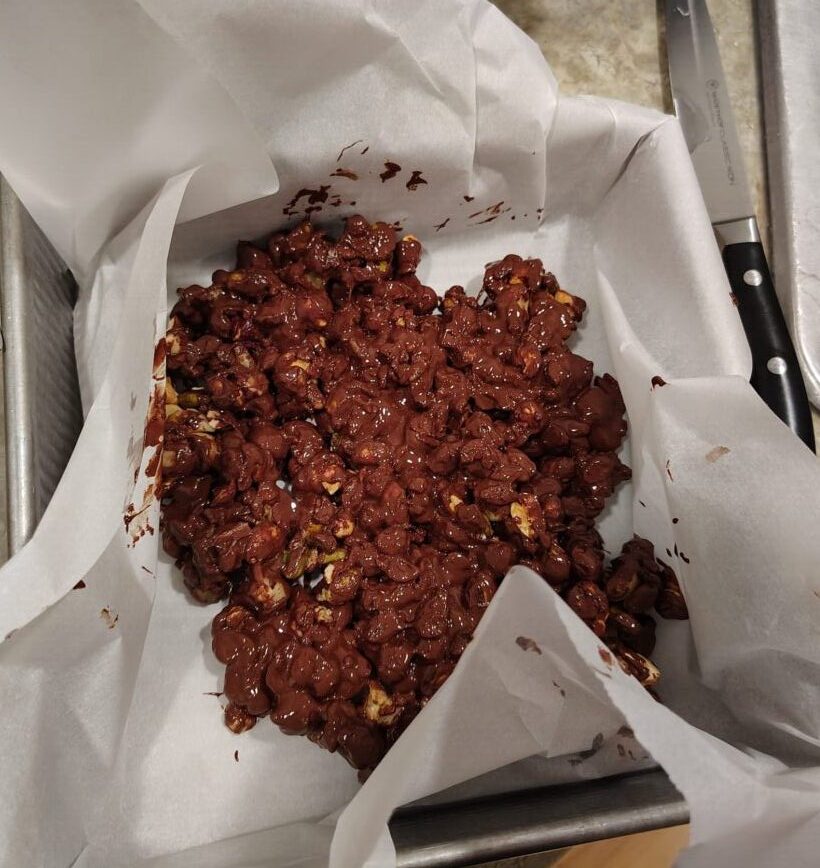
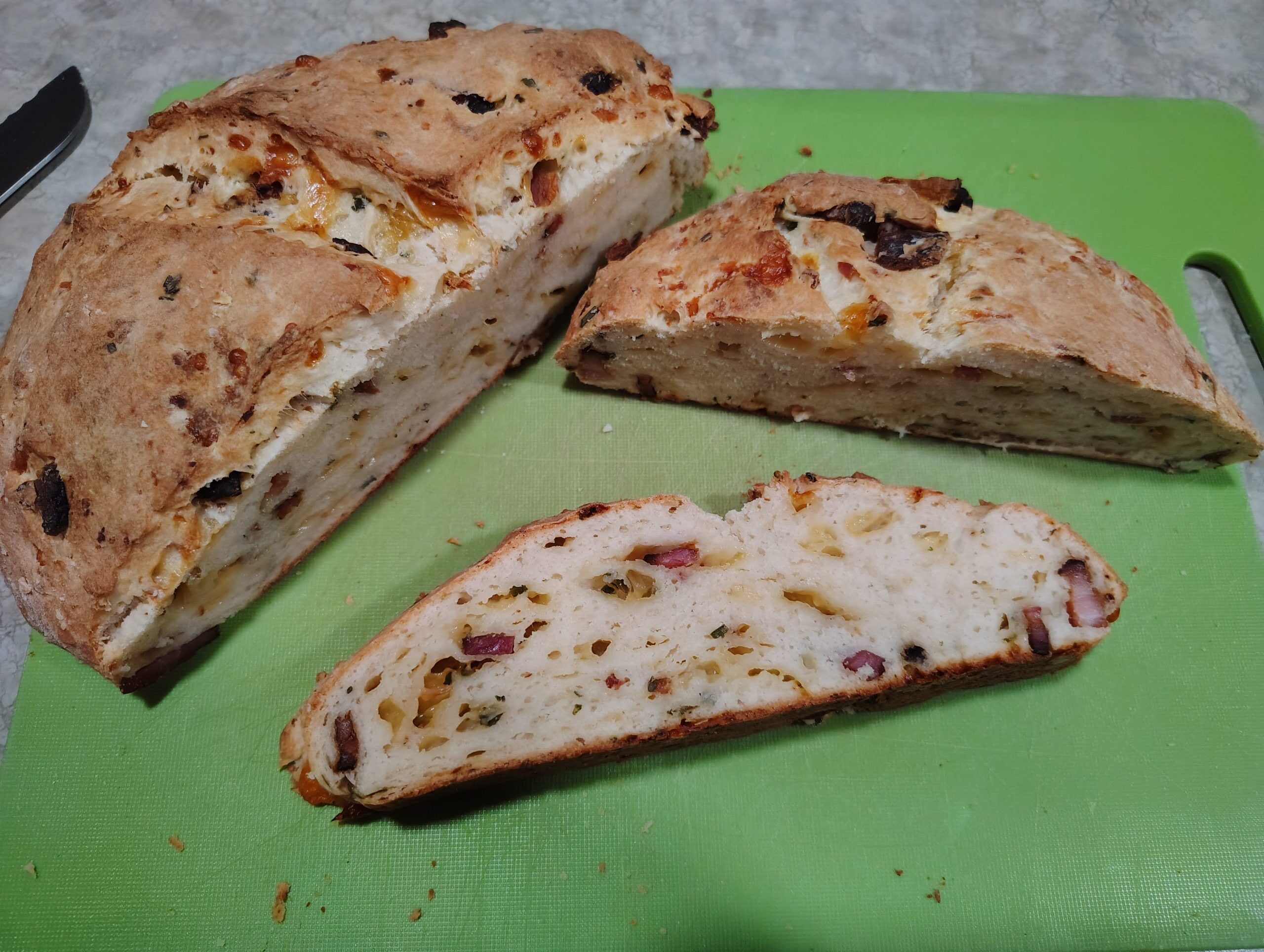
I kept it pretty simple over the last couple of weeks out of necessity as much as anything else. I made a bean and fake meat (Trader Joe’s meat crumbles) chili, loosely based on the recipe in The Bean Book. For any real bean-heads out there: I used a combination of whipple and rio zape beans, but you can really use almost any bean for chili. I made cheese and chive biscuits to go with it because that sounded good to me. Last weekend I made lasagna—just a basic one using the recipe from How to Cook Everything. It was good! It’s lasagna, of course it’s good!
The only new recipe I tried was the Smitten Kitchen double chocolate zucchini bread. It is obviously delicious. I will be making it again.
the season’s first chililasagnachocolate zucchini bread
Cat Therapy
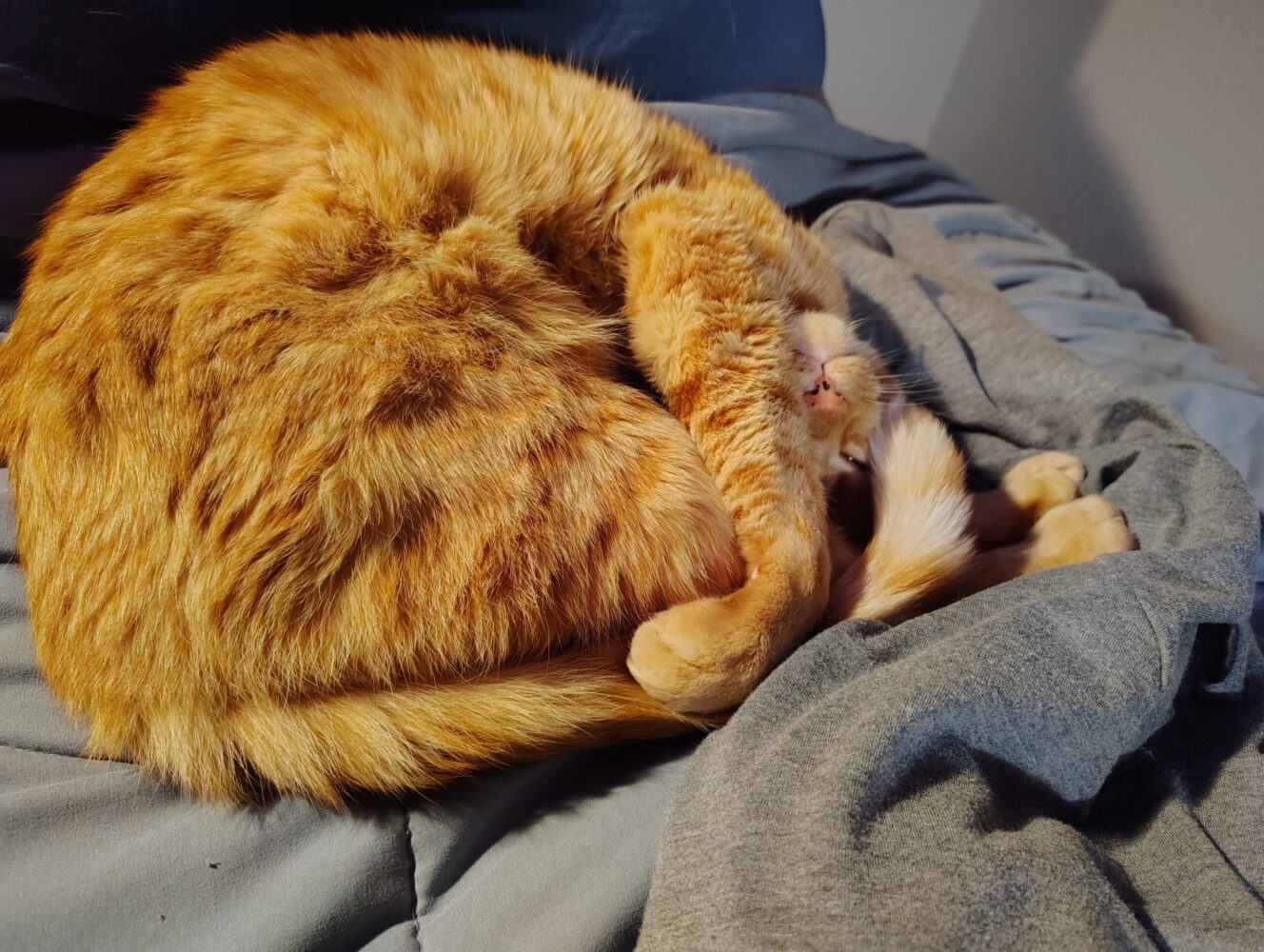
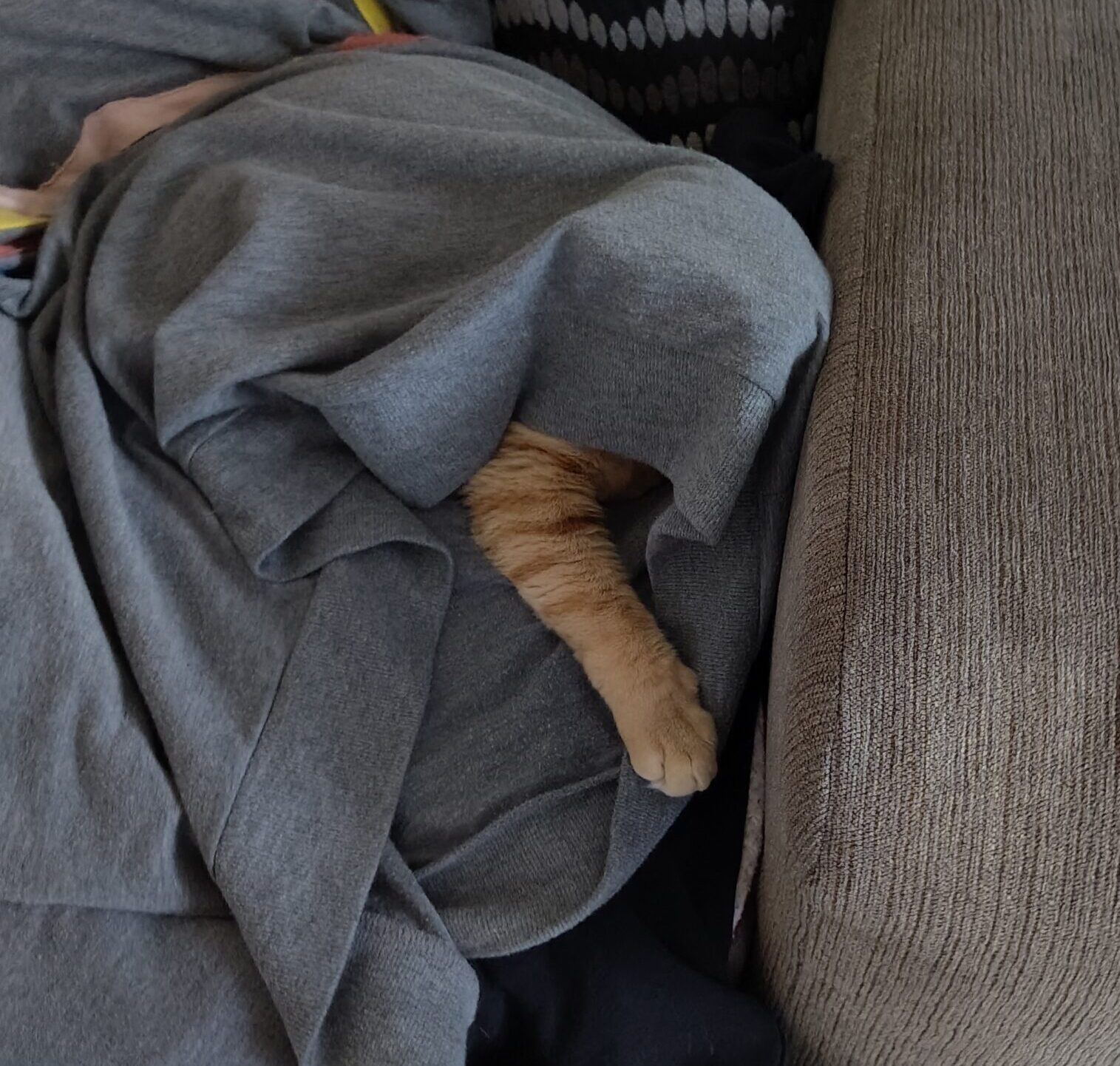
Finally, here are some cat photos for your nerves. Fritz is pleased to be king of the house again. He wanted nothing to do with the dogs and he wants me all to himself.
ProfileOn squirrel watchcozy babyplatonic ideal of catfashion boy
Hello, friends and enemies. Things are cuckoo bananas here, but let’s start with something fun. I mentioned last month that I had been working on documenting processes for the Lavender Library’s collections committee. I guess everyone likes what I’m doing because I am the volunteer of the month! Technically, this just means I get a little shout out in the email newsletter but I am still proud.
As for the cuckoo bananas of it all: We are currently taking care of my father-in-law’s dogs (my dogs in law?) because my father in law is dealing with some medical stuff. These two dogs are kind of nutty and are a breed known for being insane (they’re schipperkes) but I think they mostly just want attention (as with all of us). The main things I do not appreciate about them are that they have terrible bathroom etiquette and have peed and pooped on my floor at various times. We have to take them outside nearly on the hour to prevent incidents, and even that isn’t always enough. On top of this, Fritz is scared of the dogs. He’s been camping out in the bedroom and we have a gate set up in the hallway to prevent the dogs from bothering him. I’ve been trying to spend as much time with him as I can, but I also needed to be on dog duty while Kirk was helping his dad and now because Kirk has covid. I’ve been joking that I’m suddenly a single mom who works two jobs.
So, you might be wondering if I have covid too. No(t yet?). We are trying hard to keep me from getting it. Kirk and I are mostly staying on opposite sides of the house, he’s masking all the time and I’m masking when we’re on the same side of the house. We’re also running our air filter nonstop and Kirk is sleeping in the guest bedroom. As of Saturday, I’m testing negative and not having symptoms so we will see. If I escape covid again, I may become convinced that I simply cannot get it, which is probably not good since I already have unreasonable levels of confidence about many things, but still that is better than getting it and breaking my five-year streak of no covid.
Fuck it. Linux.
I have been getting really tired of Microsoft’s shit and, last weekend, finally did the damn thing and switched my PC to Linux. Microsoft is deprecating Windows 10 and pushing users to migrate to Windows 11 and, it sounds like, trying to con everyone into paying for OneDrive in the process. Windows 11 is also stuffing unnecessary and unwanted AI into everything and has a a feature that will take a screenshot of whatever the user is doing every few seconds, which is intrusive as fuck (yes, it can be disabled, but why the hell is that even a feature, let alone a default?). On top of that, I have Microsoft Word 2016, and Microsoft is going to stop supporting that too. They want me to “upgrade” to Office 365, which is a subscription and costs at least $100 per year. For the last time: none of this should be a subscription! I should be able to pay for the software and own it. I yearn for the early days of personal computing.
doing it live
There are a lot of versions of Linux because people can do whatever they want with the code and make their own versions. I installed Linux Mint, which is designed to resemble Windows and make the transition from Windows to Linux a little easier. The website has detailed installation instructions, which was good because I sure as hell did not know what I was doing. The process itself was actually fairly straightforward and the main problem I had was one of my own making. I have two hard drives in my computer and I thought I would be able to install Linux on one drive then simply access the other drive with all my data and files. However, I learned the hard way that Linux and Windows use different file systems, and you can’t “mount” a drive without formatting it first (that is, deleting everything on the drive). I had to perform computer surgery to liberate my data. Kirk recently got a new computer so I took my second drive out and connected it to Kirk’s old machine, then transferred the files onto an external hard drive so I could reformat the drive for linux. This worked but I am not great at hardware and couldn’t get my hard drive out of the tray so I removed the whole cage and plugged it into Kirk’s computer, leaving the case open. I do not recommend this method, especially since this issue is easily avoided by backing everything up first. Hubris.
Linux desktop!
I have not been able to use the newly linuxed computer a whole lot because it’s on the side of the house where Kirk is and we are avoiding each other for plague reasons. Still, I like it so far. I have a lot of exploring ahead of me, but I’m able to do all my regular computer stuff without any trouble. Something I really like about Linux so far is that you download software through a program that’s a bit like an app store. All the software is free and open source and works on Linux. This makes it easy and fun to just try stuff!
Here are answers to a few things I had to look up both so I remember and in case anyone else is looking for them, and then some programs that I like:
Signal messenger requires a special installation for Linux that you have to do through the terminal (Linux’s version of the command line).
Anki is my flashcard app of choice (at least it has been since converting back to it after using Memrise, which I wrote about here) and my flashcards are very important to me. It turns out there’s an error with the version of Anki available in the Software Manager, but there are instructions for downloading and installing it manually.
Freeshot is a screenshot tool. I take a lot of screenshots because I write instructions often. This has some very useful features.
Freetube is a little app for watching youtube videos without any ads. Genius.
I had been using KeePass to save all my passwords in Windows and I found out that there is a Linux equivalent, KeePassXC. It was able to read my password database file!
I’ve been called out
Books and Other Words
Given the state of everything, this is a rare post where I have no books to talk about. I’m in the middle of a few things, but have not finished anything in the last fortnight. I’m sure I’ll have something to talk about next time.
Meanwhile, on the internet:
Charlie Kirk’s Legacy Deserves No Mourning via The Nation. I’m not going to get too deep into this subject, but I do want to note that it’s okay not to be sad when a terrible person dies. Not being sad is not equivalent to supporting violence. I don’t think it’s controversial to not mourn someone who thought the Civil Rights Act was a “mistake.” From the article:
When asked about mass shootings he said, “I think it’s worth it. I think it’s worth it to have a cost of, unfortunately, some gun deaths every single year, so that we can have the Second Amendment.” Perhaps Kirk did not believe that his own life would be cut short by gun violence, but, like the rest of us, he has witnessed countless school shootings. When he said “some gun deaths” are acceptable, he surely knew he lived in a country where the deaths he deemed acceptable included those of children, some of whom were the age of his own. There is no inherent virtue in caring about your own children; that is the bare minimum requirement for effective parenting. Virtue lies in caring about the safety and well-being of children you don’t know.
Google Won’t Have to Sell Chrome Browser After All (But There’s a Catch) via Gizmodo. This is bad news for all of us on the internet. After Google lost its antitrust case, some people speculated that Google would need to sell off the Chrome browser. The courts have instead required Google to do what will be the worst thing for everyone, which is “share ‘search index and user-interaction data, though not ads data,’ with ‘qualified competitors.'” The answer to Google being a monopoly is it has to share browsing data with other companies. Why? Why would you do this? Consider this a good time to stop using Chrome browser and try Firefox instead, if you’re not already.
Wikipedia Is Resilient Because It Is Boring via The Verge. I like seeing Wikipedia getting good press and I appreciated this quotation from the article, “Wikipedia is one of the few platforms online where tremendous computing power isn’t being deployed in the service of telling you exactly what you want to hear.”
Kitchen Witchery
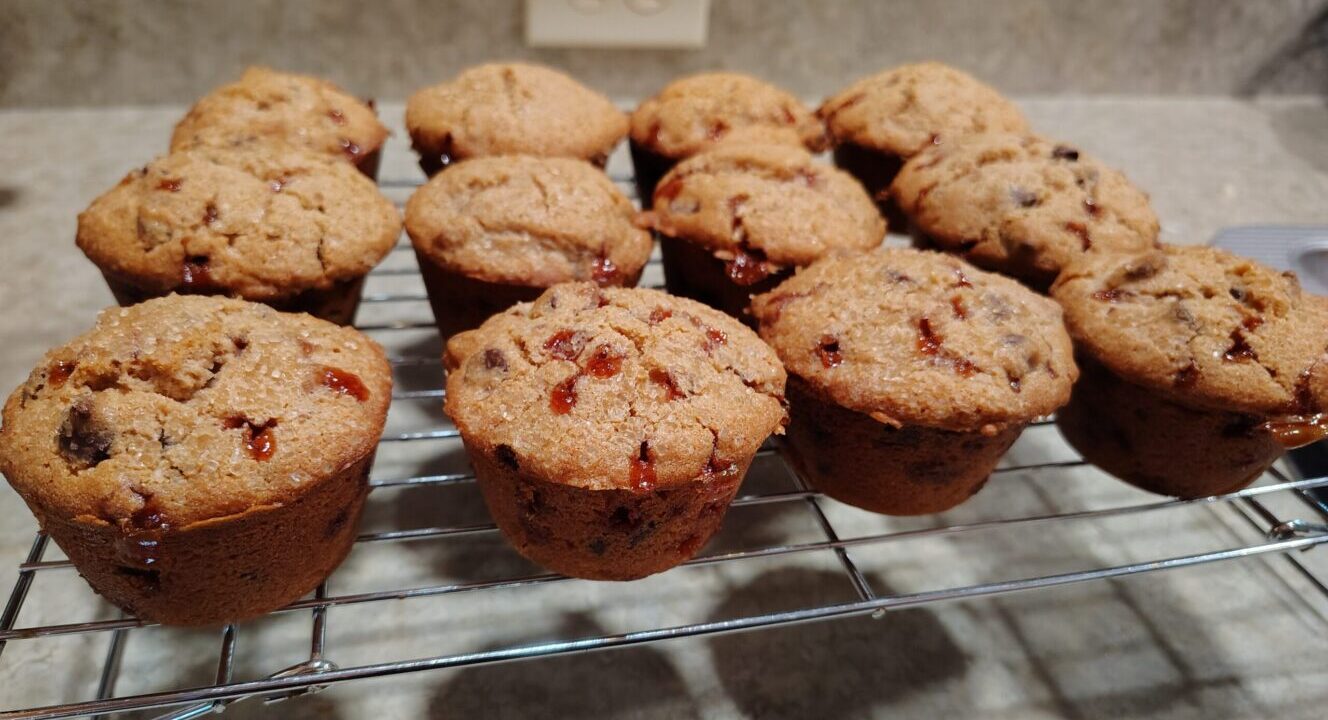
This week’s featured recipes include some chocolate chip and M&M cookies because I was seized by a desire for exactly that. I also tried another version of zucchini gratin. I thought this recipe was really good, I liked it a lot better than the version I made a month or so again. We had that with vegetarian tamale pie and I thought that was a good addition.
chocolate chip and M&M cookieszucchini gratin
Cat Therapy
Finally, here are some cat dog photos for your nerves.
Jack and JesseCouch dogAwaiting cheeto
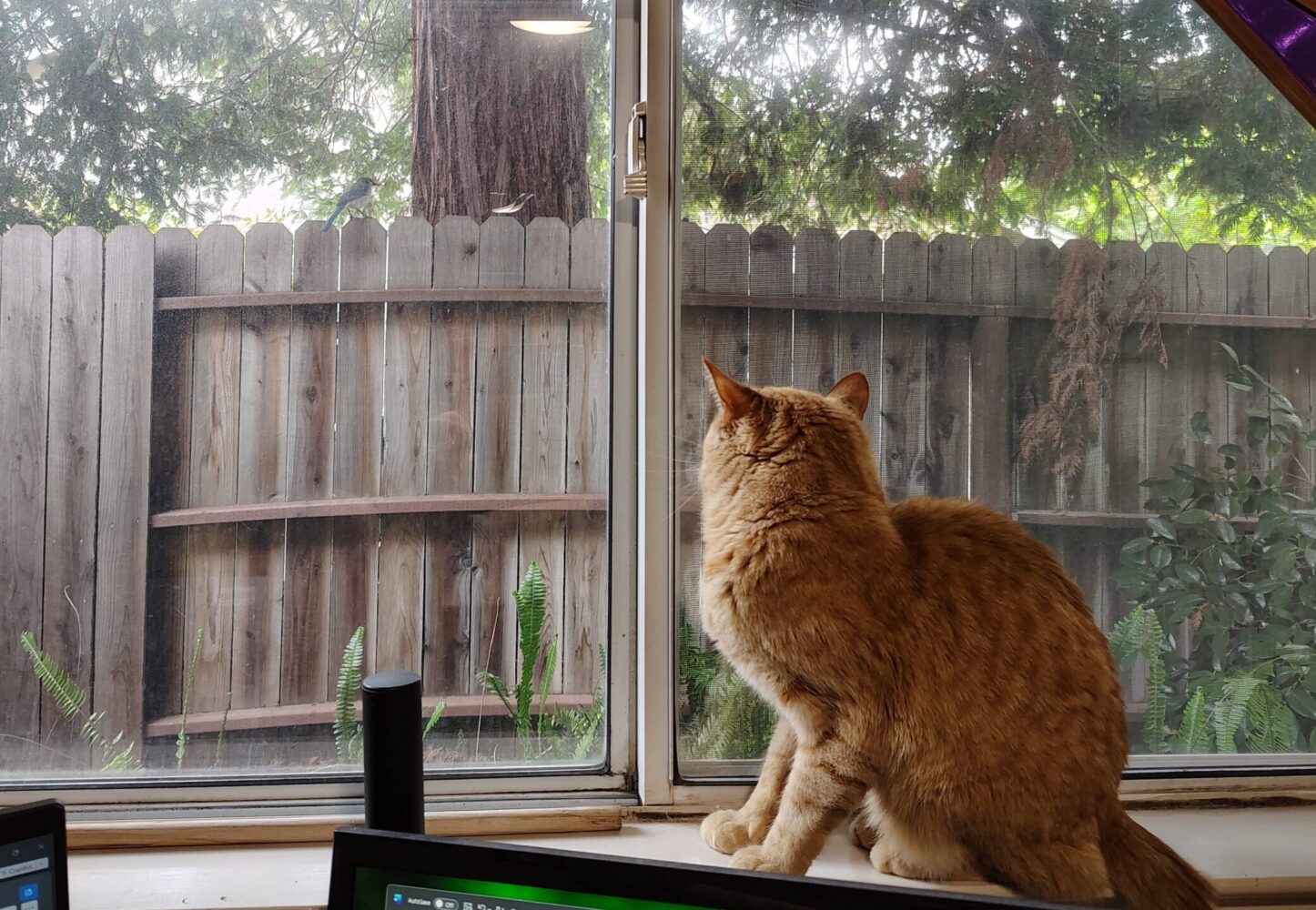
Don’t worry, I wasn’t going to miss an opportunity to post cat photos. Here’s Fritz.
Fritz acting in an indie filmMonitoring the backyardcozy babysauve
Hello, friends and enemies. Some exciting news in my world is that the dates and location for Eurovision 2026 have been announced! It’s going to be in Vienna on the week of my birthday! The announcement was at night in my time zone, so the next morning I went about reserving a hotel, thinking I was getting on it fairly early. Not so. There were already hotels in Vienna that are completely booked up that week, which is truly wild. Fortunately, I did find a good hotel for us, and reservations have been made. We haven’t solidified any other plans yet, but that was an important one to get done early! This has also made me more motivated to study some German, which I was admittedly not feeling super excited about. Now that we have some real plans, it’s a little more fun. The youtube algorithm showed me this video of a woman explaining German words to use in the bakery and I was like, wow I’m sold.
Books and Other Words
One Day, Everyone Will Have Always Been Against This
One Day, Everyone Will Have Always Been Against This by Omar El Akkad is an indictment of the powers and systems that not just allow a genocide, but actively promote it. When it becomes convenient and politically safe to do so and when, as El Akkad writes, “When the time comes to assign blame, most of those to blame will be long gone,” politicians and others in power will finally say that they had always been against this. El Akkad is a journalist grew up in the Middle East and moved to Canada as a teenager. As a child, he associated the West with freedom, but it’s not nearly as free here as our reputation makes it out to be, especially when you’re brown and an immigrant. The United States in particular believes it “behaves in keeping with the scrappy righteousness of the underdog” while simultaneously being the “most powerful nation in human history.” If you think you’re a freedom fighter, but you’re actually the country with the world’s largest military, who do you fight to show that you’re fighting on the side of good? How do you prove that you’re a scrappy underdog? Apparently, you arm a regime committing a genocide. Because we need to fight people who are, “in our minds” capable of “limitless violence.” El Akkad also discusses journalism and the misguided belief that journalists should act as a kind of impartial “referee,” but being truly unbiased is not possible and only makes you susceptible to a different set of biases, like that it’s important to find a compromise between both sides.
Should one party propose stripping immigrants of all rights and the other propose stripping them of only some rights, the intellectually rigorous thing to do is consider that’s what’s best is stripping immigrants of most rights. To compromise.
One Day, Everyone Will Have Always Been Against This is a scathing assessment of those with the power and privilege to do something, but who cannot “bear the minor inconvenience of hearing about these deaths from afar.” What Israel is doing to the Palestinian people is atrocious and it is a genocide. I was watching the news the other night and it’s very clear that everyone there is being starved to death, that is if if Israeli soldiersaren’t murderingthem while theywait for food. It’s easy to be opposed to something terrible that is already happened. It takes a lot more courage to do something in opposition to the status quo. I hope that our country stops supporting this before everyone is dead and it when, of course, everyone will have been against it.
Meanwhile, on the internet:
AI Killed My Job: Translators via Blood in the Machine. This is majorly depressing because translation is a job I have wanted to do for a long time. I guess I’m just gonna keep doing it for the love of the game on Wikipedia, which is okay. It sounds like the market for translators has really collapsed in the last year or two, even though the technology has not appreciably improved in this time. However, the perception of what “AI” can do has changed, leading to a lot more companies using machine translation or computer-aided translation, which nobody likes to do because it takes just as much time as doing it right the first time and pays less.
A Dark Money Group Is Secretly Funding High-Profile Democratic Influencers via Wired. File under: just because Republicans do it doesn’t mean you should too. I’m so tired of being propagandized on practically every corner of the internet, especially when it’s secret propaganda and the people promoting it are contractually prohibited from revealing that they’re being paid. What are we doing here?
Taco Bell rethinks AI drive-through after man orders 18,000 waters via BBC. Lol. Lmao even. From the article, “One clip on Instagram, which has been viewed over 21.5 million times, shows a man ordering ‘a large Mountain Dew’ and the AI voice continually replying ‘and what will you drink with that?’.” I, too, might order 18,000 waters in that situation. Corporations need to stop trying to get out of paying people wages.
DOGPILE: THE DONALD BOAT STORY via Donal Boat. I laughed so hard at this, but it’s so long and I didn’t even finish reading it. This random guy on X started tweeting at Sam Altman to ask him for money for a computer. They do not know each other; he’s essentially cold calling for donations. This exploded into a ridiculous saga of rich people on Twitter just giving him stuff. I love that for him. I wish I had known it was that easy to get things.
Doing Stuff
I made plans with some of my friends to see Dracula: A Comedy of Terrors last week at the B Street Theater. Someone dropped out so I invited Kirk. We learned that the theater had spread all of our group’s seats throughout the theater at the time of booking, but they said if we waited to enter the theater until just before the show, they could move us around since some people inevitably wouldn’t show up. This is how my girls’ outing turned into date night with my husband—the theater had two seats together then a group of seats together for everyone else. Sometimes it be like that. I did enjoy the play overall; I’ll say that first. I am now going to criticize it because thinking critically is part of how I appreciate things (but I also have legitimate criticism). Based on clips online from other productions of this play, I was led to believe that this show was going to be really gay. It was not. I looked up the original production and it was gay! They had characters in drag! I don’t know why B Street didn’t do that but I was a little (a lot) disappointed. In this play, Mina and Lucy are sisters (why?) but they read so sapphic to me in the source material that this is a baffling choice. In the book, Mina is also the character who puts together all the pieces and figures out that Dracula is causing everyone’s problems, but in this play, she’s frumpy, stupid, and desperate for a man. Why did they do that to my girl Mina? While this show had some very funny moments and the actors were all really good, I spent most of it being perplexed.
Ready for Dracula: A Comedy of Terrors
Corporeal Form
After my physical therapist suggested my knee might be suffering from a lateral meniscus tear, I saw my doctor to follow up and find out if we needed to do any imaging. The doctor poked my knee and watched me take a few steps, then declared that it’s not a meniscus tear and a lateral meniscus tear is “not a thing” (it is a thing). The doctor told me I could get an x-ray if my pain gets worse, but I decided to get one anyway because I wanted to find out if my right knee has arthritis and, to my non-surprise, it does. So now I officially have arthritis in both knees. That’s right it’s:
how it feels to have arthritis
My knee is still feeling somewhat swollen and sensitive but I did go to jazz and ballet class this week. I think I need to wait a little longer to resume tap because of the type of movement in tap will definitely strain my knee. I’m hoping my knee will get better and I won’t have to retire from tap dance altogether! I’m still not totally sure what happened to my knee since we can’t confirm a meniscus tear without an MRI (the x-ray was to potentially rule out other problems), but I do trust my PT so I think that is most likely what happened. In any case, the only way forward is physical therapy.
new side door for the garage
Speaking of physical therapy, I have been trying to stay on top of my many complicated resistance band exercises to rehab my knee and keep up with a little garage gym time. Last week I was out there a lot but this week I really only kept up with the PT stuff. The current nice thing in my garage gym is we got a new door! Not a new garage door, but the side door, which was formerly a door that should have been used inside a house, not facing the outside, got upgraded this week. The new door has a window that opens so I can get some extra light and air while I do my exercise. I think it looks good!
Kitchen Witchery
I’m leaning in to summer produce here in the final stretch of the season. I made a corn chowder based on the recipe in How to Cook Everything Vegetarian. I made it a little more exciting by throwing the corn cobs in some chicken stock to make my corn broth, and I added some bacon. We had that with this zucchini and ricotta galette. I liked it but Kirk thinks zucchini doesn’t have enough innate flavor to carry this galette. It’s full of cheese though, so I think it’s fine. The other dish pictured here is something I threw together for lunch this week but really ended up liking. It’s royal corona beans, orzo, and some green beans with a bit of seasoning and parmesan cheese. It made for quite a good lunch!
zucchini galettecorn chowderbeans, orzo, and green bean lunch
Cat Therapy
Finally, here are some cat photos for your nerves. Behold my little goblin boy.
Hello, friends and enemies. Has anyone else noticed that the spelling and grammar check in Microsoft Word is getting worse? I’ve found myself asking more and more “What the fuck are you talking about” when Microsoft makes suggestions. In the last week, it told me that I might want to change the word “conflate” to “conflict” (no), “received approval to send” to “approval to sending” (no!), and the name “Courtney” to “chutney” (Super no!!). I also asked the internet and it seems people are going to Microsoft’s own website to be like “hey, why are you so bad now?”
The answer seems to be that spell check is telling you what might be wrong, which is what it has always done. Sure. I don’t give all my trust to spell check. After all, I am an editor. But it seems like it used to have better suggestions, or at least not so many garbage ones. Since I can’t trust the grammar check not to waste my time, I ended up turning off a bunch of the things it can look for so it will stop bothering me with utter nonsense. Anyway, this is your regular reminder not to trust the computer too much.
Do not speak to me
Rampant Consumerism
popsocket on the kobo
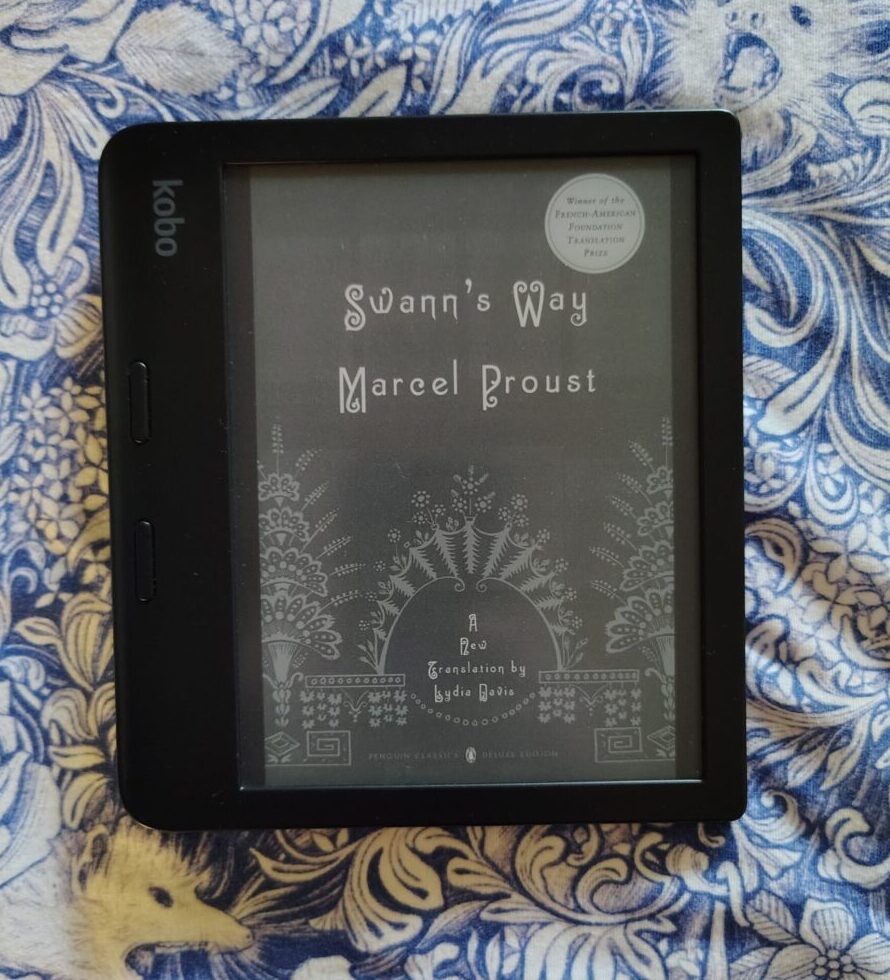
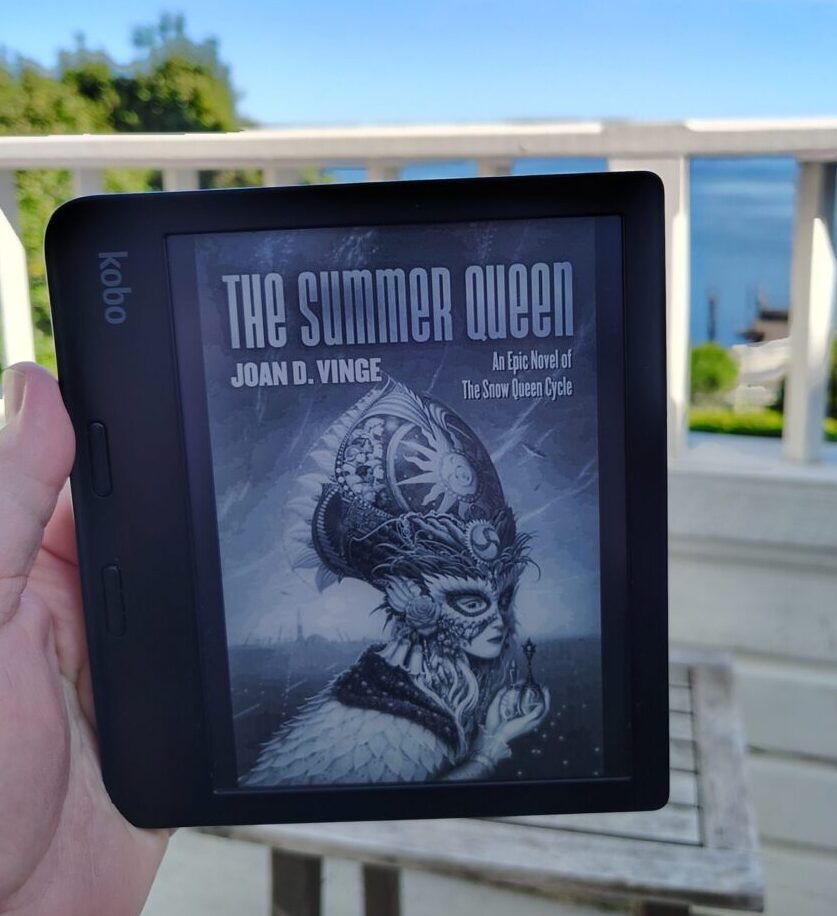
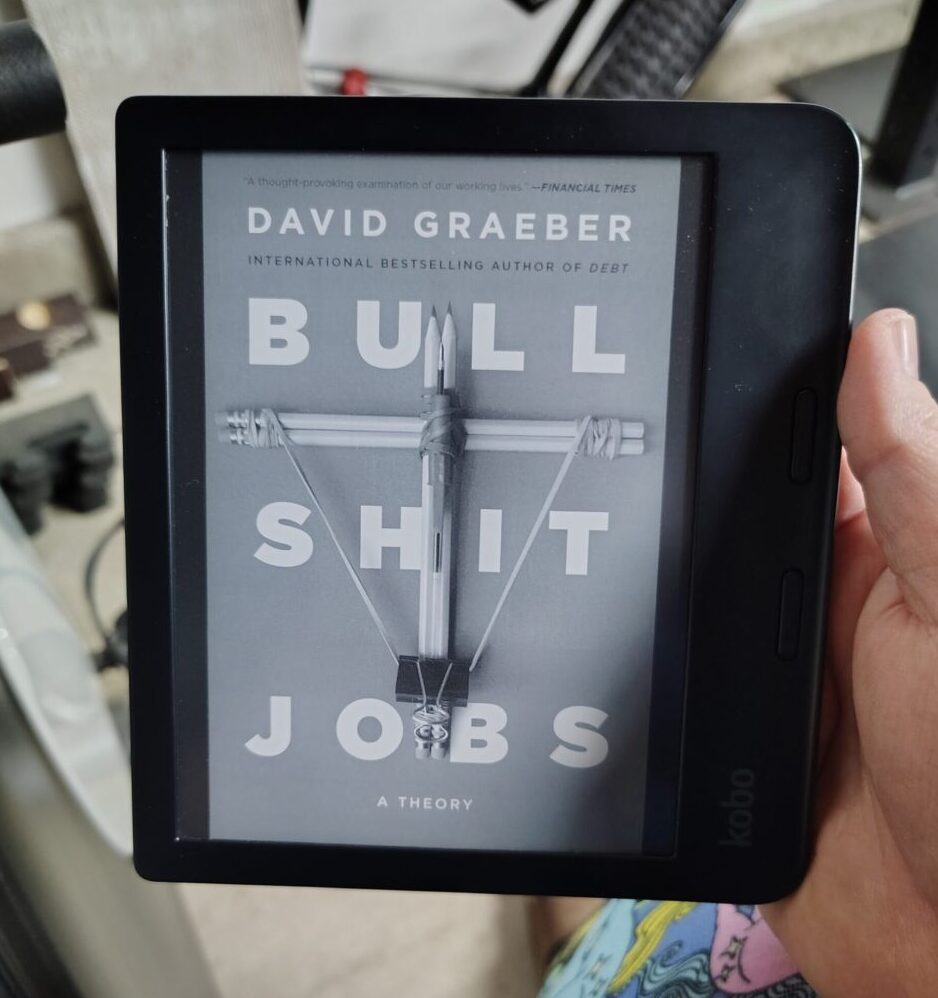
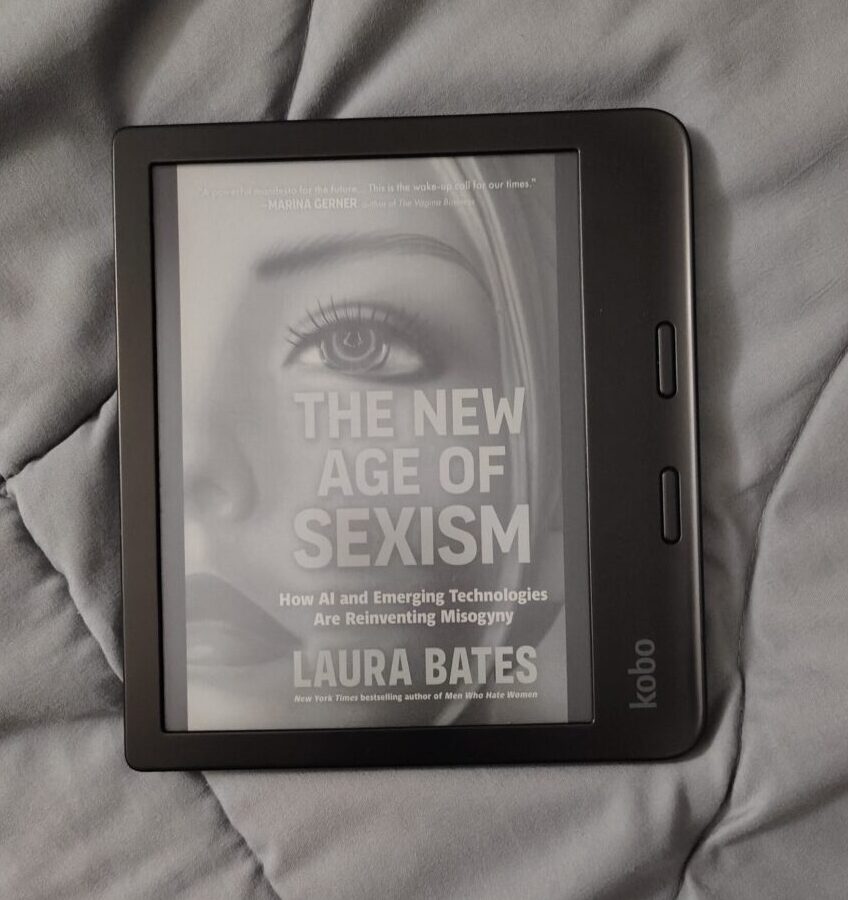
I bought two book-related items that are, I think, improving my life. First, I got a popsocket for my kobo reader. I was listening to a podcast where the host mentioned that she used one for her Kindle and I was impressed. This had never occurred to me. I bought one tout de suite and it really is a lot easier to hold the ereader with one hand!
The other thing I bought is a lovely notebook from Leuchttrum. I was inspired to start writing some notes by hand about the books I read. I follow @saffanabana on instagram and she makes a lot of great videos about media literacy. She recently posted a video about how to retain what you read. My knee-jerk thought was that I retain a lot of what I read and this video wasn’t for me, but then I thought some more and realized I don’t remember the non-fiction I read as well as I would like. Her system involves writing in books to note important ideas or disagree with the author, and then summarizing each chapter on the chapter’s last page. I’m not morally opposed to writing in books, but I do read a lot of books from the library and a lot of ebooks so I recognized that this system is not for me. I wanted to try it though! So I bought a nice notebook and wrote down quotes that “altered [my] brain chemistry” as recommended and summarized the chapters as I read. Now I have a record of what I wanted to retain of the book even though the book is back at the library. I like the idea of using this to engage more with what I’m reading instead of just passively taking it in. We shall see if it sticks.
Could this be it? The notebook that changes my entire life?
this is going to change everything
Books and Other Words
All Our Families
I tried out my new notebook this week to take notes while reading All Our Families: Disability Lineage and the Future of Kinship by Jennifer Natalya Fink, which I picked up from the Lavender Library. This work is part academic and part autobiographical, and introduces the concept of “re-lineating” disabled family members and ancestors (as opposed to “de-lineating,” which is what has been done in many families who institutionalized or wrote disabled family members out of their history). Fink proposes that if we were more aware of existing disabilities, we might be able to move away from the narrative of what a shocking trauma it is to have a disabled child. She also acknowledges that 20 percent of humans are disabled or become disabled at some point in our lives, so rethinking how we incorporate disability into our family and our stories is important. She goes into some of the history of delineating the category of “disabled,” which arose through fascist policies in Nazi Germany and in the United States as a way to mark certain groups as disposable, and discusses some of the history around ugly laws and their impact on disabled people as late as the 1970s. The chapter that I found most illuminating was one about care giving, with Fink explaining that re-lineating disabled family also means acknowledging the care work necessary for many disabled people. She highlights the struggle this presents for women in particular, who are responsible for the majority of all care work, noting that the “fear of being burdened by the care of another, of having one’s hard-fought feminist freedom curtailed … shapes the fear and stigma underlying ableism.” Another aspect of our fears around disability is found on the other side of this coin: “fear of disability is fundamentally a fear of care.” That cuts deep. Our society, which prioritizes individualism, is antithetical to the level of care disabled people need, even though at some point in our lives, we all become disabled. This shame of needing to be cared for instead of ruggedly pushing through any physical or mental problem animates ableism and makes a lot of people, historically speaking, try to erase disability from their family tree. We don’t want the reminder that it could happen to us too. Bringing these members of our biological or found families, even sometimes in only a metaphorical way, back into our lineages can help us see the full picture of the human experience and start to remove the shame of something that shouldn’t have to be shameful.
Foundation
I wrote earlier this year about downloading and removing the DRM from all my Kindle ebooks. After doing all that, I finally got my books transferred to my Kobo reader. Now I have all the ebooks I’ve bought in one place, which rules. One of the books I rescued from the Amazon DRM was Foundation by Isaac Asimov, which I’ve been meaning to re-read since we’ve been watching and enjoying the TV show. I read this for the first time when I was probably in middle school and getting really into science fiction, and I read it again in 2011 but a lot of the details of it had not stayed with me. On this read through, I could kind of see why. The book moves quickly, with the story largely propelled by dialog and with Asimov committed to making all new names that sound plausible in English but that are all novel names (like “Hober Mallow” or “Poly Verisof”), which means it takes a little more work to keep track of everyone. As much as I like and appreciate this story for being part of my early reading in the genre, it’s a little hard to really love it now. There is exactly one female character in the book and she’s depicted as a shallow harridan who hates her aristocratic husband (he hates her too, for what it’s worth). And, you know, that’s unpleasant to read! The characters the story follows, that is, the men of the Foundation, are universally the smartest guys in any situation and they succeed by outsmarting people, by knowing what drives people to do what they do even when they themselves don’t know. In that sense, it’s almost more of a mystery novel, which is not a genre I’ve ever been a great fan of and perhaps also why I wasn’t in love with this particular novel. Still, it was interesting to see how much the show runners of Foundation have been able to make out of kind of minimal characterization and exposition. I plan to keep reading but I’m not expecting these books to be as magical to me as they may have once been.
Bad Company
I heard about Bad Company: Private Equity and the Death of the American Dream by Megan Greenwell on the Culture Study Podcast. I immediately requested the book from the library after listening to the episode. This book made me mad and will probably make you mad too. It chronicles four people whose lives have been affected by private equity in different industries: retail, medicine, journalism, and housing. Private equity refers to firms that buy up other companies or entities and do not offer public stock, like Black Rock or Bain Capital (of which Mitt Romney was the CEO). Most people recently became aware of private equity when Toys R Us went out of business because of a private equity leveraged buyout. Private equity firms take out huge loans to buy other companies and then find ways to make money off them. However, the private equity firm itself is not responsible for paying back the loans: that’s on the company being acquired. Private equity firms are in search of short term profits—their executives usually make millions of dollars off any given deal—and often do things like sell off a retail chain or newspaper’s real estate to make money. Of course, then the store or newspaper has to start paying rent for its location, which costs them more money. Genius stuff here. One of private equity’s selling points is that it helps distressed companies, but as Greenwell reports, “employment shrinks by an average of 4.4 percent in the two years after a leveraged buyout and 12.6 percent when the company was previously publicly traded.” Additionally, “companies acquired by private equity firms are much more likely to go bankrupt than their peers,” with 20 percent filing for bankruptcy compared to just 2 percent of other companies. So, who is this really helping? A lot of private equity’s funding comes from public pension funds, which is really quite perverse since private equity is buying up companies and putting people out of jobs theoretically in service of making money for public employee’s retirement.
Private equity’s tactics remind me a lot of austerity measures getting imposed on countries with a lot of debt, which, like private equity, results in everyone having a worse time except for the people at the top making money. This book also had me asking the question: what is the purpose of a business? Is the purpose of a newspaper to inform people in a community or to make money for executives? Is the purpose of a hospital to treat injuries and deliver babies or to be repeatedly sold to different firms to make bonuses for executives? You might think the answer is obvious, but in the case study of a Wyoming hospital that Greenwell details, the private equity company shut down the obstetrics department to “save money.” Yet, the people living there did not save money, they had to travel 30 or more miles away to give birth, and the rate of emergency medical transport via helicopter skyrocketed. Ultimately, a lot of these costs were paid by Medicare and Medicaid because that’s the insurance that people using the hospital had (and Medicaid pays for a significant percentage of births in this country). I am, personally, tired of rich assholes taking advantage of public funds to enrich themselves, like the fact that huge numbers of Walmart and McDonald’s employees need to use SNAP and Medicaid to survive. Call me a rotten socialist if you must, but I think that people putting in a full day of work should be able to afford food, housing, and healthcare. Unfortunately, our gutless congress is probably not going to act to solve any of these issues anytime soon, since, as Greenwell informs us, private equity spends a lot of money on lobbying! This whole damn country is a pyramid scheme.
Meanwhile, on the internet:
The Mothership Vortex: An Investigation Into the Firm at the Heart of the Democratic Spam Machine via On Data and Democracy. I am sure most of you are familiar with the Democractic party fundraising emails where Nancy Pelosi emails you and says if you don’t donate $5, America will be destroyed (I’m starting to think that she’s making these threats herself). This combination of guilt and urgency has been an effective (if deeply annoying) fundraising strategy. However, this guy crunched the numbers and found that the vast majority of the funds Democrats raise is not going to advocacy work, but to a series of PACs, strategists, and consultancies, “represent[ing] a fundraising efficiency rate of just 1.6 percent,” which means that “for every dollar … 98 cents goes to consultants and operational costs. Just pennies reach actual campaigns.” Long story short: don’t waste your money donating to the Democratic party apparatus.
I’m sure you’re all dying for an update on my busted knees. I saw my physical therapist this week and she has ruled out a sprain/ligament tear, but she feels fairly confident that I tore my meniscus. I have plans to see my doctor this week so we’ll see if she confirms that. Even if she doesn’t, the PT regimen is kind of the same no matter what the knee injury is: strengthen the muscles that support the knee. That is what I have been trying to do (despite the current injury), which is also why it’s so frustrating to get hurt. Like, damn, how strong to my legs need to be? I need to focus in particular on my inner thigh muscles, which are a very difficult group to work out without a machine but we are going to have to make do with some exercise bands and a will for gains. I did feel gratified that the PT said I had been doing the right stuff. I told her my knees were feeling a little questionable when weight lifting so I shifted my approach and she said that was a good course of action. I know what I’m doing! Just my body doesn’t always want to cooperate, but she’s doing her best.
Kitchen Witchery
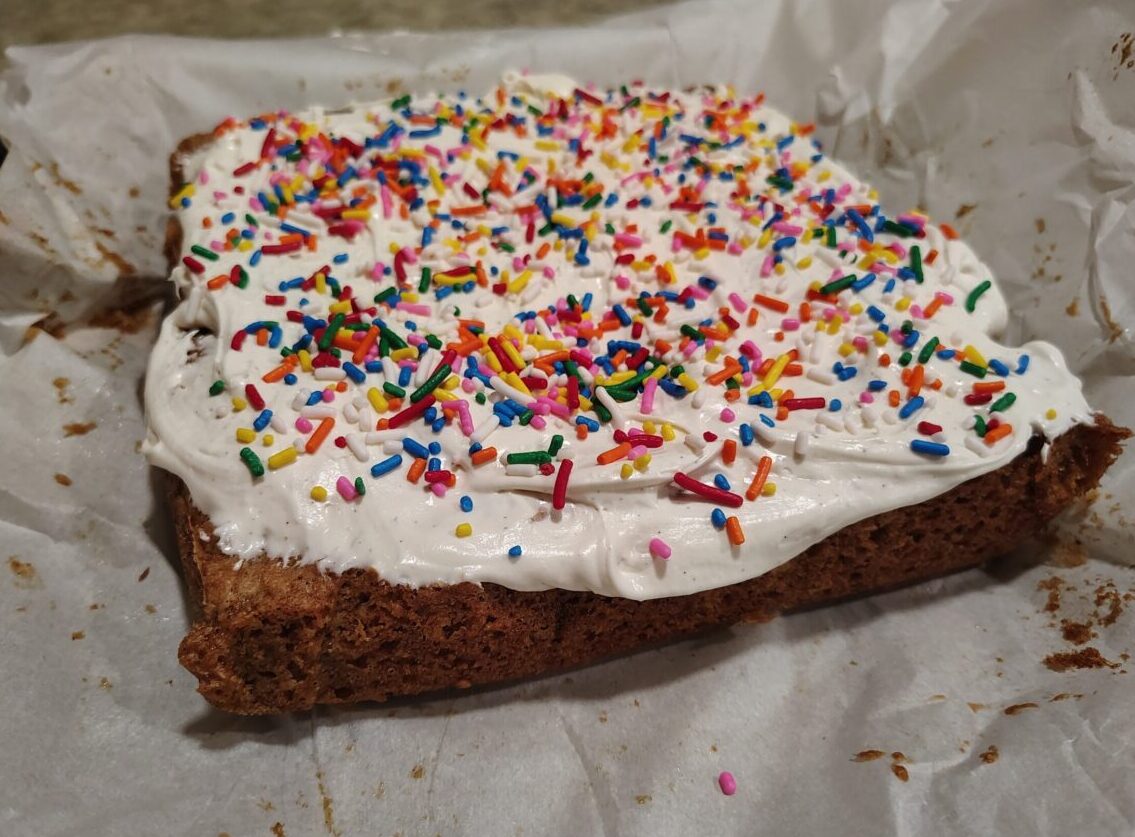
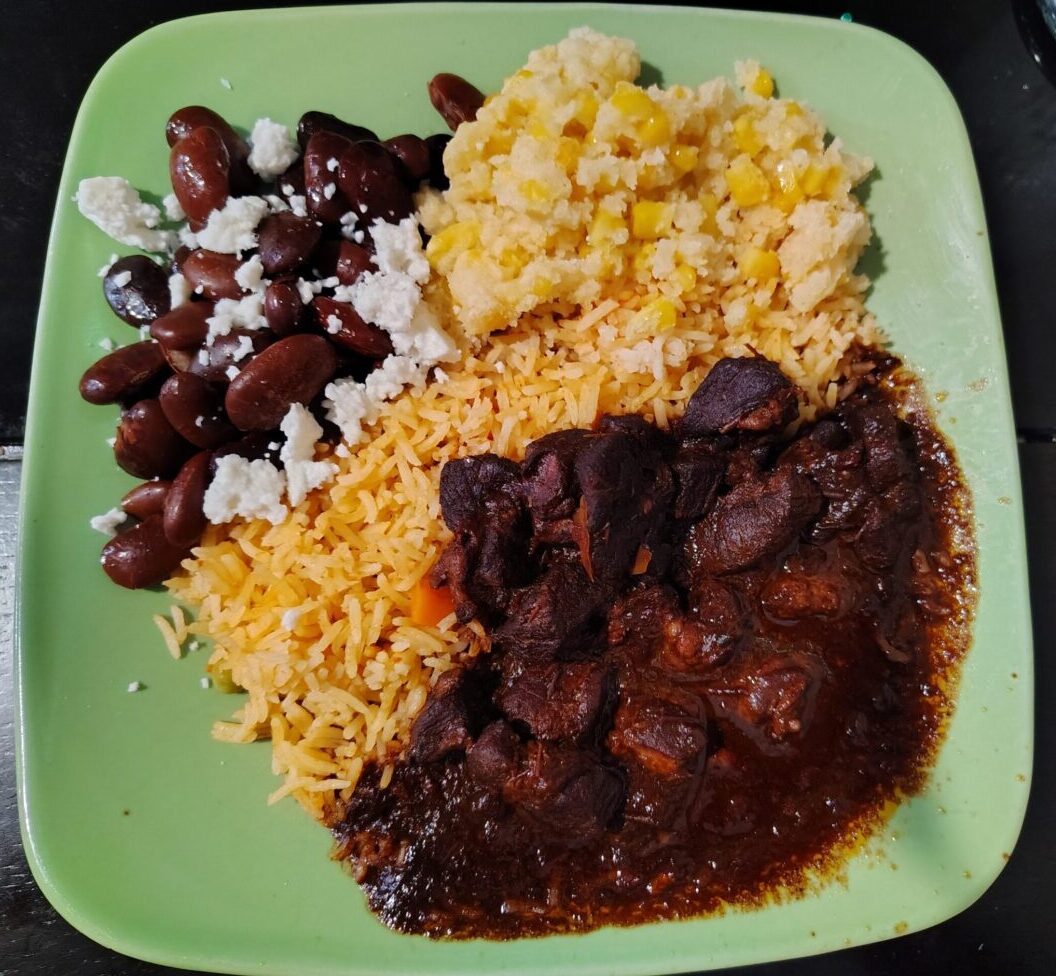
The only noteworthy thing I cooked in the last fortnight was this really good bowl of beans and rice: double brown beans. I used the calypso beans from Foodocracy (I used to subscribe to the bean club at Primary Beans but they decided to get out of the bean game and sold to Foodocracy so here we are with another bean club) and they were so creamy and delicious. I was highly impressed. I was even a little lazy with the recipe and used a pre-made masala instead of toasting and making a whole spice blend as the recipe calls for, but it was still very good. I also made s’mores rice krispie treats, which were a hit. I am not a big cereal eater but I do love golden grahams as a treat sometimes so it was tasty to have them in an actual treat. Finally, just to keep it real with you all, I’ve included a photo of a recent lunch: rolled up turkey and cheese along with pizza rolls. I don’t regularly eat pizza rolls but sometimes it’s what sounds good.
“double brown” beans and ricesmores rice krispie treatsall-rolls lunch
Cat Therapy
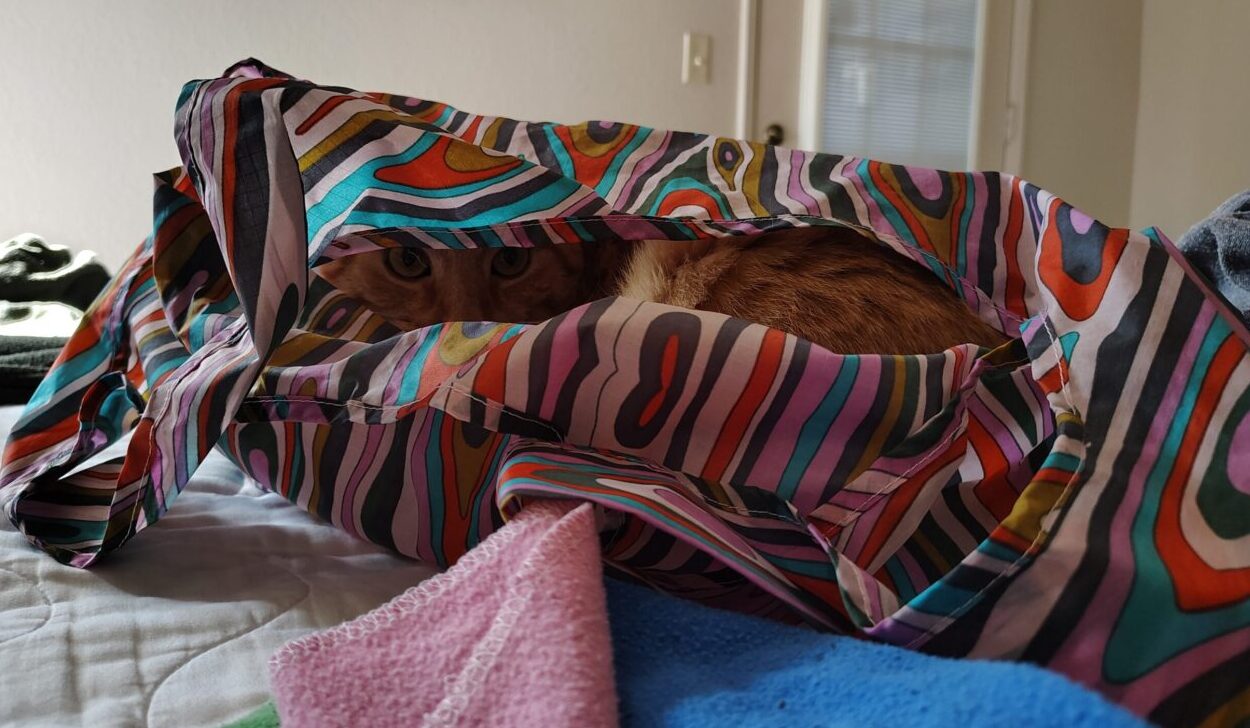
Finally, here are some cat photos for your nerves. Fritz’s favorite thing right now is the blanket fort I set up for him. I saw him trying to burrow from one blanket to the other and I thought, okay he wants to be in blankets. I was right because he’s been spending just about every afternoon in there.
chuffedHanging outshrimp modehe screamFritz’s new blanket fort
Hello, friends and enemies. I’m back with more big political opinions today, but if you make it to the end of the post, you will be rewarded with photos of my cat. Fritz has not been feeling the best and has thrown up a hairball almost every day this week. I have to assume this is because the weather is getting warmer, which I’m not thrilled about either. I appreciated the weather not getting too hot in July, but of course I can’t expect it to stay cool through August.
I have been keeping busy as usual and I’ve really been enjoying volunteering at the Lavender Library this year. I think I have neglected to mention that, in addition to working the circulation desk, I started volunteering with their collections management committee. It’s gratifying to put my masters degree in library and information science to some use after over a decade. What’s funny though is I’m using my technical writing skills more than my library knowledge. The library has been working on getting some processes documented, which is exactly the kind of thing I do for work. I know my distaste for work is well documented, but I actually don’t mind putting my abilities to use for something I like and that feels important! On Friday, I learned how to prepare books to put on the shelves (like how to apply the barcodes and wrap the hardbacks in their special covering) and I took notes on the process so that we could share that information with the rest of the collections committee. It’s a small thing but it feels good to do something useful.
This is your periodic reminder that you can subscribe to my blog! You’ll get every post in your inbox and I will never use your email for anything else.
Current Events
Hear me out: Believe women
Lots of people are frothing over Trump claiming there is no list of clients of known pedophile and human trafficker Jeffrey Epstein. I don’t feel the need to get into the details of this because many already have. Sarah Kendzior’s book They Knew: How a Culture of Conspiracy Keeps America Complacent has plenty on this because so much of it has already been reported on and is in the public domain. However, I think the most important detail of this story is that we don’t need some special list because a number of Epstein’s victims have already come forward over the years. As journalist Lyz Lens recently put it “You don’t need Epstein’s list; you need to listen to women.” The only novel thing coming out of the current iteration of this scandal is that MAGA loyalists seem to be cracking, as evidenced by the split in opinion in the MAGA bot farm on X (that is, accounts manned not by real people with real opinions but by imaginary people who post to sway public opinion). If we listened to women, we wouldn’t have people like Clarence Thomas or Brett Kavanaugh on the Supreme Court. Trump wouldn’t have ever been president, and many other horrors could have been avoided. Yet many people only give a shit about abuse when a man talks about it. This isn’t news.
AI and Fascism Are Best Friends
As the U.S. leans into its fascistic tendencies, I’ve been seeing comments online expressing the idea that artificial intelligence (AI) is the aesthetic of fascism. I’ve been mulling over the connection between these concepts and I thought I’d work it out here on the blog. First, some definitions. Fascism is the term for political movements characterized by, per Encyclopædia Britannica, “extreme militaristic nationalism, contempt for electoral democracy and political and cultural liberalism, a belief in natural social hierarchy and the rule of elites” and I think it’s very easy to see these aspects in the current political landscape: Trump’s original entrance into the political spotlight by accusing President Obama of not being a U.S. citizen and later insisting the 2020 election was stolen to the point of inciting an attack on the capitol are certainly indicative of “contempt” for democracy. AI refers to the large language models (LLMs) that chat agents like Chat-GPT use as well as image generators like MidJourney.
Here’s a recent example of AI being used as the fascist aesthetic. When the government announced its new concentration camp in Florida, they used the nickname “Alligator Alcatraz” and posted these images on Instagram. These are from official government accounts.
AI alligators in AI ICE hats in front of an AI prison facilityHonestly fuck off
These images are not what alligators look like (If you’re not convinced that these are AI, please go look at the wikipedia page for alligators. They don’t look like this. [By the way, I’m specifically using Wikipedia as a reference and not just google images because Wikipedia is working hard to keep AI slop out of the encyclopedia]). They kind of resemble an alligator, but that’s because most of us have a cartoon-like idea of an alligator in our minds. I’ve never been up close with one in real life and the odds are good that neither have you. The image on the right is particularly ridiculous, and it looks like the AI pulled references from Jurassic Park or something, giving the gators a velociraptoresque expression.
AI does not have the capacity to make anything new. It “generates” text and images but not in a novel way. When someone asks it to make a picture of video for them, AI makes a collage of all the images its ingested. It doesn’t know what an alligator looks like. It knows that pictures labeled “alligator” have certain patterns. AI is only capable of referencing things that came before it, which is why some are warning that we should be hoarding pre-AI content from an era free of slop.
Fascism, too, can only look backwards. What is the Trump administration’s vision for the future? There isn’t one. His future is a twisted reflection of the past: make America great again. We were once “great” and we’re going to reanimate America’s corpse to bring her back, just like PragerU is by using AI to animate videos of America’s founders. Fascism’s game is nostalgia. Wasn’t it great to live in a time when groceries for affordable and so was college and moms stayed home with their kids and didn’t get divorced? Wouldn’t it be great to bring back all the trappings of that era? We could eliminate no-fault divorce (conservatives literally want to do that) and then women wouldn’t be able to leave their husbands and take men’s jobs! None of those things will actually make America “great,” to say nothing of the fact that this allegedly lost greatness only applied to a very small segment of the population. If they really wanted America to be great for everyone, they would bring back the 90 percent tax rate for people making more than $400,000 (compared to 35 percent in 2021) and not let Taco Bell inflate the price of a burrito by 400 percent, but they’re cowards and they won’t do that.
Are we great yet?
This obsession with the past—even the recent past—is resurgent in our culture. I know that younger generations always have curiosity and nostalgia about the previous generation’s era; there was certainly plenty of fascination with the 70s and 80s when I was growing up. Now we’re seeing Gen Z romanticizing things from just 10 to 15 years ago. In pop culture, practically every big movie is a “reboot” or a sequel of existing intellectual property, and even songs are covering music from the early Millenial era (Doechii’s “Anxiety” comes to mind. And I’m not knocking Doechii! She’s just a ready example). I think it’s getting harder and harder to feel hopeful about the future thanks to politics, global warming, increasing income inequality, and all the rest. When my generation was growing up, we thought things were going to get better. Yes, the 2008 recession knocked us back but, on the whole, we didn’t have the despair that today’s young people are feeling. They’re reaching back for anything that might make them feel a dash of optimism.
Fascism is also sometimes recognized as a union of government and corporate power. This is the part of the essay where I start banging my anti-surveillance drum again. We are being inundated with news about government agencies and corporations abusing their access to our information. ICE is accessing private utility databases to track down immigrants. As the Washington Post reports, “ICE’s use of the private database is another example of how government agencies have exploited commercial sources to access information they are not authorized to compile on their own.” The UK has started requiring IDs for people to access “adult” sites online, which has quickly come to be defined as basically every website, and that means people have to trust any organization whose website they want to visit with their ID. This is a tremendously bad idea for many reasons, not the least of which is that corporations and other entities are constantly subject to data breaches. For a recent, terrible example, the Tea dating app was hacked and hackers immediately made a map of all the women who were using it. AI is also being used for “dynamic” pricing that airlines want to use to make us all pay more for airfare, listing ticket prices based on what they think individuals are willing to pay, rather than the actual cost of a ticket. Grocery stores are considering surge pricing that would be powered by AI. As if we aren’t already paying enough for food right now!
I wrote last month about how our data is one of our most sought-after resources. This is why. Corporations have a wealth of data—data that we have often provided unknowingly or in good faith—and now they have the technology to weaponize it in search of profits. This is why we need to be careful about who we give our data to now, especially when it comes to talking to these AI bots/LLMs. Sam Altman, the CEO of OpenAI, which is the company that makes ChatGPT, recently said that these chatlogs are not private. If there’s a lawsuit that a ChatGPT user is a part of, the chats would be discoverable and OpenAI would have to provide them. AI is not a person or a character or a ghost in the machine. It’s about as smart as the text predictor on your phone. And the corporation that owns it will not think twice about sharing any you secrets you told it while treating it as a confidant.
All this technology is being used to enrich a handful of assholes who think they deserve to rule the world as technokings (for your consideration: Technofuedalism by Yanis Varoufakis). I keep thinking about the high cost of living and how AI is making it higher. Through things like surge pricing yes, but also more directly with AI data centers forcing power companies to raise their rates. Regular people are paying more just to get electricity because AI needs a tremendous amount of power. We know that rising costs of living are connected to increased homelessness too. Listen, I hate to keep bringing this up, but the Supreme Court made it possible for cities to make homelessness illegal, which means you can go to prison for not having anywhere to live. I will keep citing the fact that prison labor is a huge portion of the workforce producing things here in the US and that Californians did not pass the ballot measure that would make it illegal to compel prisoners to work. What could be more fascist than imprisoning people and forcing them to work so a small group can get rich? Private prison stocks keep going up in response to Trump’s actions. If we want to get really pessimistic, we could also consider the statistics about the aging prison population. The Atlantic recently published a piece explaining that very few young people today are committing crime and going to jail for it, noting that “virtually everyone who ends up in prison starts their criminal career in their teens or young adulthood.” The article continues, “the American prison system is simply not going to have enough inmates to justify its continued size or staggering costs.” But what if the government found a reason to put a lot of new people in jail? Something to think about while ICE gets a budget larger than that of most countries’ military expenditures.
Ultimately, AI is doing a lot more than providing the aesthetic of fascism. It’s a driving force for fascism. AI technology, as it currently stands, is making our lives materially worse and letting the fascists in charge profit off our misery. It’s ruining the environment, it’s raising our electric bills, and worse, it’s fucking ugly. Just like fascism is.
Books and Other Words
Disco Witches of Fire Island
Disco Witches of Fire Island by Blair Fell is a really great read. It follows Joe, a 20-something, heartbroken gay man and his summer on Fire Island with his friend Ronnie. The story is set at the peak of the AIDS crisis, and deals with the extreme grief that comes along with it, bouncing between summertime hedonism and the existential dread of wondering who is going to be here tomorrow. The titular disco witches are two old queens who take Joe in when he arrives on Fire Island only to learn the “sure thing” bar tending gig his friend lined up didn’t actually exist. The story takes a lot of care for its characters who are working as hard as they can to make life worth living. I’ve read a number of male/male romances written by women in recent years but this book is written by an actual gay man and I could definitely feel a difference. In romances about men by women, it’s more like the male characters are just people and their gender is not necessarily relevant. However, Disco Witches has a palpable appreciation for the male body, which I hadn’t even realized was missing from some other books. The book also focuses on growing into oneself and figuring out who you want to be. Fell leans into gay culture’s stereotypical types of guys, but then showcases the disco witches as people rejecting that paradigm and being who they want to be, even if it’s uncool. In fact, the disco witches point out that they are queering queerness (if you will) by demonstrating nontraditional ways of living based on forming your own queer family and doing what you love (like dancing to disco and practicing witchcraft), rather than forcing oneself to slot into being a certain kind of gay. Finally, I thought it was interesting that the disco witches’ style of dancing to cast a spell was described the same way as the Sufi dervishes. We are hitting the dance floor and spinning with intention, but instead of god, it’s for disco!
Everything Is Tuberculosis
In Everything is Tuberculosis, John Green starts out with the pithy argument that any event in human history can be traced back to tuberculosis (TB). He says that we can blame World War I on the disease since Franz Ferdinand’s assassins were radicals with tuberculosis who were going to die soon. Obviously this is somewhat reductive, but it underscores Green’s point that TB is a disease that has been with humanity for a very long time. The book alternates between data and the case of a young man named Henry in Sierra Leon who had drug-resistant TB, which puts a charismatic face to a disease that most Americans don’t realize is still around. Of course, the reason Americans think TB is a thing of the past, despite it killing about 10 to 15 percent of people in the US and Europe in the 18th and 19th centuries, is because of a huge public health campaign. In the 1950s, the US government sent mobile x-ray teams all over the country to find out who had TB and to treat it early, largely eradicating the disease. Unfortunately, the same interventions that were so effective here are seen as too costly for humanitarian organizations to send to countries with fewer resources, even though treating TB early actually has a huge cost savings. As usual, the world’s unbalanced distribution of resources is leading to needless suffering. Heavy stuff aside, one of the most interesting parts of the book to me was a digression on how TB spawned our modern image of beauty. Being waifish, pale, and big-eyed are all effects of disease ravaging the body, but it was so prominent and so thoroughly romanticized that its echoes live in our modern cultural ideals of beauty. Kind of fucking gross when you think about it!
Meanwhile, on the internet:
U.S. birth rate hits all-time low, CDC data shows via CBS News. Lol. No shit. Why the fuck would anyone want to have a kid right now. Procreation is currently an that requires a level of bravery and optimism (or, on the other hand, rank ignorance) that most of us can’t muster. Children? In this economy?
Conspiracy theorists don’t realize they’re on the fringe via Ars Technica. A very interesting study came out in May suggests that overconfidence is a core piece of why people believe in conspiracy theories. People don’t necessarily want to be on the fringe because humans crave community and shared validation. The study found that people overestimated the number of people who also believed in conspiracy theories, with the author mentioning the example of the conspiracy that the Sandy Hook mass shooting was a “false flag” operation. About eight percent of people in one sample that was true and “that 8 percent thought 61 percent of people agreed with them.” Yikes. I think this means our best answer to people trapped in conspiracy thinking is to hit them with the “oh weird, I’ve never heard that before.”
Curate your own newspaper with RSS via [citation needed]. We are still feeling the loss of Google Reader over 10 years later! This post explains how and why to get your favorite newsletters and posts into an RSS feed instead of your email.
Media
I’ve been playing more video games recently because I realized that I have once again gotten into a rut of hanging out at my computer and just idly clicking stuff. If I’m just idly clicking, I might as well do something a little more fun. I finished playing Puzzle Bobble aka Bust-a-Move on my little handheld emulator. It’s just interesting enough but doesn’t ask much of me, so I find it relaxing. I laughed when I got to the last level because, while this is basically a color-match game, a wizard appears as the final boss. Why is there a wizard? I have no fucking clue. I’ve also been playing a ton of Mario Kart 8 and I’ve let my completionist tendencies take the wheel. I’m gradually working through all the courses at each difficulty level. I like using Donkey Kong as my character and then setting him up in a vehicle that makes it look like he’s going through a mid-life crisis. That just seems like something Donkey Kong would be dealing with.
Languages
I’m proud to report that I’ve published another translation to Spanish Wikipedia on federal pardons in the United States. It seems like good information to disseminate!
Corporeal Form
Well, it turns out I did speak too soon about getting back into a gym routine because now my knee is fucked up. Annoyingly, it’s my “good” knee, that is, not the knee that’s been diagnosed with arthritis. I’m not sure if I sprained it or what (torn ACL, perhaps?), but it’s been bothering me on and off this summer. In tap class last week, I did a buffalo and then my knee went !!!! and I had to sit down. I have no idea what happened because I have shuffled off to buffalo a thousand times at this point. I am going to see my physical therapist about it but in the meantime I am icing and mostly lounging around, since being on my feet for very long is not feeling good and my ankle has started to hurt too. I am feeling discouraged because so much of the health advice for the problems I have (osteopenia, arthritis, etc.) focuses on exercising and staying active, which I am trying to do. It sucks to get injured especially at something I’ve been doing for a while now. I am trying to keep strengthening the area around my knees by doing some floor exercises and wall sits, but hopefully things will get better soon and I can do something more entertaining!
Kitchen Witchery
I looked back at my photos from the last two weeks and the only food I took a picture of was this bowl of corn soup, so I hope that’s enough for those of you who come here for food photos. I haven’t cooked anything noteworthy. I made burritos earlier this week and we had breakfast for dinner featuring waffles last Friday. Just regular food is happening here!
corn soup!
Cat Therapy
Finally, here are some cat photos for your nerves.
Hello, friends and enemies. This week I had the fun experience of going to the dentist to pick up my next few sets of clear braces. I don’t know what it is about this office that has them chronically invested in not explaining anything in advance, but I learned when I arrived that part of the process would be filing my teeth to make room for them to land in their new configuration, which of course I found alarming (then covered my alarm by asking “can you make my teeth pointy?” Very cool stuff. Make me into a Ferengi). They ultimately only had to file a few teeth by a fraction of a millimeter but my question is why isn’t there some kind of orientation packet for this stuff? Maybe it’s the autism but I really hate showing up for an appointment and then learning I have to have my teeth ground down. Is it too much to warn me? Damn.
I’m keeping this post a little shorter this week because I do not have big energy for talking about what’s going on in politics. Are many things happening? Yes. Do I have coherent thoughts and sources at this time? No.
Books and Other Words
Cults Like Us
You know I’m always going to read a cult book, and Cults Like Us: Why Doomsday Thinking Drives America by Jane Borden is more than just a cult book. Borden traces the history of the US through fringe religious movements (cults, if you will), declaring “We are all in the cult of America.” The book starts, of course, with the Puritans who believed that God wanted them to put “the material world [to use] for a godly purpose” which is holier than just letting the earth be. Although this book is ostensibly about religious movements, the most salient parts of the narrative were, to me, where Borden wove together the threads of religious devotion with our worship of consumerism. She writes about the history of advertising and how the entire concept of buying stuff when you don’t really need it arose after World War One, when business leaders refused to scale back production after the war ended, instead inventing the very concept of consumerism. It turned out to be a short trip from worshiping the good Lord to the almighty dollar. Borden opines, “Americans, including politicians, have been indoctrinated to believe that work is holy, idleness is sin, and the number in a bank account represents the moral character of its holder.” This really comes together in later chapters about multi-level marketing (MLM) schemes, which, not coincidentally, often run roughshod through religious communities. Borden notes that two pieces of “Puritan doomsday ideology”—the concept of nature being here for the taking and that poverty is the result of sin—”have collaborated to uncover a new and abundant natural resource: the lower classes.” What a gut punch. She continues, noting that “Between 1975 and 2020, fifty trillion dollars moved from the bottom 90 percent of Americans to the top 1 percent.” This doesn’t mean that the Puritans are to blame for all our modern problems, but they certainly laid the groundwork for many of the issues we have today. I really appreciated this book for connecting all these seemingly disparate ideas into a book that makes total sense and helps me understand the hellscape a little better.
Intuitive Eating for Diabetes
I need to preface this next book by saying that I do not have diabetes. However, my doctor said my blood sugar was a little into the pre-diabetic range and I want to make sure I don’t develop diabetes. I’m doing some reading because gathering information is how I respond to every problem! That said, I found Intuitive Eating for Diabetes by Janice Dada at the Sacramento Public Library and was very happy that I did. I learned a lot and it made me feel like this is all manageable. The book starts with an overview on some research about weight and dieting, which was not news to me but I am always glad to see it acknowledged: we do not have any research that shows how to make successfully lose weight, and weight cycling (going on and off diets, losing and gaining weight over and over) and can increase the risk for diabetes. She also notes that diabetes itself can lead to weight gain, so it’s kind of fucked up that doctors then prescribe weight loss as a treatment. Seems unfair! Dada continues with explaining the biological process that goes wrong in diabetes and providing information about intuitive eating, a practice of listening to your internal body cues about what to eat. This can be hard for many of us after a life time of replacing innate cues with rules like “you have to clean your plate” or “you can’t eat after 6 p.m.” Dada also lets readers know that you don’t have to do anything drastic like cut out carbs or “white foods” or whatever to treat diabetes. You can eat the foods you like, as long as you’re adding in vegetables and fiber. She offers a framework of dividing a plate into three: carbs, protein, and vegetables, plus adding some fats. I think that’s something I can use, especially since it’s not overly complicated or restrictive. One thing that I also found encouraging was a statistic from a 2018 study that found that “59 percent of the prediabetes patients studied returned to normal blood glucose values in one to eleven years without any treatment.” Good news! In any case, I really don’t think I’m going to end up having diabetes but I’m glad to have some knowledge about how to help prevent it. Health insurance companies always freak out when you get anywhere near diabetes because they don’t want to have to spent money on you for the rest of your life! It’s the one time they’re in a hurry to offer care.
Martyr!
I absolutely loved Martyr! by Kaveh Akbar. I also feel very lucky that I was able to check it out of the Lavender Library because the wait list at the public library is a mile long. The story follows Cyrus Shams, who came to the US from Iran as a baby with his dad after his mother died on a plane that the US military accidentally (“accidentally”?) blew up. The novel mostly focuses on Cyrus, but also provides some chapters from the perspective of his family and friends, as well as his dream conversations between people he knows and historical figures. Cyrus is in recovery from addiction, is deeply depressed, is trying to write a book of poetry, and thinks he needs to die in a way that means something. He spends most of the story with, metaphorically speaking, his head up his ass, but in a deeply charming way. I loved the way the story was written; Akbar was a poet before he was a novelist and it really shows in his use of the language. One passage that stayed with me was one about how the “whole Abrahamic world invests itself” in rules about what not to do, “but you can live a whole life of not doing any of that stuff and still avoid doing any good. That’s the whole crisis. The rot at the root of everything. The belief that goodness is built on a constructed absence, not-doing.” There were also little details that made me know that Akbar is using the same internet that I am, like in a reference to the “oldest known written complaint” (per Wikipedia) to Babylonian copper merchant Ea-nasir (it’s fine if that doesn’t mean anything to you, it just means we’re spending time in different internet neighborhoods). In conclusion: go read this book!
Meanwhile, on the internet:
Medicaid cuts: The how and why via Your Local Epidemiologist. I am sure I am biased since I my job is related to federal healthcare, but I think a lot of people are not realizing how dire these Medicaid cuts are going to be. Your Local Epidemiologist has a very good explanation of how Congress did this and what it’s going to affect. In short, the federal government will be providing less funding to states and “states will have to determine how to fill the resulting funding gaps,” which is almost certainly going to result in reduced coverage.
The Media’s Pivot to AI Is Not Real and Not Going to Work via 404 Media. A lot of media companies seem to think that incorporating AI into their coverage is going to keep them relevant and financially solvent. They’re probably wrong! From the article: “AI is a tool (sorry!) that people who are bad at their jobs will use badly and that people who are good at their jobs will maybe, possibly find some uses for … The only journalism business strategy that works, and that will ever work in a sustainable way, is if you create something of value that people (human beings, not bots) want to read or watch or listen to, and that they cannot find anywhere else.” Relatedly, author Kameron Hurley recently mentioned on BlueSky that “What tech companies fail to realize in AI-gold rush is human attention span is finite. There are only so many hours in the human day. You can write 5,000 books a year or make 50,000 movies a year, but who has time to ingest them? We are already starting to turn off data inputs due to overwhelm.” She’s right. I already can’t keep up with all the things written by real human people with unique thoughts. Who’s going to look at all that AI slop and get these people their advertising revenue? Will the internet just be bots crawling the web to be advertised at by other bots?
Amazon Ring Cashes in on Techno-Authoritarianism and Mass Surveillance via Electronic Frontier Foundation. Just a heads up for all you Ring camera users, Amazon has walked back their policy on Ring footage and is “easing police access to footage from millions of homes in the United States.” Also “employees at Ring will have to show proof that they use AI in order to get promoted.” What a nightmare.
Autism Thoughts
I have to share this video from Instagram because it explains so much. It’s from Sol Smith who just published a book about autism (although I haven’t read it yet). He has a lot of really smart stuff to say about autism and ADHD but this one really had me like “holy shit this is my whole life.” This clip explains a concept called “restraint collapse,” which is when we have to use all our cognitive energy during the day to do things we don’t want to do like work or wash the dishes when there are things we want to do so bad! Restraining ourselves is taking up all the energy, so we come home from work tired and unable to do anything else. For many years I have described my anxiety as centering around time: time to do the many things I want to do when I have to do so many things I don’t want to do or maybe just feel neutral about. I have many important tasks! I have Wikipedia to edit! Books to read! But I’m spending all this energy holding myself back from doing what I want so I can do my dumb job and make money to pay for my house. I think what this means is this feeling is maybe not anxiety but another aspect of autism that I’m dealing with. It also makes me feel a little better about being perennially dissatisfied with work even though my job is fine. It’s just not what I want to be doing!
Moving It
I don’t want to speak to soon but I think I may finally be getting into a routine with my garage workouts again. I’ve been out there a few times in the last two weeks. I am sure the relatively cool summer weather is making it a lot easier on me—it hasn’t been excessively hot this month. I’ve been sticking to my plan of not doing anything that will make my knees too crunchy, so no squats and no deadlifts. This kinda sucks because I do find a lot of satisfaction in doing heavy lifts but it will not help me to fuck my knees over. I’m hoping I’m just in a phase of having more knee pain and it will pass eventually. Having arthritis is a drag.
Kitchen Witchery
Given the aforementioned health concerns and continuing the efforts I mentioned last time, I’ve been trying to have more vegetables with my lunches. I tried a roasted corn and squash recipe based on one of the recipes in Ruffage. Instead of zucchini ribbons, I roasted yellow squash (which is what I happened to have on hand) with the corn, then topped it with sour cream and herbs as prescribed. I had that with a sandwich that I made using this multigrain bread, which came out quite tasty. The last few days I had a bowl of soba noodles topped with roasted green beans, sweet potato, and baked tofu topped with some store-bought sauce. That also turned out quite good. I was thinking I should try adding some peanuts on top but I kept forgetting! For dinner recipes, I tried a slow cooker garlic butter chicken and roasted some carrots to go with it. I thought it was just okay but I think I don’t like dropping chunks of uncooked garlic into the slow cooker; I have to sautee them or they taste too bitter to me. Kirk loved it though because he’s a true garlic-enjoyer. Still, I think I will make this again, just with cooking up the alliums before adding them to the pot.
two-for-one multigrain loafgarlic butter chicken with roasted carrotslunch with extra veggieseven more vegetable lunch
Cat Therapy
Finally, here are some cat photos for your nerves.
Hello, friends and enemies. It’s a three-day weekend! I personally believe that all weekends should have at least three days but I shall savor the ones I get anyway. Something fun to start: I’ve started juggling a little bit again. I’ve been following a few jugglers on instagram and thinking about how fun it looks, even though the parts I used to enjoy most were juggling with other people. I got some balls out of the garage and have been trying out a few tricks. I’ve forgotten so many but fortunately jugglers are on the internet and maintaining old websites (in internet terms) for us to learn from. I never forgot how to juggle but I am not as smooth as I once was and I don’t have very many tricks in my repertoire. However, I’m finding it much easier to juggle and learn tricks than I used to, I think because I got my binocular vision dysfunction addressed. Wow, those disabilities will really disable you if left untreated, huh? I’ve been putting on music and practicing a little when I’m bored in the afternoon or feeling a little stressed. People say you should go on a walk to chill out. I don’t want to go on a walk. It’s hot outside. So, for now, juggling.
Current Events
Merchandising the Genocide
It’s apparently not enough for the government to defund basically everything and start building concentration camps. The concentration camp has a stupid name and they’re selling merchandise about it. I think it’s fairly clear that the whole point of the prison, which they are glibly calling “Alligator Alcatraz,” is a place for people to die. I know this because right-wing assholes are out here on the internet chuckling about how the alligators are going to be eating well. They are not keeping their racist fantasies to themselves. They are sharing them because they don’t think we can do anything about it.
Speaking of dying, the “Big Beautiful Bill” is cutting nearly a trillion dollars from Medicaid. First, let me sincerely say: fuck everyone who voted for this. Millions of people are going to lose coverage and there will be many preventable deaths. Many hospitals will close. I am not trying to victim-blame, but this makes me return to the idea of literacy in this country. A study last year that a lot of people have negative associations with “Medicaid” but like their state version of Medicaid that probably goes by a different name. For example, in California it’s called MediCal and other states have goofy names like SoonerCare (Oklahoma) or Apple Health (Washington). Too many people are operating on vibes and emotions (curated by propaganda) instead of reading how something will actually affect them. Probably because more than half of American adults are reading below a sixth-grade level. Imagine your average 11-year-old and their level of information literacy. That’s what we’re working with. This is why people hate “Medicare” but love “Medical,” or why people hate “Obamacare” but love the Affordable Care Act. Again, I don’t think it’s the public’s fault that we are now facing huge cuts to Medicare (good luck to anyone trying to pay for a nursing home now, by the way). I think we are being taken advantage of by corrupt politicians who do things like sell off stocks related to legislation they’re about to vote on (this should be illegal). I’m mad that we are removing funds for essential services that keep people alive so we can do stupid things like increase ICE’s budget from $8 billion to $100 billion for the next four years. We could cancel one-tenth of student debt instead and I guarantee it would improve people’s lives way more than this. I’m so fucking mad about all of this and upset that I’m living and paying taxes in a country that only wants to spend money on the worst possible shit.
Our Data Ourselves
I’ve recently been mulling over the concept of data and, specifically, how much our data seems to be worth versus how little we as individuals are getting in return and some of the things that led us here. I was thinking about early Facebook and how, when the social network was young, it was mostly a place where users filled in information about themselves to let everyone know who they were and what they were about. Here’s an example of an early Facebook page. It has the user’s name, school, birthday, and a whole lists of interests. This isn’t unique to Facebook either; it’s just what we did on the internet then. We put information about ourselves online and hoped like-minded people would find us to talk. Ten years later, Cambridge Analytica used data scraped from 50 million users to target voters, which “played a decisive role in U.S. President Donald Trump’s 2016 election victory.” Users gave that information to Facebook freely, or maybe more accurately, put that information online as a bid for companionship without thinking about “giving” it to Facebook, and in return Mark Zuckerberg is a billionaire from selling that very same information to causes that interfere in elections.
I’m far from the first to make this point about users not getting anything out of the apparent wealth that their data generates. I’m sure my thoughts here have also been influenced by Shoshana Zuboff’s The Age of Surveillance Capitalism, which I read in 2020 (I thought it was just a few years ago but I checked my records and nope. Five whole years ago). Now we have an additional layer to corporations profiting off of what Zuboff refers to as “behavior surplus”—in which companies “[claim] private experience as ‘raw material’ for data factories”—with the arrival of large language models (LLMs. Note I am being pedantic here because the “AI” products we have are just glorified auto-complete machines. They are not intelligent. They recognize patterns). OpenAI, for example, is valued at $300 billion, which is insane. But all the data they used to create the model is stolen. It’s stolen from us and everything we’ve ever put online and it’s stolen from authors who had their works fed into databases without their permission. We all made that, but the people at OpenAI are billionaires are the only ones reaping the profits. But, you know, asking “for artist consent would ‘basically kill’ the AI industry.” Now OpenAI has been “awarded a $200 million contract to provide the U.S. Defense Department with artificial intelligence tools.” It’s not enough that AI firms have stolen our data, they are now also getting our tax money to find better ways to murder people (I assume).
I’m recycling this because it’s relevant and makes me laugh. Generated with https://youwouldntsteala.website/editor.html
It just sucks that the internet has the potential to be so cool and we’re wasting it on something as stupid as LLMs. Reddit, which has been acknowledged as one of the last holdouts where you can find opinions from real people online, is launching a new ad feature that “‘dynamically integrates positive content from Reddit users directly below an advertiser’s [content].'” I guarantee those Reddit users did not make those comments to provide free ad copy but here we are. Even if that is buried somewhere in Reddit’s terms and conditions, I would argue that no one would say yest to this specific thing on purpose. Advertising is such big business yet they want to co-opt things people say online? For free? What a trash heap. Even the way we search for information online is getting sucked up by AI garbage. Actual website traffic has tanked because people don’t navigate past the google search page anymore. Google lifts information from other people’s websites and reposts it in the search results. The game is definitely rigged because Google spent years rewriting the rules of the web so people could get revenue from google ads. Now Google has pulled the rug out from under people and is keeping all that delicious ad revenue for itself.
I’m not certain I’m adding anything new to this discourse but I thank you all for coming along for the ride as I sort it out for myself. I think we all have to get a lot more careful about what we share online and how we share it (I say as I write on my public website on the internet), especially as this fascist police state heats up. We all crave human connection and it’s fun to share online! You never know who is going to find you and what weird things you might have in common. I love sharing stuff on my blog because my friends talk to me about it and I learn new things from you in response. I’m probably going to revisit this topic again in the near future. I think there’s a lot more to say here about our data and how it intersects with this strain of evil technology with shit like Palantir and it’s database for tracking immigrants, especially related to the giant budget that congress just awarded to ICE.
Books and Other Words
There is No Place for Us
This week’s book that will depress you and make you mad was There Is No Place for Us: Working and Homeless in America by Brian Goldstone. In this book, Goldstone follows four women with precarious living situations in Atlanta as they struggle to hold their lives together over the course of several years. The story sheds light on the many people in limbo between what the government officially considers “homeless,” that is, living on the street without a car or any kind of shelter, and people who are effectively homeless but are making do living in their cars, crashing on friends and families’ living room couches, or living out of extended-stay hotels. The book is tough to read at times because these families keep trying to make choices to get out of exploitative living situations, but the system is so clearly stacked against them, that they keep failing. Gladstone notes times when some of these women wondered if it was their fault or they were doing something wrong. But what are people supposed to do when they finally get approved for a Section 8 housing voucher and no landlord will accept it? When it costs $50 just to apply to rent an apartment (savvy readers may note there is no actual incentive for a landlord to rent an apartment when they can just keep charging applicants $50 and then denying the applications)? When you finally find an affordable apartment but the owner sells the whole complex six months later and it gets razed to make room for luxury condos? How is someone making $11 per hour supposed to send one or more kids to daycare so they can work and then have any money left over for rent or food? These families aren’t lazy, they’re trying to work and use the support available, but there is very little on offer for people who aren’t sleeping in a tent outside, which is of course something people are doing everything they can to avoid. To go full socialist about it: housing should be a public good. If people can make a profit from owning a place to live, they are going to keep profiting and kicking out residence who don’t pay much in rent to make room for those who will. It’s awful that there are so many rich people in this country while we have so many people—including millions of children—who can’t afford to live. To take it a step further, the reason we have so many obscenely rich people is exactly because of this type of exploitation. As Gladstone shows in the book, the people who own the extended stay hotels know exactly how disgusting they are and they know who’s living there. In one scene, the hotel manager says they’re going to paint over mold in a room. Would it really cost that much more to just clean it? Landlords are taking so much money from people struggling to get by and giving them next to nothing in return. This country is sick.
Meanwhile, on the internet:
The Art of the Shakedown via The Present Age. Trump is filing frivolous lawsuits that everyone knows he would lose against media outlets. However, media outlets are paying him millions to settle rather than get tied up in litigation for years. Importantly, the firms are also trying to maintain their attorneys’ security clearances. From the article, “Starting in March, Trump went after Paul, Weiss, Rifkind, Wharton & Garrison with an executive order threatening to yank security clearances from any lawyer who’d worked against him. Without security clearances, these firms would struggle to represent corporate clients. It would, as Paul Weiss noted, ‘destroy the firm.'” It also notes that “These firms also had to promise to gut their DEI programs and pledge allegiance to ‘merit-based hiring.” Trump has collected almost a billion dollars using this method so far! Very normal democracy stuff happening here (sarcasm!).
Scientists once hoarded pre-nuclear steel; now we’re hoarding pre-AI content via Ars Technica. AI slop has proliferated so quickly that the people making AI models are desperate for pre-AI content. Welcome to the post-reality information apocalypse! For the record, I have never used AI to write this blog and I never will. Put this page in the vault.
‘A Black Hole of Energy Use’: Meta’s Massive AI Data Center Is Stressing Out a Louisiana Community via 404 Media. Meta is building a data center in Louisiana and it will use as much power as an entire city. The area’s residents will be subsidizing Meta through rate increases. Seems backwards to me! Why doesn’t the billion-dollar company pay the full rate? Hell, why not wipe out everyone’s overdue utility payments as a good-will gesture. Or if you really want to get galaxy-brained about it: don’t build it and stop using AI.
Ennigaldi-Nanna’s museum via Wikipedia. I found this on Tumblr and it brought my joy so I’m sharing it. In 530 BCE, Ennigaldi created what we would now understand as a museum in Ur (what is now Iraq). There are artifacts there dating back to the 20th century BCE. Two-thousand-year-old stuff from 2,000 years ago! Earth is full of cool stuff, despite the horrors.
Media
My new favorite TV show is King of Drag! It’s the drag kings’ answer to RuPaul’s Drag Race and I hope you all watch it because I need it to be renewed for season two. It’s free to watch on Revry, either on their website or their TV app. There have only been two episodes so far, but I already love this show. It’s clear that the creators really carefully considered what elements of drag-themed reality TV they wanted to keep after nearly 20 years of Drag Race and what they wanted to do better. One of my favorite parts is actually how they’ve chosen to end each episode. On Drag Race, the eliminated queen from each episode walks to the back of the stage, tries to say something pithy, then starts a walk back to the werk room, offscreen, while the remaining cast dances on the runway. In contrast, King of Drag‘s eliminated king gets knighted on stage by host Murray Hill while the whole cast and the judges stand behind him in support. It’s such a nice contrast to the sad walk of shame and something I didn’t even realize I was missing. I know it’s “just” TV but I think the drag kings are doing something that communicates their views on community in a way that Drag Race has simply never considered. The sappy stuff aside, this show is hilarious and all the kings are so good at what they do. Last week’s celebrity impersonation challenge was so funny. Have you ever wanted to see Ira Glass do pushups? Steve Irwin romance a crocodile with a French horn? Well, now you can. Go watch it! It’s free!

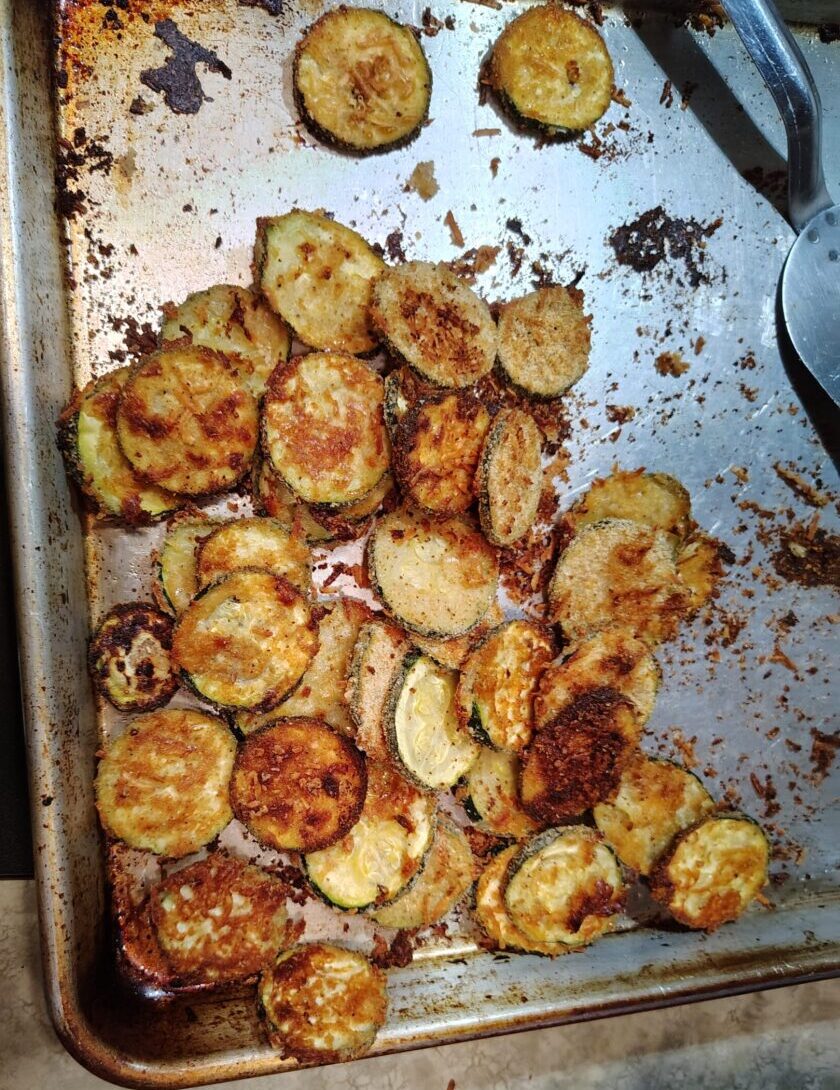

Rampant Consumerism
I bought a bunch of knee-high compression socks since my doctor recommended that for me (I have varicose veins and all my blood likes to flee to my extremities, so the socks will help that from getting worse). I’m not really thrilled about wearing even more clothes in this warm weather but, alas, the things we do for our health. One of my friends recommended Wellow because they have socks for wide calves. They are actually quite cute and comfortable. They’re doing their job just fine but I wish I didn’t need so many things. Wearing the tall socks makes me want to wear shorter shorts. Something has to give! I do feel fairly ridiculous now though because I’ve got the compression socks, braces, and I’m often now wearing my carpal tunnel brace during the day because my carpal tunnels are all fucked up. When will I be released from this mortal form and get to exist as a being of pure light and energy? (note: this is a joke and not a death wish, please don’t get it twisted).
Moving It
I’m proud of myself for actually working out in the garage a few times over the last two weeks. Having a fan out there helps a lot. We also have overhead lighting in there now so I did an evening workout, which was nice and cool. The only bummer right now is that my knee has been bothering me (the so-called “good” knee, in fact). I’ve been trying to find ways to work around that and still use my equipment. I tried doing some Romanian deadlifts, which are a straight-legged lift, instead of original-flavor deadlifts and that worked well. I’m hoping the heat won’t get me down too much this summer and I’ll be able to keep at it. Please send cooling thoughts.
squat setup
Kitchen Witchery
I’ve been trying to eat more vegetables and, since I can’t eat anything without cooking it (thanks to my difficult body), this requires some planning. I made a couple of new vegetable dishes over the last two weeks. I’ve picked things that are a little more involved than just roasting vegetables because I’m trying to keep myself interested. To that end, I made roasted carrots with whipped tahini. I liked these quite well. The carrots are topped with a mixture of tahini, yogurt, and seasoning, along with some pistachios and dill. I also made this herbed summer squash and potato torte, which was easier than I thought it would be, probably because I used the mandoline for slicing everything. I liked it but I think it needed a little more seasoning, or maybe I just didn’t use enough herbs. I think I would also make it a little smaller next time because I did get sick of it after a few days.
For regular dinner meals, I returned to one of our standbys, spicy peanut soba noodles and green beans. I’ve shared this before but I want to note that this time I paired it with some baked tofu, which turned out to be a very good choice. It made the meal more filling (I usually make pot stickers to round it out, just the frozen ones you can buy at the store). In new-to-me recipes, I made Tunisian chickpea soup from the Cool Beans cookbook (although I am sure there are many versions of it out in the world). We liked it a lot. Kirk really enjoyed it but I think he just likes anything with harissa in it. Because I’m always cooking beans, I tried the NYT’s pesto beans recipe and served that over some noodles. I also made a red onion, broccoli, and blue cheese tart to accompany it to make sure there were some more vegetables involved. Finally for the fourth, I just grilled some hamburgers and vegetables. I’m eating corn off the cob since my teeth are kind of sensitive thanks to these braces.
roasted carrots with whipped tahiniherbed summer squash and potato tartpeanut noodles with baked tofuTunisian chickpea souppesto beans with noodles; onion, broccoli, and bleu cheese tartall-grilling meal
Cat Therapy
Finally, here are some cat photos for your nerves. This poor baby was very scared of all the loud explosions on Friday (and Saturday because our neighborhood is nuts) night. I was surprised because, in years past, the firework hullabaloo has not seemed to bother him. He spent the evening dashing around between under the table and under the bed, plus spent a little time tucked under the blankets in bed (though once the noise got too aggressive he did flee for safety).
Hello, friends and enemies. I’m happy to report that my braces are starting to hurt less. I was very stressed out about it last week but, after a few days, the pain went down, although my mouth is still a little sensitive. It’s been two weeks so I have switched to the next set of aligners. I was worried that they would hurt as bad as the original set did, but thankfully it doesn’t. I’m uncomfortable but not to the point that I feel like it’s not worth taking the braces out to eat, which is what I was afraid of. I’m still not thrilled about the whole ordeal but body maintenance is never ending.
next round of braces
Current Events
I had been mulling over another topic entirely but the US has officially started bombing Iran, so we shall save it for another day. This isn’t going to be my most organized and well thought-out essay, just some thoughts as our idiot president formally kicks off World War III (currently still described on wikipedia as a “hypothetical future global conflict”).
Al-Jazeera reports that the US has bombed three cities in Iran, including Isfahan, which, in addition to being home for almost 4 million people, is the location of one the most famous pieces of Muslim architecture, the Shah Mosque. I’m so tired of this country running endless wars in the middle east. People online have been joking about how this is a repeat of the Iraq war, with just one letter changed and I can’t disagree. It’s okay to leave Middle Eastern countries alone, actually.
The US military used B-2 stealth bombers to carry out the attacks. Each of these planes costs $2 billion. This is what our country is spending money on. Meanwhile, for just one example, in the US we have a child poverty rate of about 14 percent, which more than doubled after the expanded Child Tax Credit (part of the American Rescue Plan Act in 2021) expired since the government chose not to renew it. Granted, it would cost more than three B-2 planes to lift America’s children out of poverty, with an estimated $1.6 trillion to make the expanded child tax credit permanent. Still, this country, when given the option to prioritize its citizens, chooses global hegemony and violence every time. Experts estimate that the US spent $3 trillion on the war in Iraq. The war in Afghanistan cost $8 trillion. How much will a pointless war in Iran cost? We seem to have money for everything except the things that would improve conditions for the people who live here. I hate that my tax dollars get funneled into killing people and destroying things in other countries.
I guess I’m not surprised that we’re at war with Iran since Trump seems to be obsessed with it. There is, of course the classic tweet from 2013 where Trump claims Obama will attack Iran (projection, I suppose). And does anyone else remember that week in 2020 when we were all on pins and needles wondering if Trump was going to drop a nuclear bomb on Iran? This fucking asshole just wants to bomb people. There’s also the well-documented history of Trump pushing for the US to “partner with the Soviet Union on nuclear weapons, basically for the two empires to use nuclear weapons in tandem in order to intimidate other countries.” Really cool, stable stuff here.
A classic Trump tweet
By the way, Congress has not authorized a war. I’m not sure the constitution is worth much at this point, but it is still officially the job of Congress to say whether we can do a war or not. I guess that doesn’t matter. Sixty percent of Americans don’t want a war, but we’re not letting that stop us!
Anyway, here we are. It’s the third (? Or maybe just year 22 of the same) Middle East war in my lifetime. Why the fuck are we doing this again.
estamos jodidos indeed
Books and Other Words
Claiming the B in LGBT
You probably won’t be surprised to learn that I found Claiming the B in LGBT: Illuminating the Bisexual Narrative edited by Kate Harrad on the shelves at the Lavender Library. It’s a collection of essays on topics related to the bisexual experience and most of the essays feature anecdotes from bisexual people who seem to have participated in a survey at a bisexual convention in the UK. I’ve appreciated getting some perspective from bisexual literature lately because I didn’t realize I was bisexual until a little later on and I’m obviously in a committed heterosexual relationship, so I have felt somewhat out of touch with it all. However, it seems to be a very common experience to not realize right away that you’re neither straight nor gay and that can be a shock to one’s identity. The book takes on a lot of subjects, beyond simply discovering one’s sexuality and coming out, that intersect with bisexuality like race, disability, and aging. One comment that stuck out to me from the chapter on disability was that “a concern for lots of the disabled bi people we talked to was that having more than one label will make people think they’re trying to be too special. This is hard when society already tells you bisexuals are greedy and attention-seeking.” That’s so true. It can feel like asking too much to have people take in more than one facet of me that’s not the norm. I don’t really believe that, and I think I deserve to be accepted in all my strange and derivative ways, but out in normal culture it doesn’t always feel that way. In any case, this is a good read if you’re looking for a pulse check on what bisexuals are thinking about.
The Lover
I read Marguerite Duras’s The Lover for an online book club that one of my friends was participating in. I ultimately didn’t join the book club but wanted to read along with my friend! This is kind of a weird little book. The prose is haunting and the story is told through the dreamy haze of trauma. The Lover is autobiographical fiction about Duras growing up in what is now Vietnam (and what was then French Indochina) with her mother and two brothers. The unnamed main character goes to a French school and spends most of the narrative talking about her family being shitty and her assignations with her “lover” (also unnamed), a wealthy, young Chinese man. Notably, a man who is almost 30 while the protagonist is 15 or 16. So … gross. It’s not really clear why the protagonist decides to spend time with this man other than a spirit of contrariness. It doesn’t seem like she particularly likes him, or even men at all; the only named character in the story is her dorm-mate, about whose perfect breasts she rhapsodizes for at least two full pages. So, that’s certainly a choice.
You sound like ChatGPT via The Verge. Using large language models like ChatGPT is changing how human people talk to each other! ChatGPT seems to have some favorite words and they are now in more frequent rotation among humans. This part made me laugh: “researchers suspect that AI influence is starting to show up in tone, too — in the form of longer, more structured speech and muted emotional expression.” Congratulations AI, you are making everyone sound more autistic. We salute you.
Corporeal Form
I ended up going to the doctor this week and I was extremely surprised to have found someone who seems to really be paying attention. Regular readers may recall that I have been struggling to find a good primary care doctor. I liked the one I had over the last year, but she left Kaiser so I had to pick someone new. Fortunately, I seem to have made a perfect choice this time and the new doctor is even better than the last. My appointment lasted almost an entire hour, which is simply unheard of. I made the appointment because in dance class this week, I was feeling so warm and lightheaded that I thought something must be wrong. However, the doctor seems to think I’m just a certain type of white person with a very low tolerance for heat (what a great time to be alive for me then, lol). Before we talked about that, I told her I wanted to review everything going on with my body. I made a list on my phone of all the ailments and it low-key sounds like the disclaimer section of a prescription drug commercial. The doctor actually had follow-up questions about my ailments and referred me for some tests! I mentioned osteopenia and she asked me how I knew I had that. It came up in a test result years ago but apparently never migrated to my chart. She said I am young for osteopenia and I sighed because I’ve been hearing “You’re young for that” a lot lately. However, this doctor actually took the next step and wondered why a relatively young person has osteopenia and referred me for some tests. What a crazy idea! I am hopeful that I can get some better healthcare now.
When I got my labs done for the osteopenia stuff I also had to get a test for my liver enzymes, which one of my doctors is monitoring now because of the fatty liver situation (by the way, “fatty liver” is being rebranded as “steatotic liver disease,” nice of them to not just put fat in the name). In March, my enzymes spiked for no reason known to me. The doctor in charge of my liver, who is unfortunately a specialist and not my new, good doctor, told me to test again in three months and asked no additional questions. Well, test results show that my enzymes are still going up sharply. I’m not sure why but it is stressing me out because I’m trying to manage it with eating certain foods, taking an omega-3 supplement, etc. I’m certainly not drinking alcohol so I don’t know what’s happening. I’m not looking forward to talking to the doctor about it because the only thing she has ever told me to do is lose weight, but according to other medical professionals, that isn’t the only thing to do. In fact, my new doctor told me that refined sugar is bad for the liver. This sounds obvious now that I hear it, but no one had actually told me that before. Might have been nice to have this kind of information! I’ve been fairly stressed and upset about this. It’s hard to try really hard to take care of myself and simply not have it work.
Moving It
Given all the health stuff, I feel like I really need to get into a positive feedback loop and start lifting weights again. I am at dance class three times a week but I know—and my doctor emphasized this for me—that resistance training is the main thing I can do to take care of my bones and my body. It’s hard though because I am tired, but I think I will have more energy if I have more muscles. Unfortunately, that means I have to just do it tired for a while. So, for what feels like the fifth or sixth time now, I went out to clean the garage and make it habitable for gym activity. For my birthday, my dad sent me a huge fan for the garage gym and I finally got that set up. It seems like it really moves some air! We also cleaned the garage and moved the stationary bike/rower that was in our bedroom to the gym. We haven’t been able to use it because Fritz craves violence and bites the foam seat if he has a chance. I’ve had it all mummified in blankets, which of course makes it deeply inconvenient to use, so I have not. I’m hoping it will be easier now that it’s in the garage, especially since Kirk set up a TV out there. We have a great setup, I just need to use it.
my biggest fangarage gym status reportchomp
Kitchen Witchery
I usually try to avoid re-posting recipes or only posting new or novel food but that’s left me without much food stuff to talk about since my repertoire is getting pretty big. So, here’s some kind of basic but good food. I am still making snow cones. This week, I tried root beer flavor and I liked it. Kirk hated it but that’s okay. It’s a polarizing experience. On Friday, we had Mandy and her daughter over for dinner so I grilled tri tip, using a recipe from Latin Grilling for a chili rub and honey-lime glaze and we enjoyed it. I also made rice krispie treats with rainbow sprinkles.
root beer shaved icetritip dinnerrice krispie treat season
Cat Therapy
Finally, here are some cat photos for your nerves. He’s been really into hanging out in his carrier lately. I put it under a table in the bedroom and he seems to think it’s the ultimate spot for being left alone.
under-the-table timestretchingcreepinjust a little baby
Hello, friends and enemies. One of the ways I keep track of things I see online has been with Pocket, which I use as something like a temporary bookmark station but it can also function as an archive of stuff you read and find interesting online. Unfortunately, because we don’t get to keep anything good on the internet, Pocket announced it’s shutting down. Well, they say it’s becoming a newsletter or something to deliver “the same high-quality content.” That’s cool and whatever but that’s not what I need. It reminds me of the death of Delicious in 2011, which was an earlier bookmarking tool. They don’t want me to keep an archive of things I read! Conspiracy! I kid, I kid. It’s just very annoying to try to keep a record online when these websites keep deciding there’s no money in … bookmarks. I am not sure if I’m going to start using regular internet browser bookmarking, or perhaps leave tabs open (god help me). If anyone has a good suggestion, please pass it on.
Current Events
I had been thinking for the last few weeks about getting into some discussion of covid and what we know, since that body of knowledge has of course evolved a lot in the last few years. We’re now seeing that a new covid variant, NB.1.8.1, has emerged and there are cases in California, so it seems like a good time to take a look. One reason I wanted to read up and share my thoughts on this is because I am still masking in public places as much as I can. So, I asked myself, am I right to still mask when so many people don’t? If you don’t want to read the rest of this, the short answer is yes, as far as I’m concerned, wearing a mask is still an important way to protect yourself and others from covid, and covid is a lot more serious than just a cold or even the flu.
The FDA recently announced that it will be limiting who can get vaccinated for COVID to “people over 65 or with at least one chronic condition.” Your Local Epidemiologist explains that, while it does sound scientific to say manufacturers “must run a new placebo-controlled trial after a variant arrives,” this contradicts current scientific practices. Scientists don’t run a controlled study with placebos on every iteration of a vaccine because it’s slow and unethical (imagine giving someone a placebo vaccine, that person now thinks they’re vaccinated but they aren’t! You can’t do that!), and because new vaccines are based on previously studied, safe, old vaccines. One good thing is many people will still be able to get vaccinated because the CDC says you can get it if you have one of many chronic conditions like asthma, fatty liver, depression, or you’re just fat (it’s once again a great time to be fat lol). Still, the fact that fewer people will be receiving updated vaccines makes me think it will be more important to mask to try to protect each other.
While the vaccine is important, it’s not the ultimate weapon against covid. The vaccine meaningfully reduces the most severe effects of covid, like hospitalizations, but unfortunately isn’t as effective as something like the polio vaccine is against polio, which allowed us to essentially eradicate the disease. Even though the vaccines don’t do it all, they are an important part of reducing the risk of long COVID, which is, to me, one of the scariest parts about the disease. A piece of research that has stayed with me is that every infection increases the risk of long covid. This contradicts the popular belief that getting infected with covid “builds immunity” (it doesn’t). The study followed over 138,000 US veterans who had covid over the course of two years. The findings showed that covid has a “cumulative” effect, and “the adverse health effects from two infections are worse than one, and three infections worse than two.” As dire as that sounds, I do think one optimistic thing here is that it suggests it’s never too late to start taking covid precautions. If you’ve had covid three times, trying to avoid a fourth round is still important and could be the difference between you and long covid.
The World Health Organization reported that it is observing increases in covid rates worldwide, although currently rates are “relatively low” with 4.8% of samples testing positive for covid. I am not a doctor or public health expert but I feel like one in twenty cases is still a lot. Those are not odds I trust when it comes to my health. The increase in cases may be due to the new NB.1.8.1 variant. Bloomberg reported last month that covid is “spiking” in Hong Kong and Singapore “Severe cases – including deaths – also reached its highest level in about a year.” Cases are also increasing here in California according to L.A. County wastewater data, which is basically the only reliable source of infection rates now. This may lead to a “summer surge” in covid cases.
This is as good a time as any to remind everyone that Biden ending the “COVID-19 national emergency” two years ago was not a declaration that the pandemic ended. All this did was end federal support for covid from an administrative perspective, basically letting the government off the hook for paying for things like testing. No one has ever said that covid is over! Shortly after, the CDC also changed how it reported covid rates, getting rid of the color-coded map that showed infection rates by county. This makes it harder for regular people who are not chronically online like I am to figure out what the fuck is happening and how risky covid may truly be.
I want to be clear that I’m not writing this to make anyone feel bad about how they have dealt with covid. It’s a very personal choice, although the consequences of our individual choices are intertwined. The pandemic is, unfortunately, a group project. I’m writing this for myself and my own records, in part. It’s good to check in with one’s biases now and then. I’m also writing it for anyone who is feeling confused or overwhelmed with covid in the last five years (presumably all of us). It has been difficult to navigate and figure out what is the safest choice, especially since covid is a novel virus, so no one knew what to do at first. I also think it’s important to document what’s happening with covid amid the unhinged rhetoric about vaccines, given that people in our government are promoting the conspiracy theory that vaccines cause autism, which I wrote about at length a few weeks ago. The same people erroneously pushing “herd immunity” are the ones telling us vaccines cause autism. Yet, per the The Gauntlet newsletter, “The problem is that we cannot achieve herd immunity to COVID—ever. Herd immunity would mean long-term, durable protection from infection, like we have for viruses like measles, mumps, and rubella.” Herd immunity for covid simply does not exist.
The talk of herd immunity and the “vaccines cause autism” lie are features of eugenics, which seems to be the defining philosophy of our current government (perhaps the current era), and even of the Biden administration, given that he did not exactly promote robust covid mitigation strategies. I am once again going to boldly (selfishly?) come out and say that I don’t think some people should have to die because they’re disabled or have autism or a weaker immune system. The hallmark of a functioning society is how it takes care of the people least able to care for themselves. The government shouldn’t just decide that it’s fine for thousands of people to die because responding to a pandemic is too much work. Yet, that’s exactly what it has done. Masking up and taking covid precautions is a way that you can demonstrate real care for the people around you, which is increasingly important in a society that does not seem to care.
Books and Other Words
Unshrinking: How to Face Fatphobia
In Unshrinking: How to Face Fatphobia, philosopher Kate Manne discusses societal forces that make people, especially women, feel like being physically smaller is a moral imperative. Manne begins with discussion of fatphobia and some research on what we know about weight loss. This isn’t news for me but it feels like a gut punch anyway: “there is currently no known reliable, safe, and ethical way to make fat people thin.” You can surgically remove half of your stomach, but even then people may not lose much weight, plus bariatric surgery is relatively high risk considering it’s elective. Manne also notes that “several studies indicate that dieting is actually a consistent predictor of future weight gain” and “it appears that weight gain is the typical long-term response to dieting, rather than the exception.” So everyone who has ever told a fat person to try to lose weight can shut up. One of the saddest parts about fatphobia that Manne chronicles is that fat women, in particular, are taken less seriously and assumed to be stupid and incompetent, which she illustrates with personal experience as an academic and with research that has repeatedly found things like teachers assume girls with a higher body-mass index (BMI) to be “less able readers.” Which, god damn. Children. Another study found that “defendants in a fictional court case were significantly more likely to be judged guilty if they were fat and female.” This stuff is just hateful. I hope I never end up in court. I won’t get into everything I took from this book because there is a lot of good stuff. It’s full of thought-provoking perspective on being fat and, more importantly, how fat women, in particular, are perceived in society. I highly recommend reading it.
A Choir of Lies
Alexandra Rowland’s A Choir of Lies is the sequel to A Conspiracy of Truths, which I read in April. A Choir of Lies focuses on Yfling, whose teacher, Chant, abruptly liberated him from his apprenticeship a year or two before this story begins. Yfling is writing account of his recent stay and in Heyrland, a place roughly analogous to Holland, and his role in events that are a fictionalized version of tulip mania. I like Rowland’s work a lot so I’m not surprised that I liked this one too. It’s ultimately a coming-of-age story, with Yfling trying to figure out who he is and how he wants to use his abilities in the world now that he’s on his own as an adult. I don’t have any deep thoughts about it, so there you have it!
Meanwhile, on the internet:
Nick Clegg says asking artists for use permission would ‘kill’ the AI industry via The Verge. First of all: good. Second: Nick Clegg is both a former Meta executive and former UK deputy prime minister. He is basically admitting that the only way to make “artificial intelligence”—though we’re really only referring to large language models here—is to steal artists’ work. It’s bonkers that you can make a company founded on stealing intellectual property, but at the beginning of this century, record companies were literally suing children for sharing music files online. So, it’s cool when a corporation does it? I think that’s what we’re learning here: it’s fine to steal when you’re rich.
The Human Workforce Behind AI Wants a Union via The Nation. Speaking of AI, here’s your regular reminder that AI is far from a finished product and still requires thousands of real human people working behind the scenes to train it, or, in some cases, to function as a Mechanical Turk. It’s a hard job and every corporation seems hell-bent on making it as miserable as possible on top of that.
Admin is crashing out via Read Max. In this newsletter, Max Read explains the current Trump–Elon drama through the theory “that what we think of as ‘social media platforms’ are mostly just million-user message boards, and as such retain–especially among the most frequent and visible posters–many of the ancestral folkways, customs, and cultural conventions of their forum forerunners.” This made me laugh but it’s true. Internet old-heads know that this is just classic internet drama dressed up for the 2020s. Read goes on to state, “I want to underline that this is more than just another example of the ongoing and near-complete convergence between ‘electoral politics’ and ‘television entertainment.’ It is also an example of the ongoing convergence between ‘electoral politics’ and ‘forum drama,’ driven by the overwhelming mediation of politics by various message board-like social-media platforms.”
Why Protests Should Be Promises via Time. I liked this reminder that protesting has to be backed by a coherent demand. It’s not enough to be in the streets for its own sake. Táíwò writes “for protests to succeed, they must be backed by movements with the ability to promise to withhold—labor, debt payments, rent payments, or consumer support—and to follow through if demands aren’t met. Protests by such movements consequently morph into real, tangible promises: demonstrations of an ability to escalate, backed by strategic leverage.”
Doing Things
Last weekend was very busy! My mom visited me (I forgot to take pictures but I know she got one of us and posted it on instagram) to see my dance recital. The recital was fun and I think all my pieces were really good! It was nice that my mom came to watch. On Sunday, my friend Lemon and I hosted another food party. This time, we did a garden/tea party and encouraged everyone to dress up. I got a fancy hat for the occasion. I made cheddar and scallion scones, a chocolate-caramel tart, and hibiscus-ginger punch. Unfortunately, the tart melted over the course of the afternoon and caramel was pooling all over, but before that point, it was very good. I want to try making it again (or just make and eat the caramel, who knows).
cheddar-scallion sconesChocolate-caramel tart, scones, and other garden party snacksgarden party time
Languages
I have been extremely focused on my languages over the last two weeks! I’m noticing that Icelandic is feeling a little easier lately. Don’t get confused: I’m still buried in the intermediate level, but I’ve ascended a rung or two on the ladder of fluency. I decided that, if I’m going to learn German for our trip to Eurovision next year, I want to make sure I’m putting in extra effort with the Icelandic so I don’t lose my progress. I’m still studying Spanish too, of course, but I don’t feel it’s at risk in the same way. I’ve been working hard on translating my Wikipedia articles and getting caught up on my flashcards (I was ignoring them so now there’s a huge backlog to review. Alas). Here are two articles I recently translated that have some fun details: Ketubjörg and Úlfsstaðir.
Corporeal Form
braces are here
This week I finally got “braces.” In actual fact, I have “clear aligners,” which is the non-brand name term for Invisalign (my dentist is using some other brand, but that’s the one most people have heard of). About a month ago, the dentist did 3D imaging of my mouth and sent it to a lab that models how the teeth move. They print out “trays”—basically sets mouthguards—that I’ll wear two weeks at a time. The dentist also glued little “buttons,” as they call them, to my teeth to give the trays something to hang on to (you can see them in the photo if you look closely).
I had braces when I was younger and I guess I forgot how awful they are because I’m having a bad time. Granted, I’m only two days in so I suppose it will get easier but I have been in a lot of pain. What I really don’t like is that I have to remove the braces to eat, and removing them and putting them back in are easily the most uncomfortable part since that reminds my mouth that it’s being bullied into place. It’s making me nervous about wanting to binge eat since I don’t want to take the braces out more than I have to, and of course, I don’t want to be hungry. I’m hoping I’ll figure out how to live with it all since they’ve estimated that it’s going to take 15 months to straighten out my teeth, and in my experience these things always take longer than they tell you.
Cat Therapy
Finally, here are some cat photos for your nerves.
Fritz inventing new positionsanother day of sunbathingcrazy mode