Hello, friends and enemies. I’ve been continuing my experiment of blocking (almost) every account that advertises to me on instagram. I was truly unprepared for how quickly the ads would get completely insane.

I can’t emphasize enough how much I hate advertisements. I am trying to live but I am constantly subject to the cacophony of ads and it takes up my limited mental and sensory energy. We are all being psychically assaulted. This little experiment has really made me think about how much of a waste social media can be. These ads are so jarring that it’s now uncomfortable to browse my feed.
After I got through all the influencer ladies selling me clothes from Walmart (actually some of those are still popping up. They are legion), instagram I guess assumed I should get ads they normally send to straight men about sports betting and dash cams. Once I dispatched those, the Christianity began. I’ve gotten a ton of ads for Christian products, Bible apps, and simply Israel (a primarily Jewish nation but, of course, the site of a lot of Christian belief). I was particularly puzzled by an ad for an app that says “You have 47 Bible apps on your phone. They don’t have one verse in their language.” The “them” is two African men in some form of traditional dress. Is that a problem that keeps coming up? That you might meet someone and not have the Bible ready in their language? Do you think what these guys really need is The Bible? Then started receiving a lot of ads for semaglutide medication (like Ozempic), which pisses me off in particular because I know that, at least at one point, Instagram had a setting to disable any ads related to weight loss and I did have that turned on. I’m not sure if they retired the setting or I broke it. Finally, I’ve landed in some weird conservative “wellness” space. It’s showing me ads for tallow-based beauty products and—bizarre by even these standards—some ad asking “what would happen if you put castor oil in your belly button for 30 nights?” I don’t know, girl, I would probably feel greasy?? Another ad that made me be like “I just have to log off” is one that reads “I don’t have all the answers. But I think more boys raised shirtless outdoors with guns would help.” Help WHAT exactly???
I’m not going to complain about my personal instagram ad apocalypse again (probably), but I do think it’s worth considering how much stuff we don’t even want to see that we’re beaming into our brains. Not even just stuff we disagree with or from other perspectives but true fucking garbage. There’s no way the lady asking what might happen if we apply castor oil to our navels has anything worthwhile to offer us. It’s a garbage heap, but we all go hang out at the dump every day because it’s somehow the best place to find fun and interesting things to share with our friends and we can always find a spot to hang up our best photos amid the detritus of human civilization. It’s a drag that the internet has so many cool things and has such potential to connect us, but we’re drowning in the stupidest advertisements that humanity can conceive of just because a few people decided that the internet’s whole scaffolding would be made of ad money and propelled by whatever can grab a viewer’s attention, worthwhile or not. The twenty-first century sucks so far.
Books and Other Words
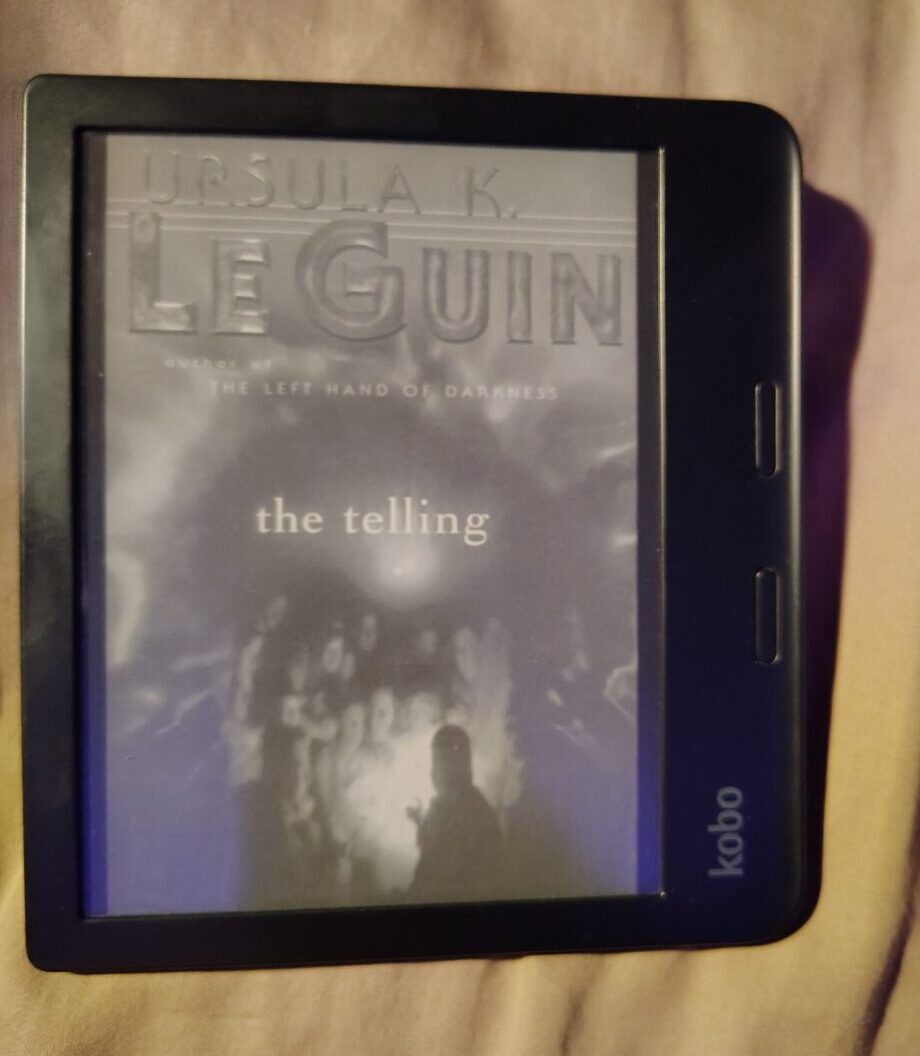
I wrapped up Le Guin-fest 2026 (for now?) with the last book in the Hainish Cycle, The Telling. This story focuses on Sutty, a woman from Earth who has traveled to another planet, Aka, to be an “observer,” a person who gets to know the local culture and report back to the Eukmen (a loose confederation of planets). Sutty’s Earth is under the thumb of a totalitarian, patriarchal regime, so she joins the diplomatic corps as a means of escape. Unfortunately, by the time she arrives on Aka (decades later thanks to the time it takes to travel through space), they too have suffered a takeover but in the form of an obsessively corporatized society in which nothing works right and all of the old ways have been banned. For the first part of the story, I wasn’t sure I had it in me to read about a woman dealing with living in an authoritarian, capitalist system (haven’t we seen enough?), but as the story progresses, Sutty gets an opportunity to go to the countryside and observe people who covertly maintain their old ways, a system of being called The Telling. This story doesn’t culminate in a big moment of standing up to the oppressor; it’s a much quieter story. The book itself even tangentially mentions that one might expect something grander. Later in the story, when Sutty is traveling to a giant, hidden library in mountains not unlike our Himalayas, she expects to find some kind of temple adorned with colorful flags, but instead finds a cave system where visitors pitch their tents and read as much of the literature of The Telling as they can before the season changes and they have to make their way back down the mountains. It is, as I’m realizing Le Guin’s work is in general, a tale to get us reflecting on our relationship to truth and how we form and perpetuate the stories about who we are.
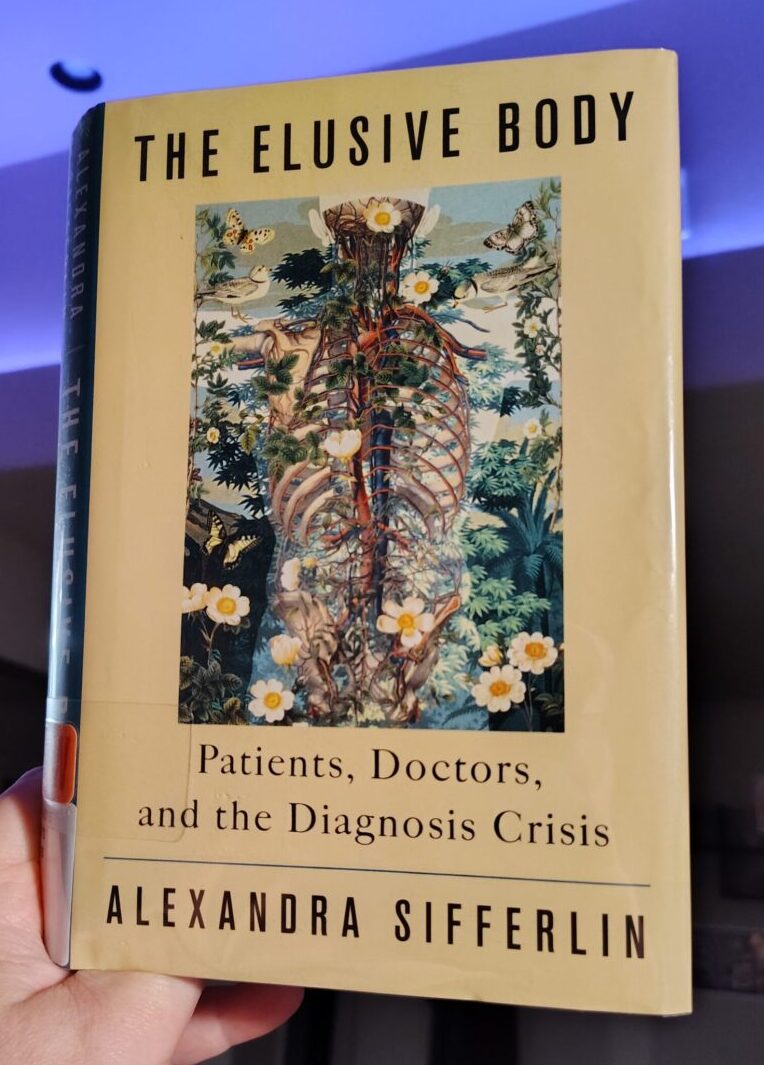
The Elusive Body: Patients, Doctors, and the Diagnosis Crisis by Alexandra Sifferlin was genuinely irritating me by the end. The book’s premise is an interesting one: why can’t doctors diagnosis people more accurately? It’s a question that’s certainly on my mind. The book opens with an unusual medical case and talks about the NIH’s Undiagnosed Disease Program, which is genuinely cool. Unfortunately, the book never really settles on a coherent narrative. Sifferlin is a reporter for The New York Times and her newspaper experience is evident in the way she writes. Most of the book seems like it comes in article-length chunks that don’t always connect. Sifferlin repeatedly writes compelling hooks, introduces new characters, then kinda forgets about them when she finishes making the point, in contrast to what we might expect from narrative non-fiction, in which the author uses one or several real-life cases to help the reader relate to the information as we move through the work.
I didn’t really notice things going off the rails until the chapter on overdiagnosis. My hackles were up as soon as Sifferlin brought up autism because why only bring it up during a chapter on people (allegedly) getting diagnosed too much? She references a 2011 study from South Korea in which “researchers found that 2.6 percent of the population met the criteria for a diagnosis despite not having one,” noting that this “suggests that many people in other populations, though undiagnosed, would still meet the American criteria for an autism diagnosis.” Now, I’m not a doctor, but I think if people are meeting the diagnostic criteria for something and are not diagnosed, that actually means we are underdiagnosing something, not overdiagnosing. But what do I know. The next chapter was almost exclusively about AI and, had I not been so near the end of the book, I would have stopped right then and there. I know I have a (deserved) reputation as an AI hater, but I can admit there are legitimate uses for specific AI in medicine. However, Sifferlin spent the whole chapter focused on only Chat-GPT, a large language model that puts words together by predicting their most likely sequence. It has no relationship to actual sources or information, so telling us that this might “one day” be the future of diagnosis neither comforts nor cheers me. The chapter uses a lot of conditional language, talking about what “could” or “might” happen, which means Sifferlin has spent over ten percent of this book (and this is the book’s longest chapter!) on technology that is not yet delivering on its promises. After spending the rest of the book talking about factors that make accurate diagnosis difficult—doctors’ communication skills and biases, training and testing, the pressures of the insurance system—it seems like a waste to end with what appears to be an infomercial for a technology that is going to do a worse job than doctors, despite their flaws.
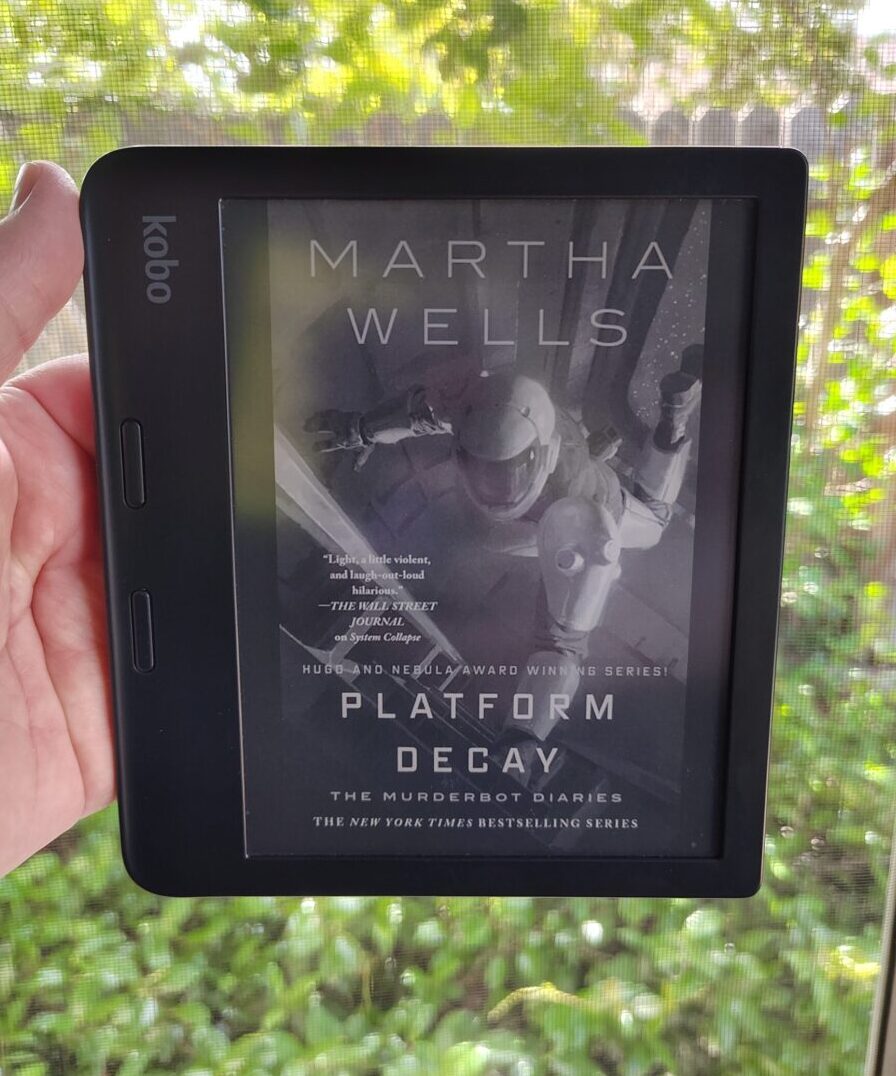
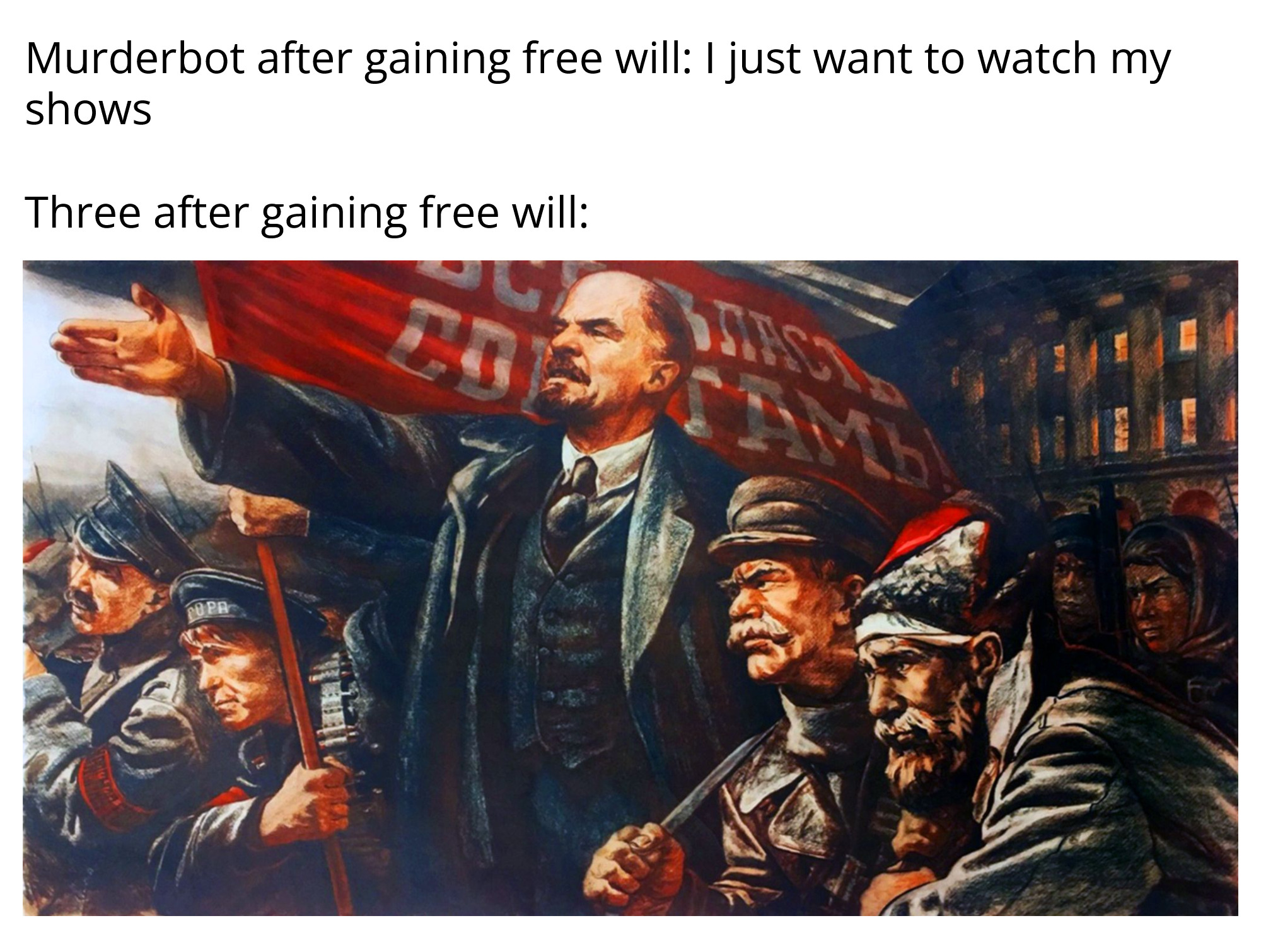
Martha Wells’ Platform Decay is the eighth installment in the Murderbot series, which follows a sec unit (a human/robot hybrid that a company owns and leases to protect human clients) who managed to hack its programming and liberate itself. Though Sec Unit (as most people call it; “Murderbot,” as it calls itself) didn’t really do anything with its freedom for years except privately watch TV and keep doing its job, until it met its current group of humans, of whom it is fiercely protective. In Platform Decay, Murderbot and fellow liberated bot, Three, go to a huge space station to rescue their favorite human’s family members. Chaos ensues. One of the funniest details of this book is that Three is off-screen passing the code for bot liberation to everyone it meets, which we know because one of these liberated bots then runs into Murderbot and tries to share the code, but Murderbot tells it to fuck off and make better fashion decisions. I wish we had a story from Three’s perspective too because the memes people have been making about Three’s possible adventures are very funny.

Finally, I finished a book in Spanish that I’ve been reading on and off for a while: El vampiro de la colonia Roma by Luis Zapata. This book was originally published in 1979 and I added it to my list after I learned of it when translating the Wikipedia article about LGBTQ literature in Mexico. Vampiro was one of the first Mexican books to openly discuss homosexuality. Although “vampire” is in the title (English: The Vampire of colonia Roma [colonia Roma is an area of Mexico City]), it’s not a book about the supernatural. The story follows a young male prostitute, nicknamed Adonis, going about his misadventures and trying to make a living. Please do not ask me for details because it’s kind of a blur. The story is written as if it’s transcribed from Adonis making a tape recording, telling the story of his life. There is literally zero punctuation in this thing and there’s a lot of slang or shortened words to represent the way someone actually talks. Once I got used to it, it wasn’t so bad but there was a steep learning curve. Something that made me laugh from this book was a scene where the protagonist was in a bathroom making little holes (literally. The Spanish is “agujeritos”) in bathroom walls and I said, hey, wait a minute … did I just learn the word for “glory hole” on context alone? When I started learning Spanish in high school, I never imagined this is where I would end up. Being alive is really something.
Meanwhile, on the internet:
- Left in the dungeon: Are rumors of a leftist LitRPG genre more than fantasy? via the Oakland Review of Books. I was gratified to see this review of the Dungeon Carl Crawler series draw the same conclusions that I have about the series: it’s charming because it’s rooted in a form of collective solidarity. I also appreciated the discussion about the history of the genre and how it’s normally very libertarian, so Carl is an interesting departure.
- The Tokenpocalypse Is Here: Companies Are Scrambling To Stop Spending So Much on AI via 404 Media. Predictable but still hilarious to see it happen. From the article, “Consulting giant Accenture is trying to figure out how to stop non-technical workers from blowing through companies’ AI token budget on trivial tasks like converting PDFs to presentation slides, according to leaked audio obtained by 404 Media.” lol. lmao even.
- Reasonable Concerns via The Present Age. Parker Molloy summarizes a decade of increasing conservatism on gender expression, culminating in this week’s Supreme Court ruling that “state can decide who gets to play on a girls’ team based on what [Kavanaugh] called ‘biological sex,'” as a road paved with “reasonable concerns.” She notes, plenty of people with these “reasonable” concerns about trans people “treated those concerns as a reason to stay quiet while the restrictions piled up, on the assumption that this would all stop somewhere sensible.” Well, it hasn’t stopped anywhere sensible and is probably going to keep getting worse. I have stupidly not been as outspoken in favor of trans rights as I ought to have been in the past, and did briefly get taken in by the “reasonable concern” crowd in the mid-2010s. I will be clear now: Trans people aren’t bothering anyone. They are just people trying to get through this stupid life like the rest of us. Our government’s treatment of trans people is terrible and embarrassing, and they are using trans people as a stepping stone for greater oppression of women, girls, and the broader queer population. This shit is trash. Everyone who cares about human rights needs to oppose this.
Rampant Consumerism
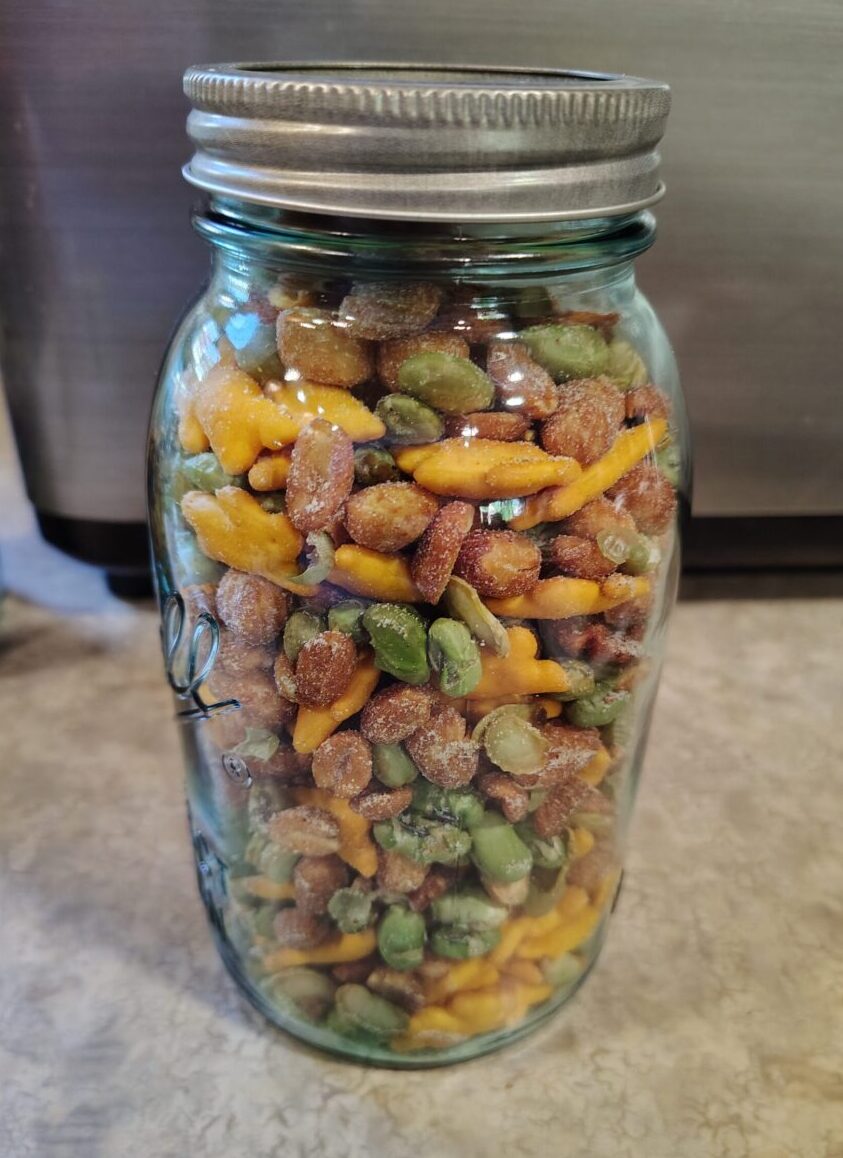
Sometime before my instagram ad apocalypse, I was getting a bunch of ads for nuts.com and their custom trail mix. I do love snacks and customizing things so, unfortunately, that did work on me after sufficient exposures. It turned out I didn’t like their custom trail mix options, but I bout some pre-made mixes and I was inspired to simply buy some stuff and make my own mix. My current snack mix is honey roasted peanuts, roasted edamame, Annie’s cheddar bunnies (those are from the grocery store; I bought a cheese cracker snack from nuts dot com but didn’t love it in my mix), and sweet/spicy pecans. Alas, the pecans are a little too spicy for me so I am going to do something else in the next batch. I was also inspired by an instagram video I recently saw that said something like “I’m ADHD and put all the snacks I like in one jar so when I don’t know what to eat, I eat that.” Honestly, she’s a genius for that. I have been leaving this snack jar on the counter in sight so when I’m like “hungry!!!!” I can just go “oh good, a snack” and it helps a lot. Highly recommend for all my neurodivergent homies.
Languages
I mentioned last time that I have been feeling uninspired about my Spanish studies and I was trying to figure out what to do next. I do yearn for grad school, but only in a theoretical sense. I realized that grad school is probably 80 percent reading (the remaining 20 percent is writing and crying) and reading is free. Why not do a solo run of a masters in Spanish? I found a bunch of reading lists for Spanish masters programs online and I’m in the process of combining them into one big list and noting which books are the most recommended. I think what I want to do is take it one author at a time, read up on them, get into their work, translate or update any relevant Wikipedia articles about them, and of course write my opinions or findings on the blog. I’m starting with Sor Juana Inés because that’s as good a place to start as any. I am accepting that this will be a slow process. When I got my masters in library and information science, I did that shit in under two years but of course now I have many things going on and I want to take time to really engage with this stuff and not just check off a list that I read the books. I will report back.
Corporeal Form
I feel so stupid just figuring this out but I recently realized that I am fully lactose intolerant (warning: incoming TMI). I haven’t been able to drink milk without getting sick for years so I guess I knew I had some issues, but I have been eating cheese and other things without much trouble (I thought!). After recently eating a fettuccine alfredo that really made my stomach hurt, I said to myself, am I lactose intolerant? I ran a few experiments and, yes I am. Although cheese and stuff isn’t making me immediately throw up like milk might, it is definitely contributing to me having to poop all the damn time (like, four or more times daily). I have started eating less dairy or taking lactaid pills when I do eat dairy and I have been pooping way less, like twice per day. This rules. The only bad thing is now I’m trying to figure out how to reconfigure my diet and it is annoying.
Moving It
I realized I had been making my workouts rather harder than necessary because I thought I should be doing my physical therapy exercises plus whatever other stuff. But no, PT is a whole workout, at least with the exercises I have now. So instead of trying to do everything all the time, I am trying to do PT plus a little extra upper body stuff since I’ve decided I’m committed to making my shoulders swole as hell. It’s very hard to find the balance of doing enough and not overdoing it, especially because I feel a lot of anxiety that my arthritis, especially, will get worse if I don’t work out. I’m hoping this recent realization will help a little.
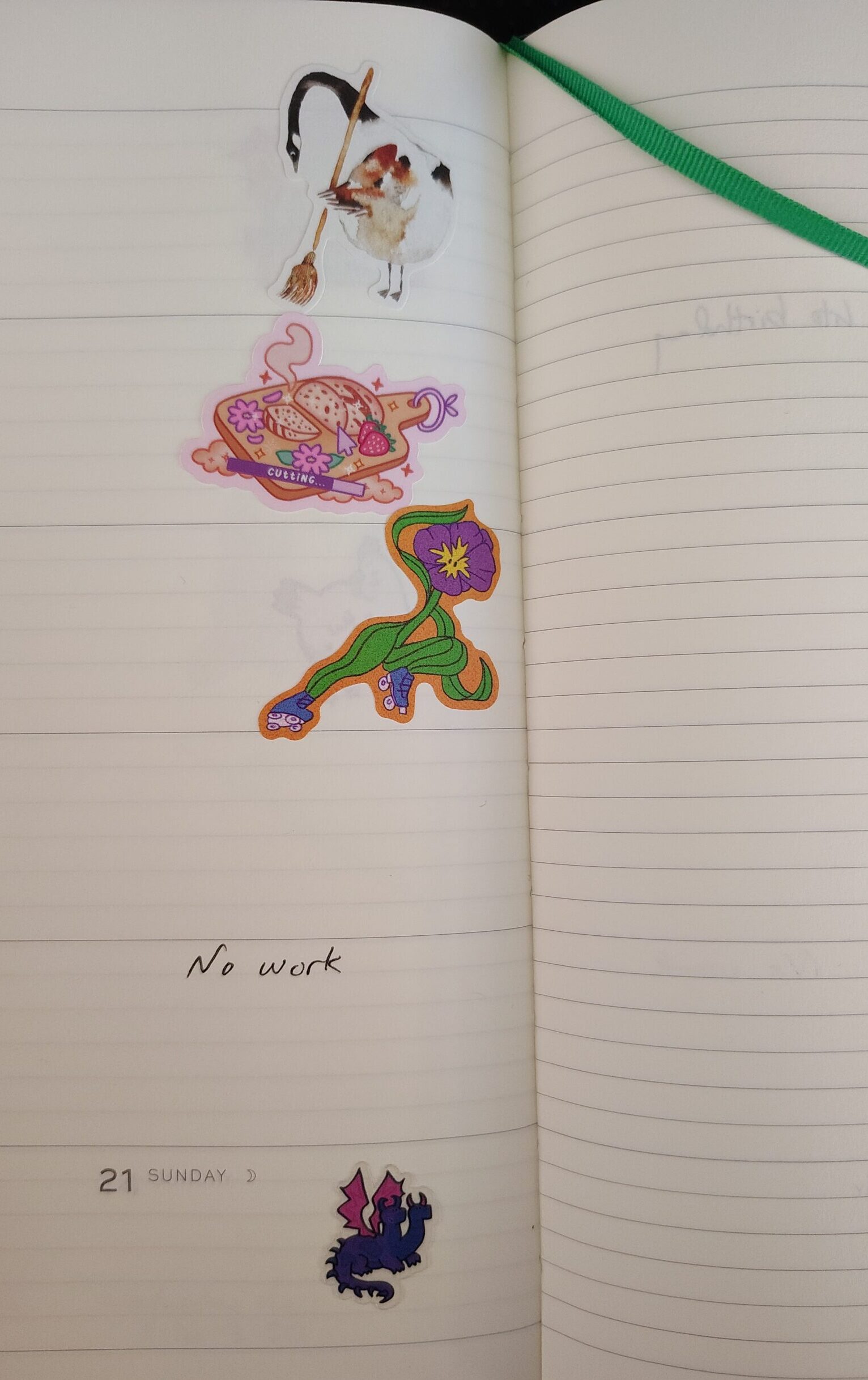
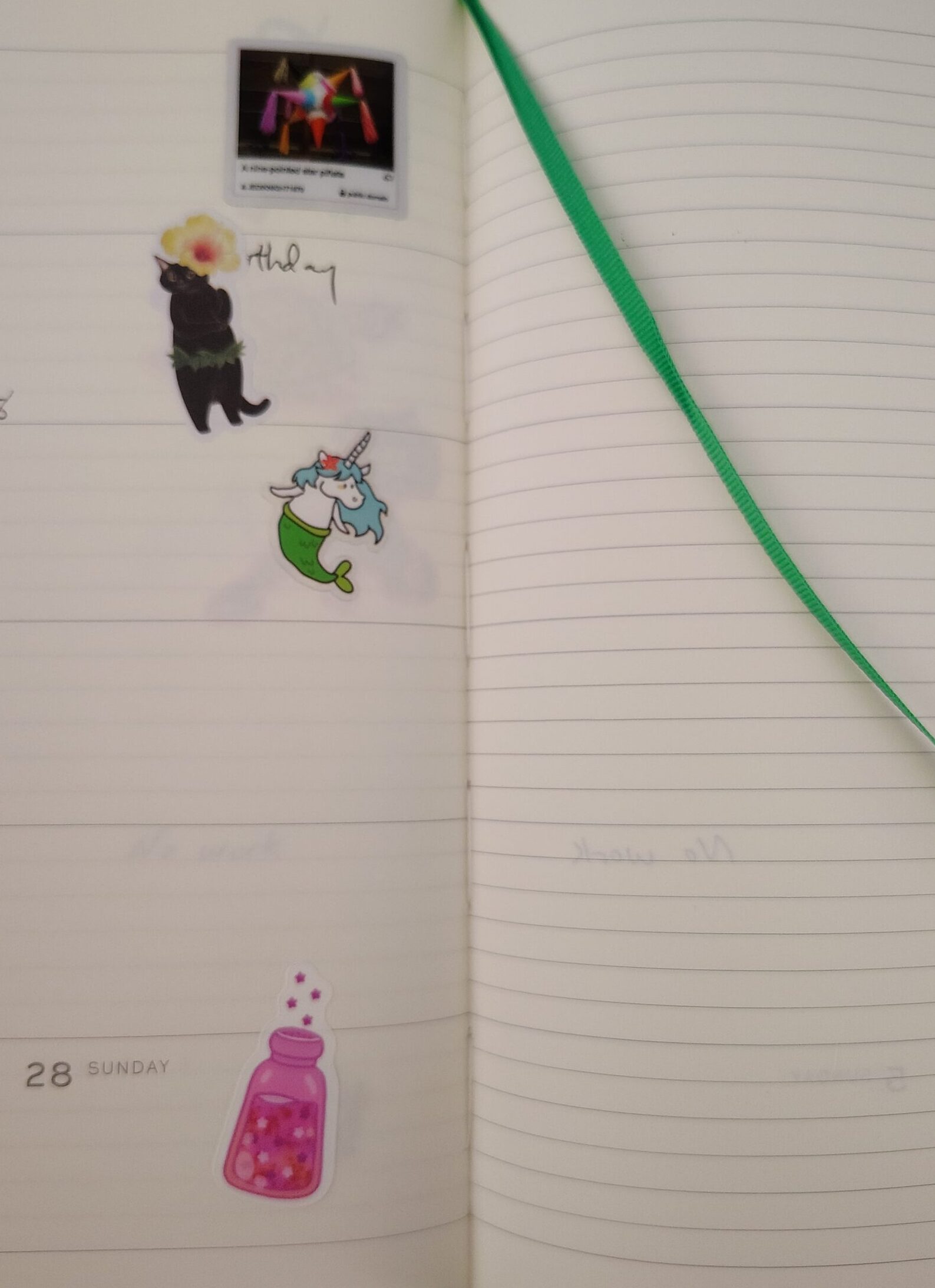
Here are the stickers I rewarded myself with for working out over the last two weeks!
Kitchen Witchery
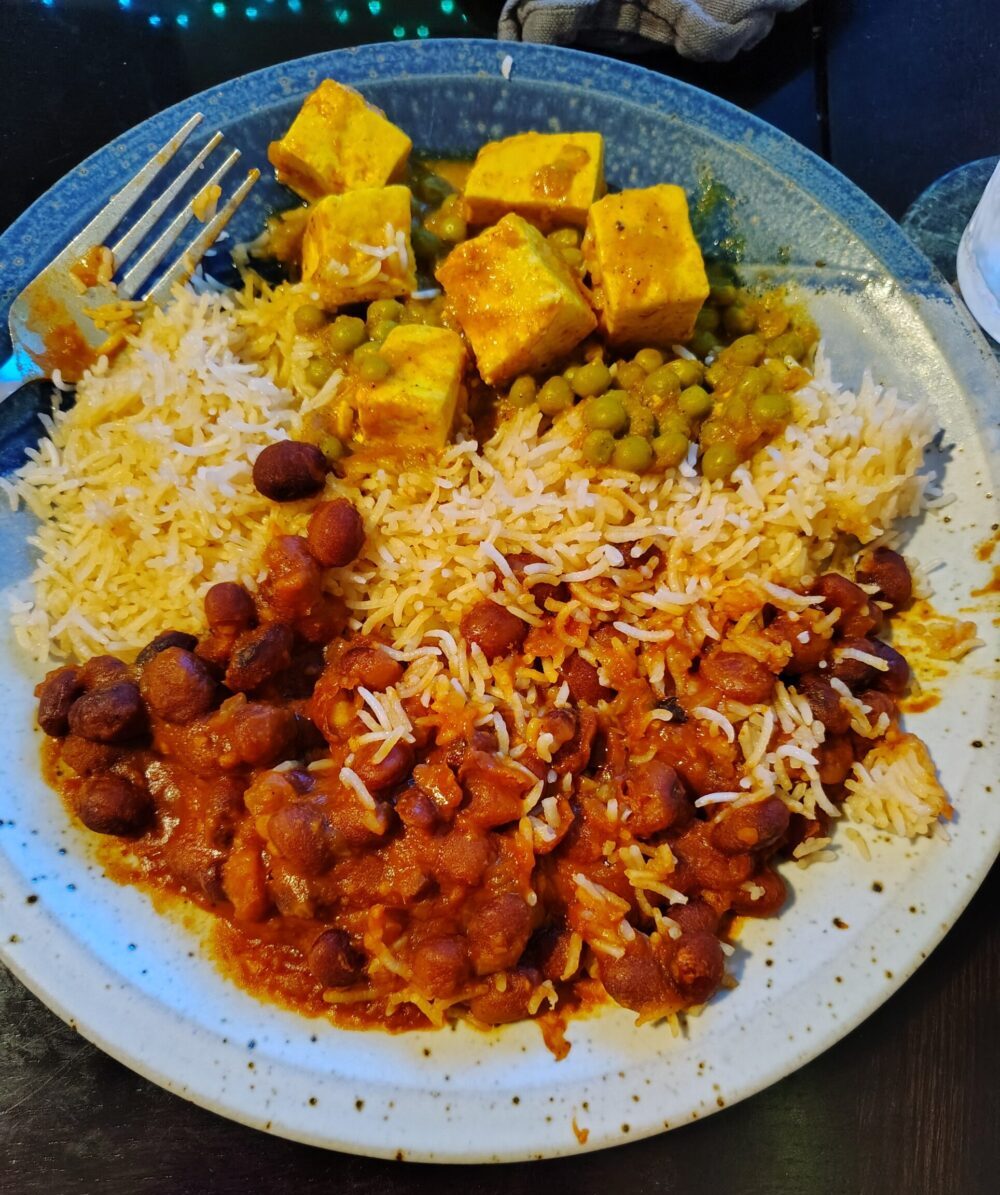
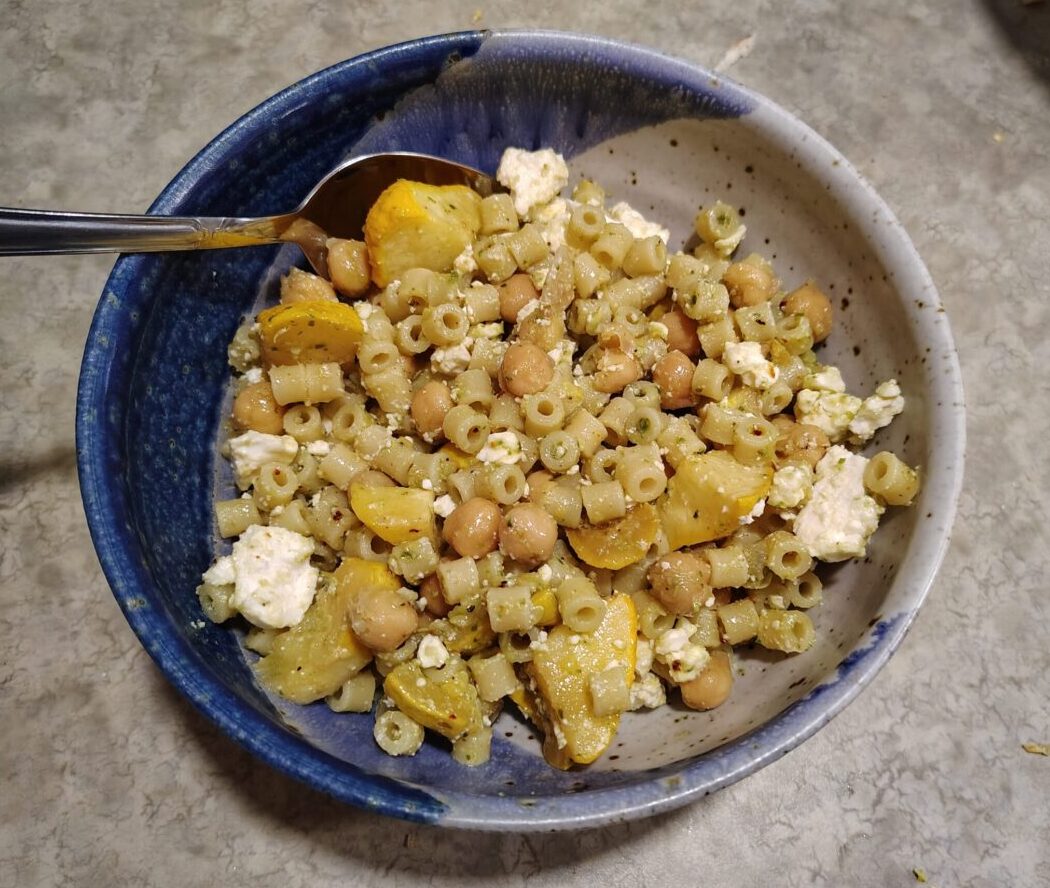
I made household favorite matar paneer (peas and cheese) from Classic Indian Cooking and we had that with a simple bean curry, which everyone liked, to round out the meal. I’ve been trying to use the large amount of squash I bought at the farmers market last week, so I roasted a bunch of yellow squash then mixed that with chickpeas, noodles, and feta for lunch over the last week. I still have some extra noodles and squash. I think I might blend the squash with some ricotta to make a little sauce. That sounds like it could be good.
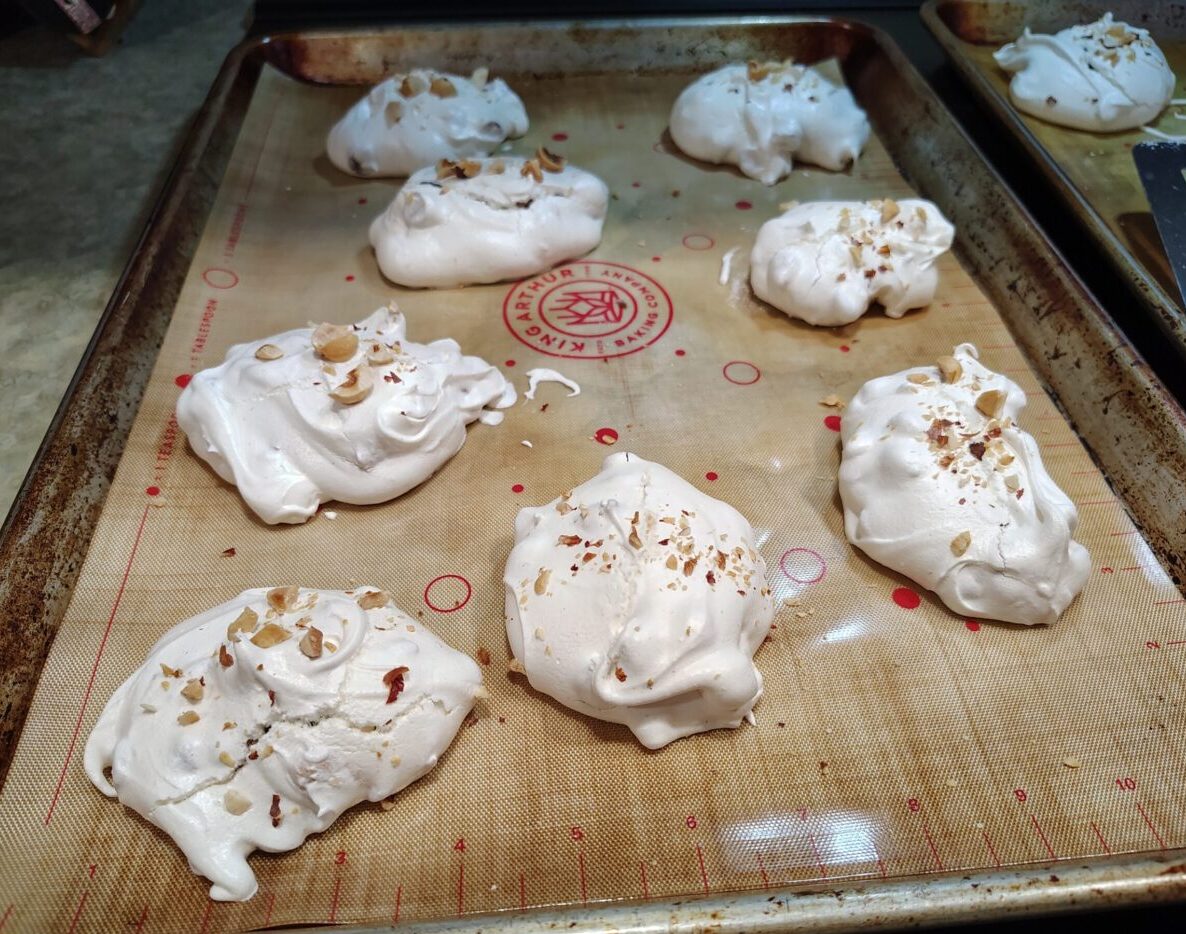
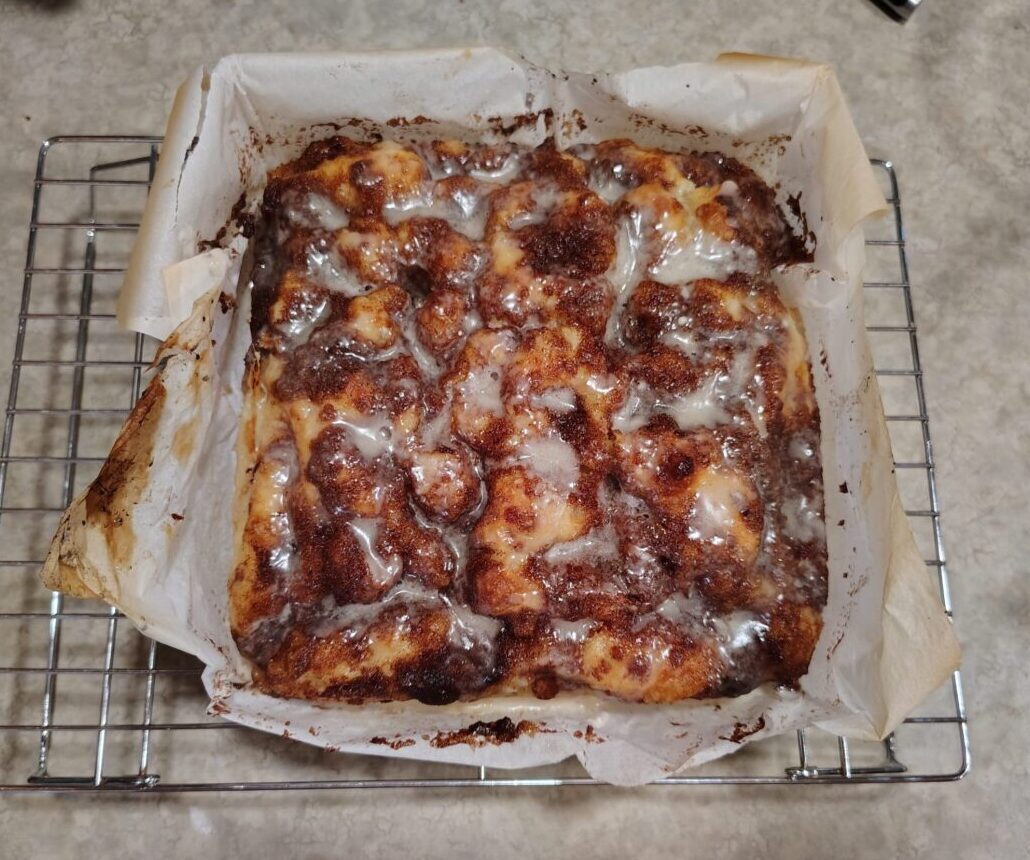
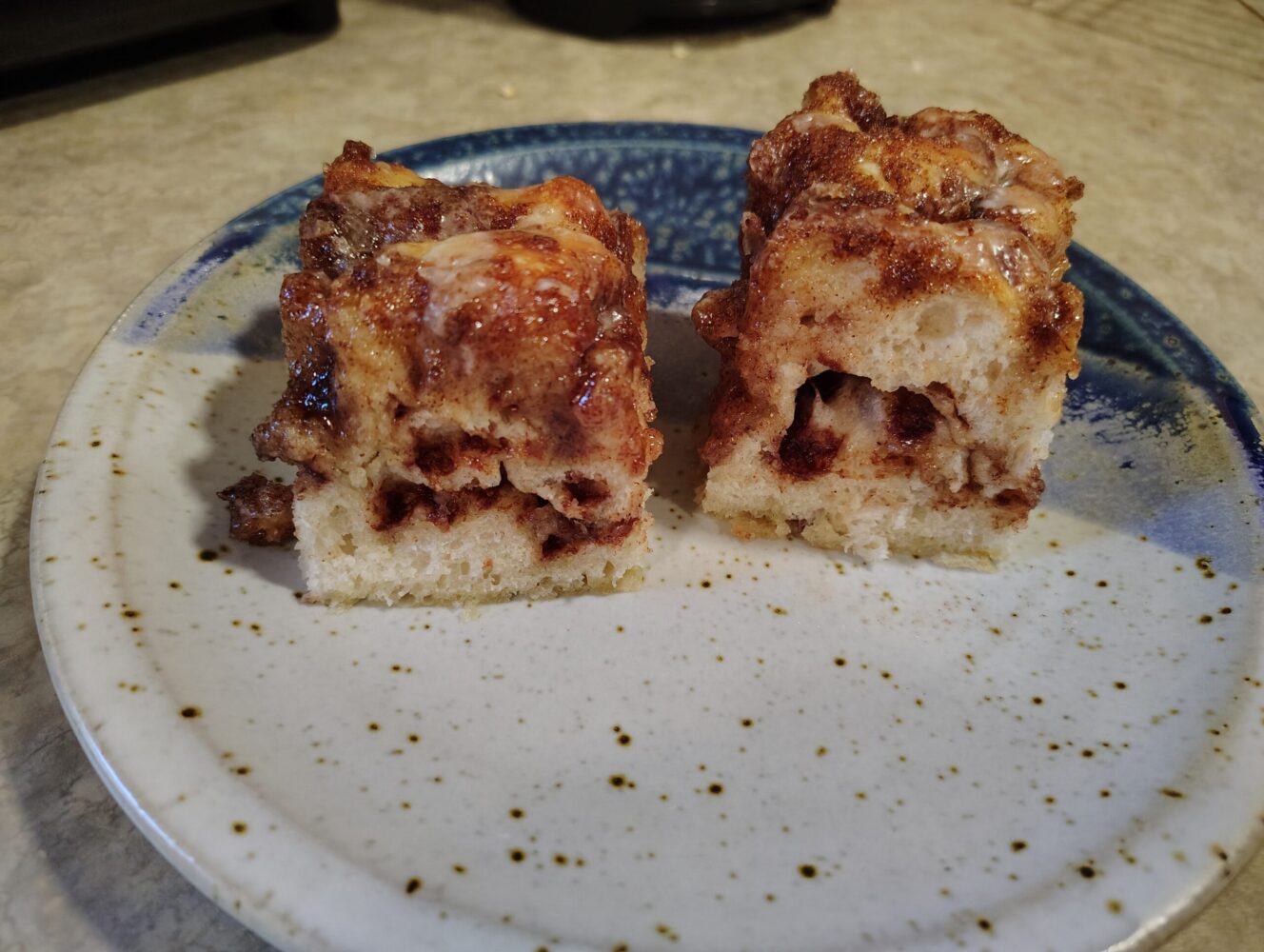
We had a bunch of leftover egg whites because Kirk made lemon bars (no pictures. This isn’t Kirk’s blog!). I didn’t want them to go to waste so I whipped up a batch of meringues. I combined the recipes for chunky hazelnut meringues (for the mix-ins) and Vermont maple meringues (for the method and quantity of egg whites), and that worked really well. They are good! I also made a cinnamon roll focaccia, which was a delight. I like that you get all the essence of a cinnamon roll without having to fuck around rolling out the dough. Kirk said he liked them better than regular cinnamon rolls, but he is only so-so on cinnamon rolls, so it’s not as big of a compliment as it sounds like. Still, it is very good and I will make it again.
Cat Therapy
Finally, here are some cat photos for your nerves.