Hello, friends and enemies. I’ve been noticing a lot of medieval stuff online lately and it got me wondering: what’s going on with that?
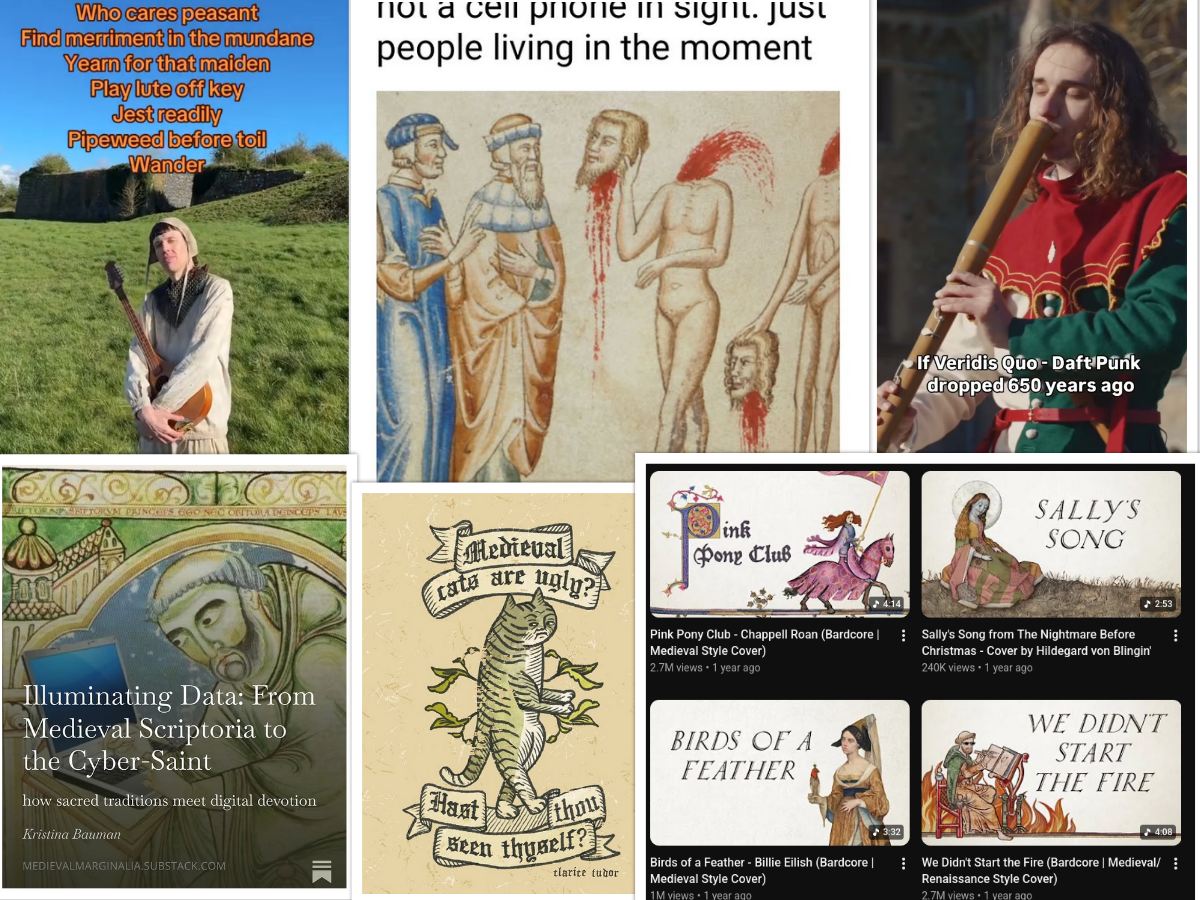
I understand that social media is algorithmic and looking at weird medieval stuff means I will get more weird medieval stuff to look at, but the fact is that many other people are making this stuff. There is something inspiring this and I’m not the first person to reflect on the subject. There’s a post from Zombie Grrrl Zine that explains that the Victorians were also obsessed with the middle ages, noting that “While class consciousness was reaching new heights in the industrial hellscape of Victorian England, an escapist fantasy was taking hold: the medieval period became a time of whimsy and freedom in the eyes of the Victorian lower class.” I think we’re seeing something similar now. People are sick to death of capitalism, of exploitation, of corporations telling them that they can train an LLM to do their job or leave (get fired now or later!). In some ways, it does sound more attractive to work the fields as a serf and potentially have more days off than you do now at the email factory. At least the serfs were doing something useful. Many of us are just out here like “I already answered this question in the previous email. Please see attached :-)” and trying to cling to any semblance of sanity. Why not inject a little whimsy into your day with some bardcore music or maybe by being a silly little jester (the amount of clowning and jestering I’m seeing online is off the charts too).
There’s a kind of class solidarity through time right now. It’s as if people are saying we have more in common with a peasant than a CEO. Income inequality is basically as high as it’s ever been. We’re using terms like “late-stage capitalism” to herald the downfall of the current order, but what comes next? As Ursula K. Le Guin so sagely noted in a 2014 speech, “We live in capitalism, its power seems inescapable — but then, so did the divine right of kings. Any human power can be resisted and changed by human beings. Resistance and change often begin in art. Very often in our art, the art of words.” The Medieval period was the last time in Western history that we lived without capitalism. Faced with the difficulty of picturing the future without a profit motive, many are embracing the past in an attempt to buck the current system. It’s easier to imagine the past than an unknown future. Medievalism may not be showing us the way forward but it is, perhaps, revealing some truths about where we want to go next.
Books and Other Words
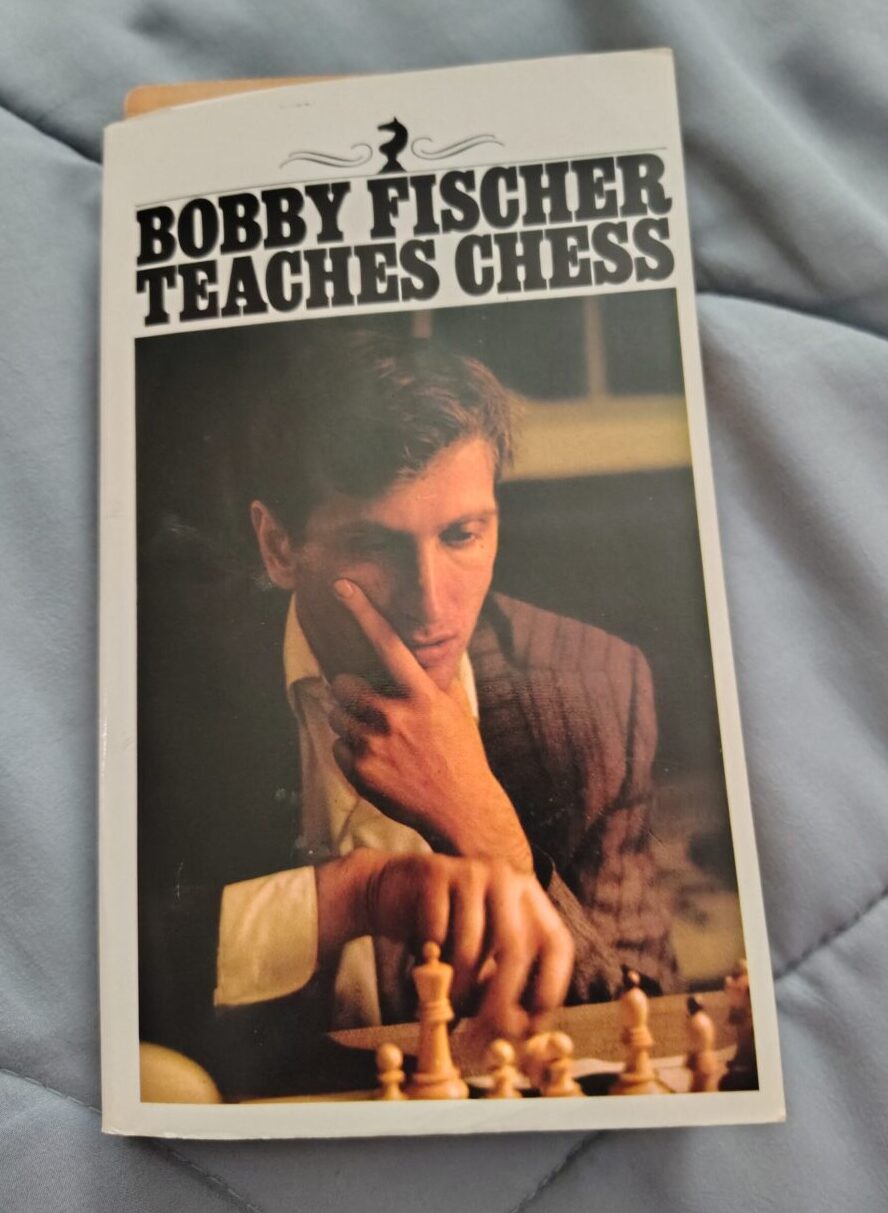
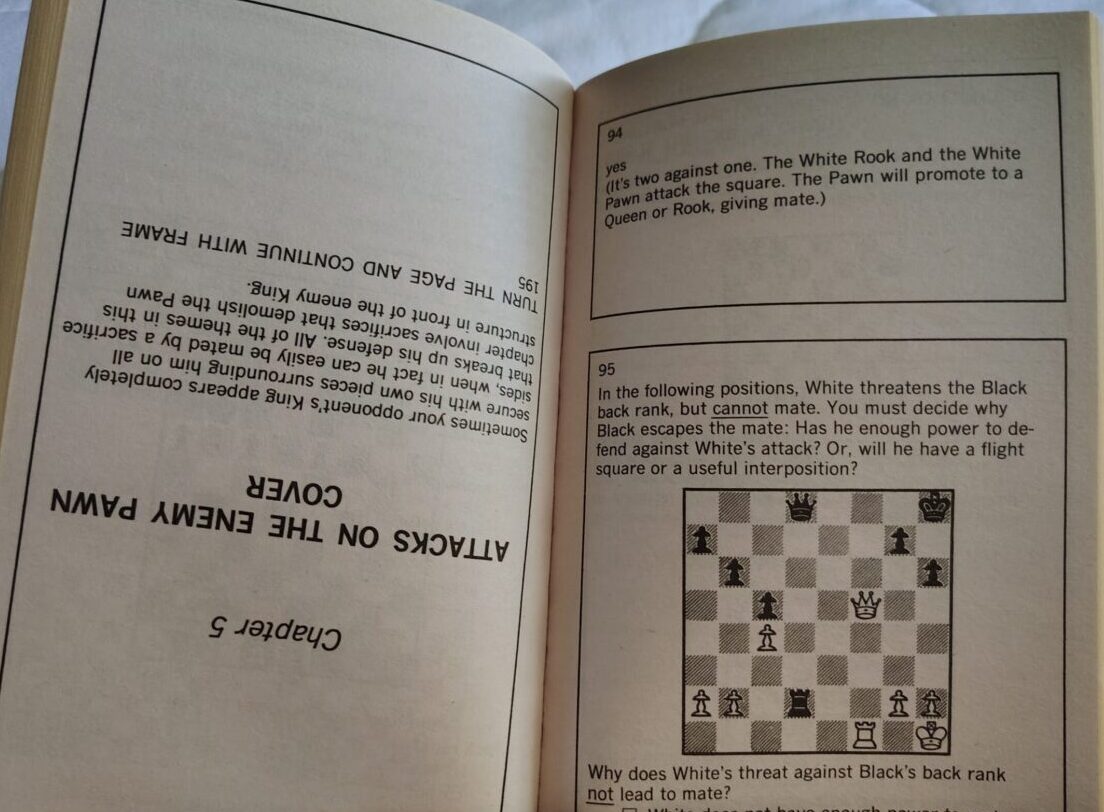
As I’ve mentioned previously, I’ve been playing chess this year (be my friend on chess.com!), so I decided to read a book about it. Bobby Fischer Teaches Chess by Bobby Fischer, Stuart Margulies, and Don Mosenfelder is certainly not written by Fischer himself despite having his name on the cover, but I don’t think that’s particularly important. Magulies and Mosenfelder use the introduction to explain that this book employs a novel concept of prompting you to complete the puzzles instead of, presumably, just lecturing you about chess. I guess this is a wild idea for 1966, when the book was originally published. After some initial explanations, each page of the book has a puzzle with the answer available when you flip to the next page. This results in the unique formatting choice to have half of the pages flipped upside down, so you go through the book reading all the right-side pages, flip it, and continue through the rest. It’s ingenious but wacky. I do think I learned a lot from working through the puzzles, which focus on a few tactics like back rank checks and drawing out a defender. We shall see if my game improves.
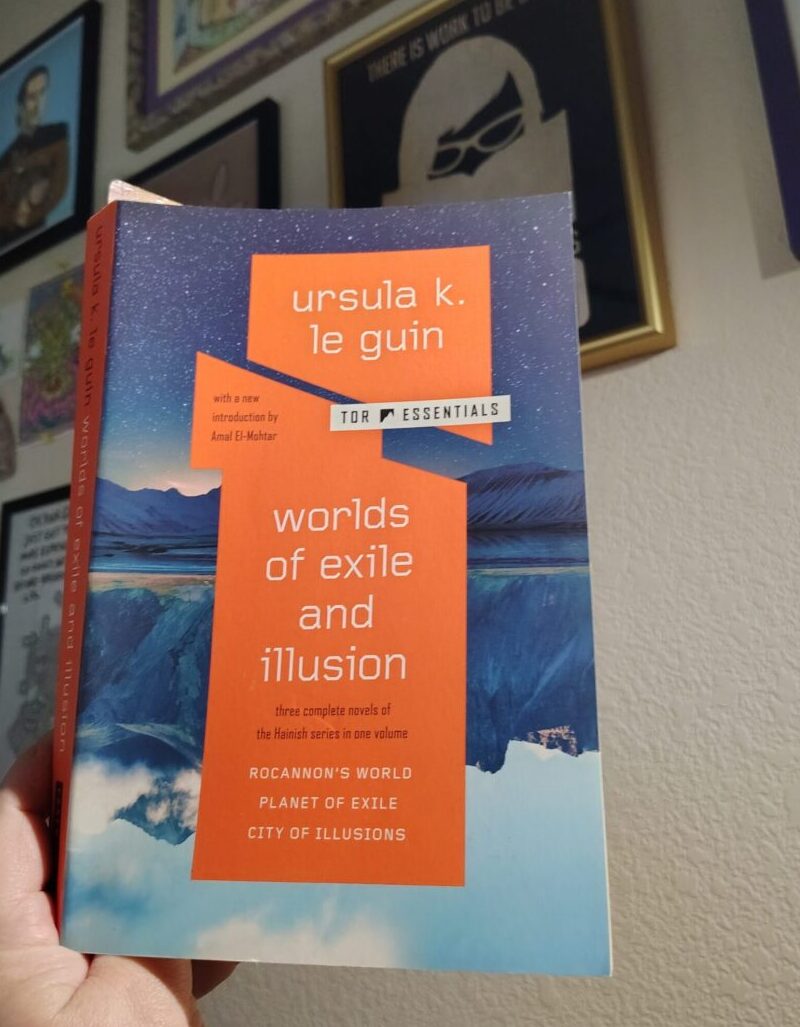
I’ve been on an Ursula K. Le Guin bender over the last few weeks. I started with the collection Worlds of Exile and Illusion, which consists of the first three novels of the Hainish Cycle: Rocannon’s World, Planet of Exile, and City of Illusions (the novels are about 100 pages apiece so they fit in one volume). Each of these works takes place on a different planet that has highly intelligent life forms (HILFs). The Hainish Cycle, so named for the Hain who are the progenitors of most HILFs, is only a loosely connected series (what we might now refer to as the Hainish Extended Universe) with books taking place in the same reality but with no real connection or through-line between them. These first three books all seem to be asking “what is it to be human?” This is a common question in science fiction but I liked the perspective that Le Guin approached it with. Can humans really come from the stars? Would a human look like that, or what if he were the enemy but looked just like a real human (a question of City of Illusions)? I also find it interesting that she plays with how different planets’ movement through space would impact a world’s culture. For example, in Planet of Exile, a “year” lasts about 60 Earth years, which means any society that survives has to have the strength and fortitude to make it through a twenty-year winter. These are all well-written and great works of science fiction, but Le Guin really gets cooking with the next book: The Left Hand of Darkness.
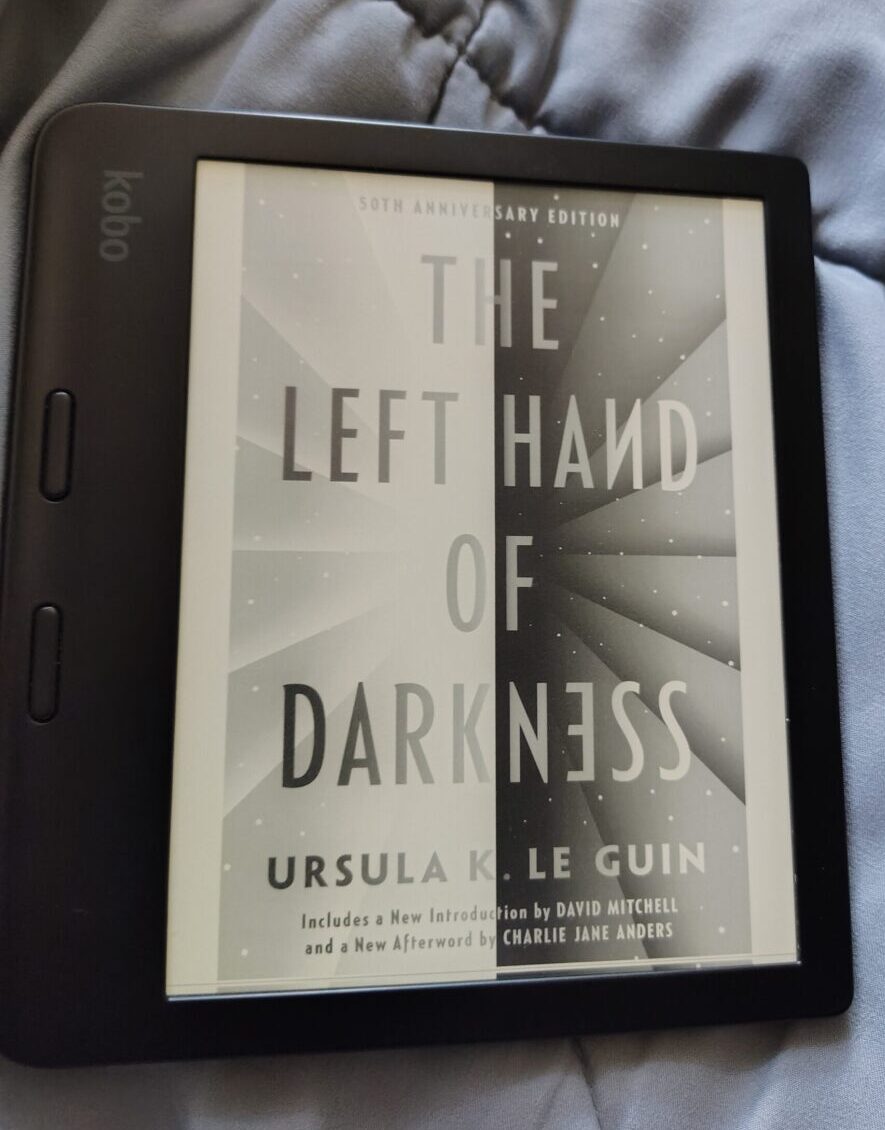
I first read The Left Hand of Darkness ten years ago. I wrote last year that I felt like I’d gotten better at reading, and I sensed that again while revisiting this book. I kind of thought of reading as a skill as something that peaked in college and then just stayed steady, but I suppose practicing any skill will make you better at it, and I have read over 600 books since I last read this one. Still, it feels surprising to re-read something and have such a fundamentally different experience. In any case, in The Left Hand of Darkness, Genly Ai, a representative from a galactic confederation of planets, visits the planet Winter (locally known as Gethen) to invite them to join. Gethen is an icy planet populated by a people who have no fixed sex or gender. Instead of being in a permanent state of man or woman, they go through a phase called kemmer every 26 days and take on sexual characteristics of a man or woman; one person may play either role at different times in their life. This book, originally published in 1969, is thus a meditation on gender relations. What if anyone could get pregnant? Le Guin rightfully posits a much more equal society without one gender being an oppressed class. The result is that “nobody here is quite so free as a free male anywhere else” because “burden and privilege are shared out pretty equally.” What an indictment of the men of Earth.
We see The Left Hand of Darkness play out primarily through Genly’s viewpoint, as a man from a world of men and women. He refers to everyone as a man unless he feels that they have some sort of feminine trait about them, like his “landlady” who he considers womanly due to having a fat ass. He opines, “One is respected and judged only as a human being. It is an appalling experience.” The horror! Genly lets his misogyny blind him to the dangers of his situation and, after fleeing one country and being taken in by a certain political faction in another, he gets used as a political pawn and is eventually sent to prison. He is rescued by Therem Harth rem ir Estraven, a politician who Genly though had betrayed him. Genly is forced to reckon with his prejudices on the harrowing trek back to civilization, noting at one point “I had no wanted to give my trust, my friendship to a man who was a woman, a woman who was a man.” If only Genly hadn’t been such a dumbass and had been willing to see anyone other than men as complex human beings, he might not have been in this mess!
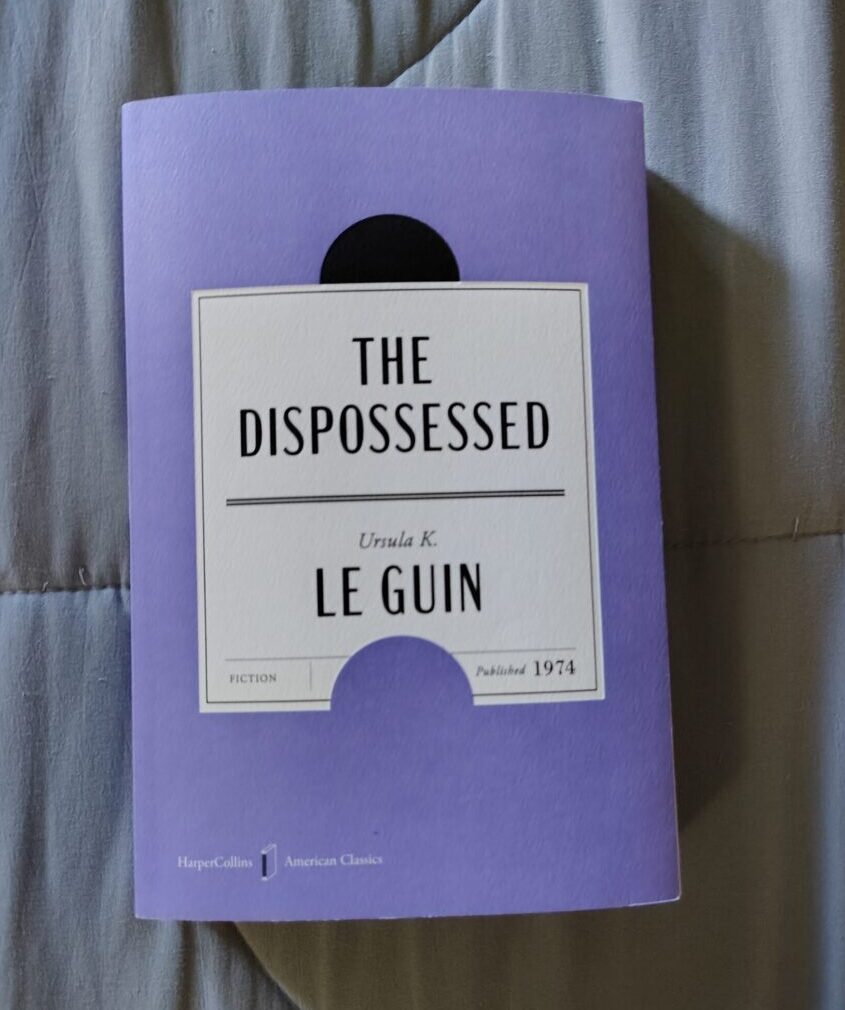
Technically, the next book in the series is technically The Word for World is Forest, but I accidentally read out of order. That’s okay though because you could really read these in any order. The book I read instead was The Dispossessed, which was my favorite so far. I know this book will stay with me. The story concerns Shevek, a physicist from Anarres, a habitable moon of the planet Urras. Anarres is home to a society of anarcho-communists founded about 150 years before the story begins by a woman named Odo (this made me laugh because I kept thinking of Odo from Deep Space Nine). The strongest insult on Anarres is “profiteer” and anyone behaving badly is implored to “stop egoizing.” The story alternates between past events on Anarres and present events on Urras, where Shevek is the first person from Anarres to visit since the original dissidents left. It’s not until the end of the book that we learn precisely what drove Shevek to leaving his home and family to dwell among these rotten profiteers. In the process, we see what is ugly about both societies. Despite that, this is not a book that suggests that human nature is greedy or evil; quite the contrary. The Dispossessed shows people striving to make society better for everyone. Certainly not everyone is doing their part and there are people at the top of the hierarchy making the people below them miserable (whether the oligarchs on Urras keeping the population poor and at war or the unofficial head of the physics department on Anarres who refuses to distribute Shevek’s work without rewriting it and making it into his work). Le Guin’s power is in helping us imagine other ways of being and The Dispossessed might be her most powerful work of all.
Meanwhile, on the internet:
- GOP Sen. Dan Sullivan draws an unusual opponent in Alaska’s primary — and he’s not happy about it via AP. One of the candidates challenging Alaska’s incumbent senator, Republican Dan Sullivan, is also a Republican named Dan Sullivan. Truly hilarious. No notes.
- The Surprisingly Radical Roots of the Renaissance Fair via Smithsonian Magazine. The people who gave us the renaissance fair were actors out of work thanks to McCartyhism and the Red Scare. I had no idea!
- Attention Spans Aren’t Shrinking via Cognitive Wonderland. It’s a widely held cultural belief at this point that smart phones and social media are making our attention spans shorter, but that’s not what research is finding. There is research to show that, in the short term, we struggle to recover attention when switching tasks (for example, when trying to write an essay then looking at instagram), but that is not the same as having a short attention span. The author here also theorizes that it’s much more obvious that someone isn’t paying attention when they look at their phone compared to just letting their mind wander.
- ‘Stop! That! Train!’ Director Denies Film’s Speculated AI Use: RuPaul-Led “Movie Is Fully Human Made” via The Hollywood Reporter. There’s a whole drama (dare I say, discourse) arising around RuPaul’s latest theatrical release. People online pointed out some visual inconsistencies in the trailer that are the kind of thing one finds in AI graphics and that AI-forward visual effects companies worked on the film. The director posted a statement reading “It’s come to my attention that there is some on-line speculation that Stop! That! Train! Is full of fully generative AI shots and I’m here to tell you this is patently not true.” What a strange and specific thing to say. Why not just say there’s no AI if they didn’t use AI? It’s disappointing all around.
- I Fed the People Building the Metaverse via Titty Boobowitz (inspired blog name haha). This essay is by a woman who worked as a pastry chef at the Meta offices. She writes:
This is what I mean when I say I do not trust the people building AI.
Not because they are uniquely evil geniuses plotting world domination in secret underground bunkers. The real problem is that they are ordinary institutions filled with ordinary failures of character. Ego. Bias. Cowardice. Protectionism. Mediocre men promoting versions of themselves while women quietly keep entire systems functioning underneath them.
And then we act shocked when artificial intelligence reproduces racism, sexism, surveillance, exploitation, and bias at scale.
Who did we think was building it?
Media
It recently came to my attention that Heaven 17 has more than one album. I write this knowing that maybe only three readers (two of which would be my parents) have even heard of Heaven 17. I’ve been listening to Penthouse and Pavement for literal decades after ripping the CD in my dad’s collection. I think we can all agree that Fascist Groove Thing both goes hard and remains relevant in 2026. In any case, I bought two of their other two albums, The Luxury Gap and How Men are and have been appreciating them. I’m not sure why I never looked for more of their albums before but I’m here now.
Rampant Consumerism
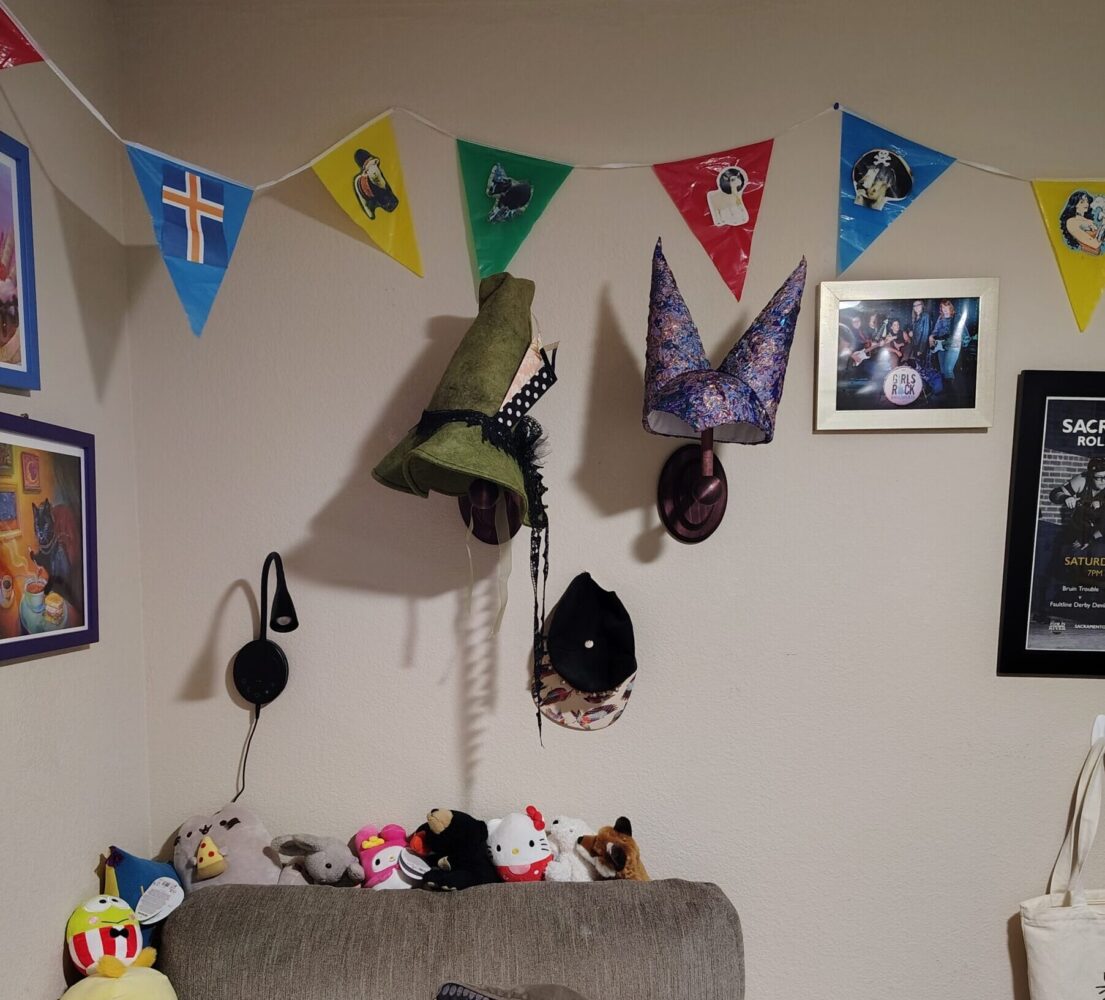
I recently bought some hat stands to put on the wall in my office so I could display my fancy hats. I just think they deserve more than being stuffed in the closet. So, behold my hats:
Moving It
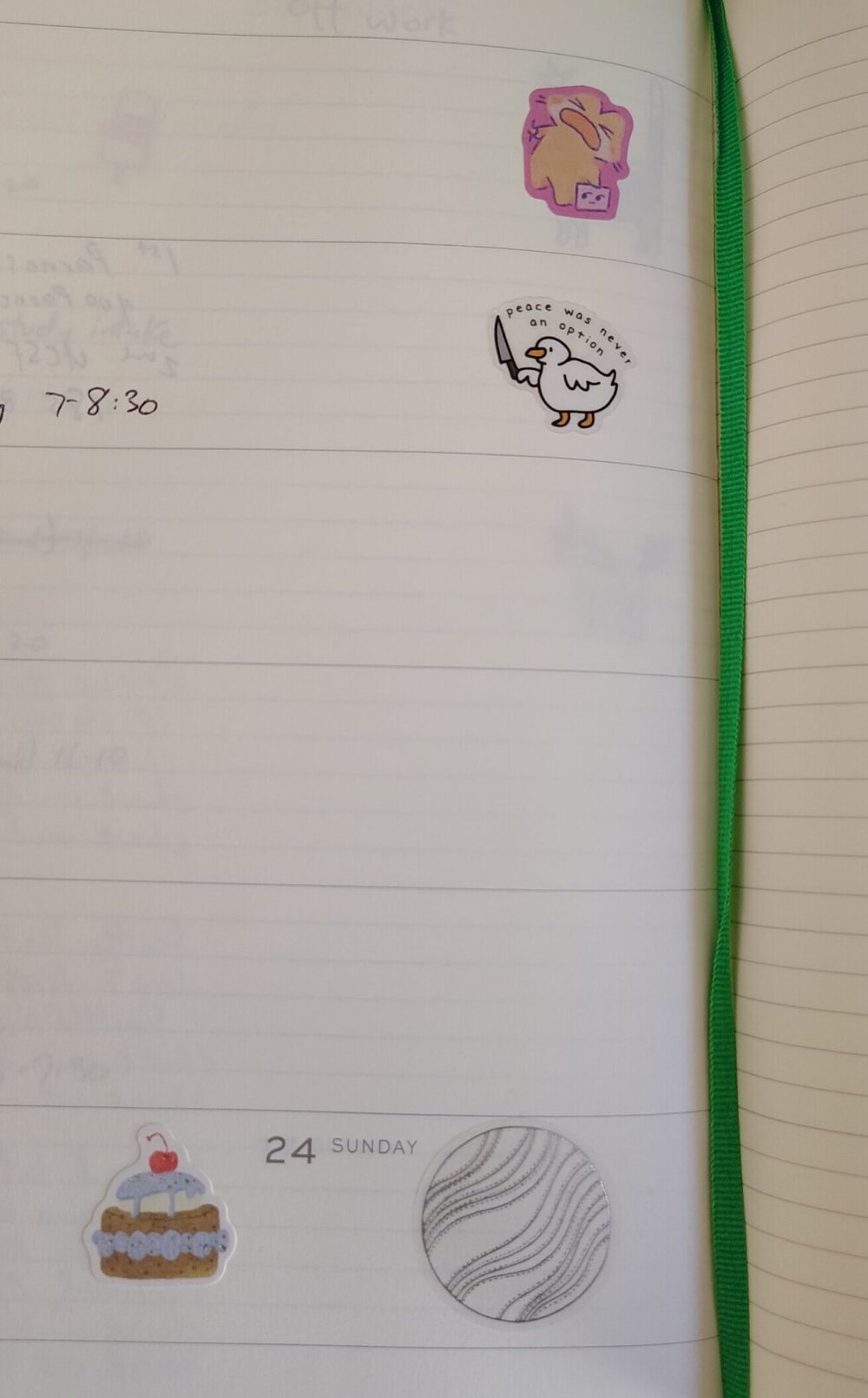
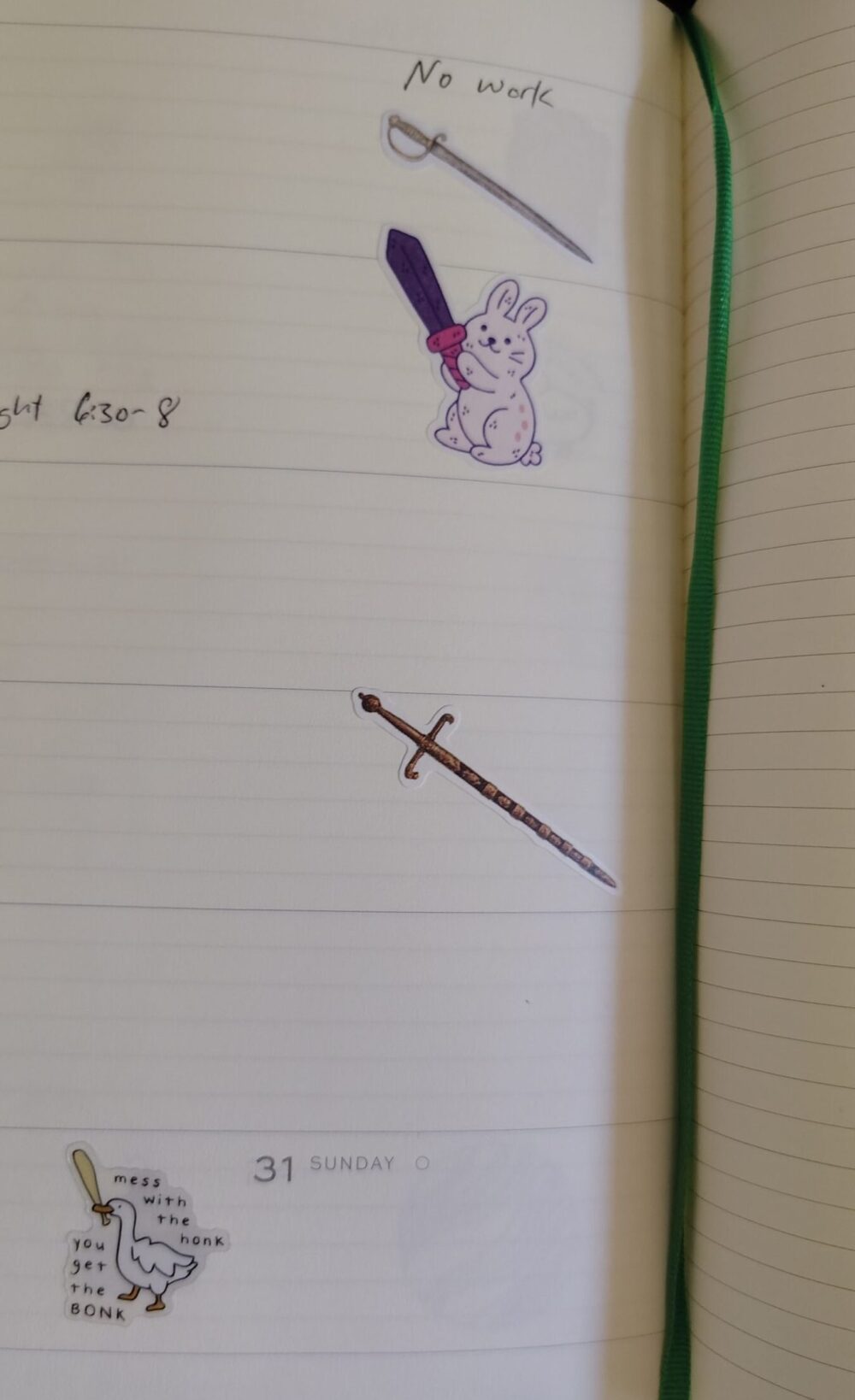
I was on a really good run of exercising a lot for the first few months of this year but, as I might have expected, the warmer weather is making my life difficult. I think I am going to have to lower my expectations for the hot weather because it’s not working for me. In any case, enjoy the last two weeks’ stickers.
Kitchen Witchery
Sometimes I look at my photos from the last fortnight and realize I’ve been cooking more than I thought. I was trying really hard to use everything I bought at the farmers market two weeks ago! It’s probably a good thing that I’m looking for ways to use all the vegetables. We went to the farmers market again yesterday, so I will hopefully find more success here.
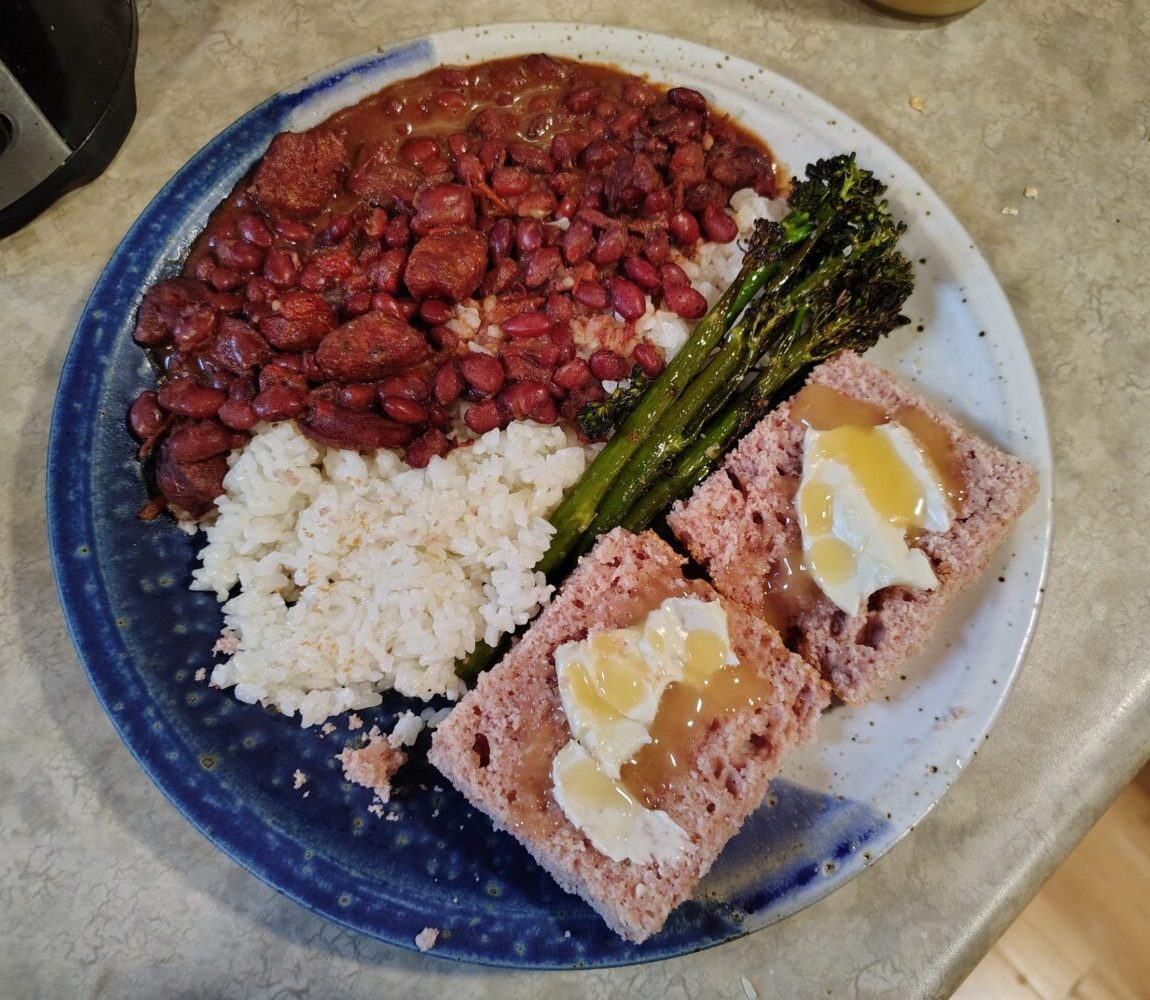
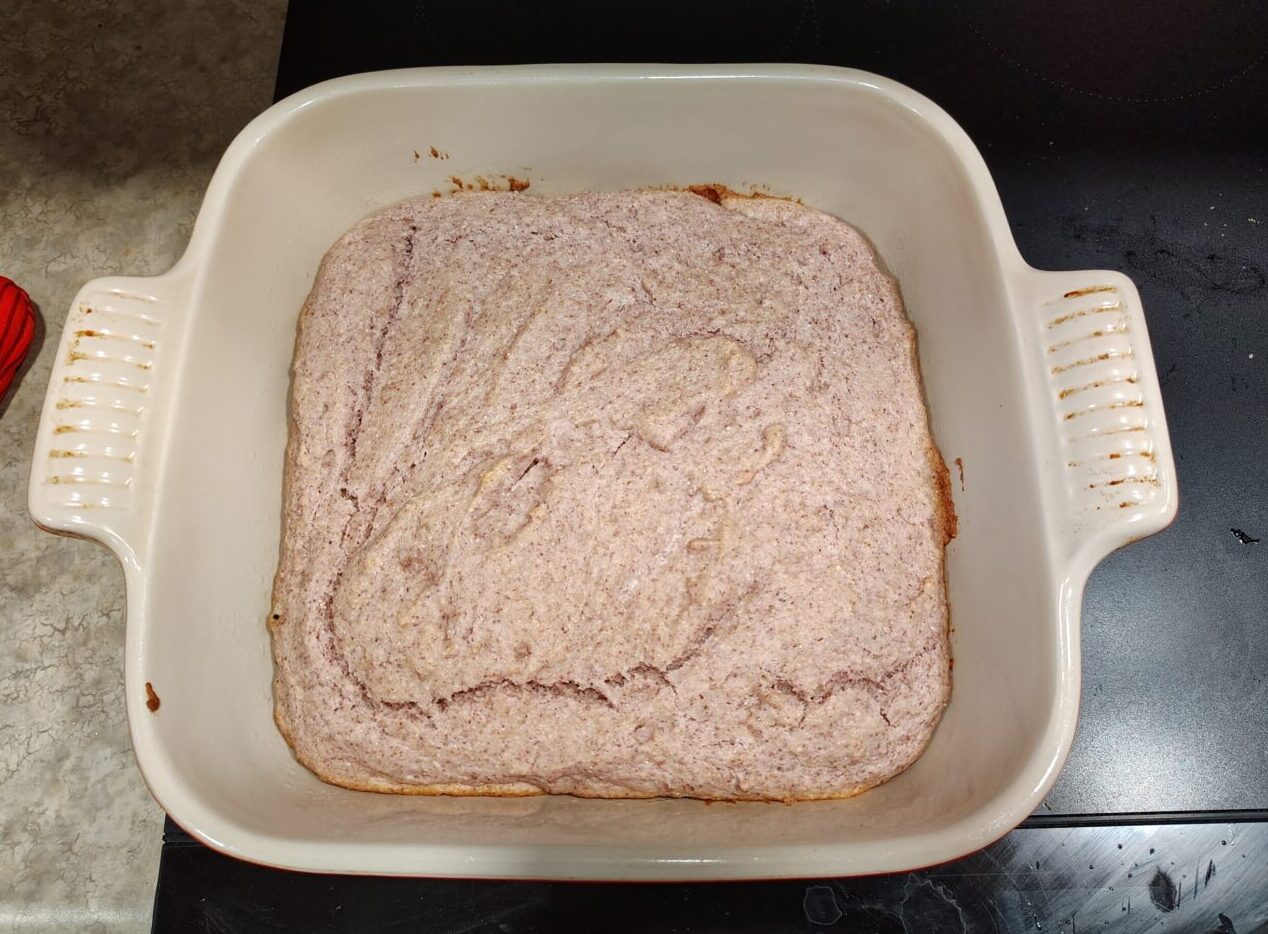
- I pulled some red beans (a The Bean Book recipe) from the freezer, roasted broccolini and cooked some rice for a recent dinner. I made cornbread to go with it using purple(!) cornmeal. This isn’t like that purple ketchup abomination from the 90s. The cornmeal is purple because it’s made from blue corn.
- This broccoli cheddar beans recipe is good, although I did modify it a little (as one must when it comes to NYT recipes). I added shell pasta to make it more of a meal and some seasoning. I also declined to participate in the fuckery of making cheddar croutons. You can just eat regular bread. It’s fine.
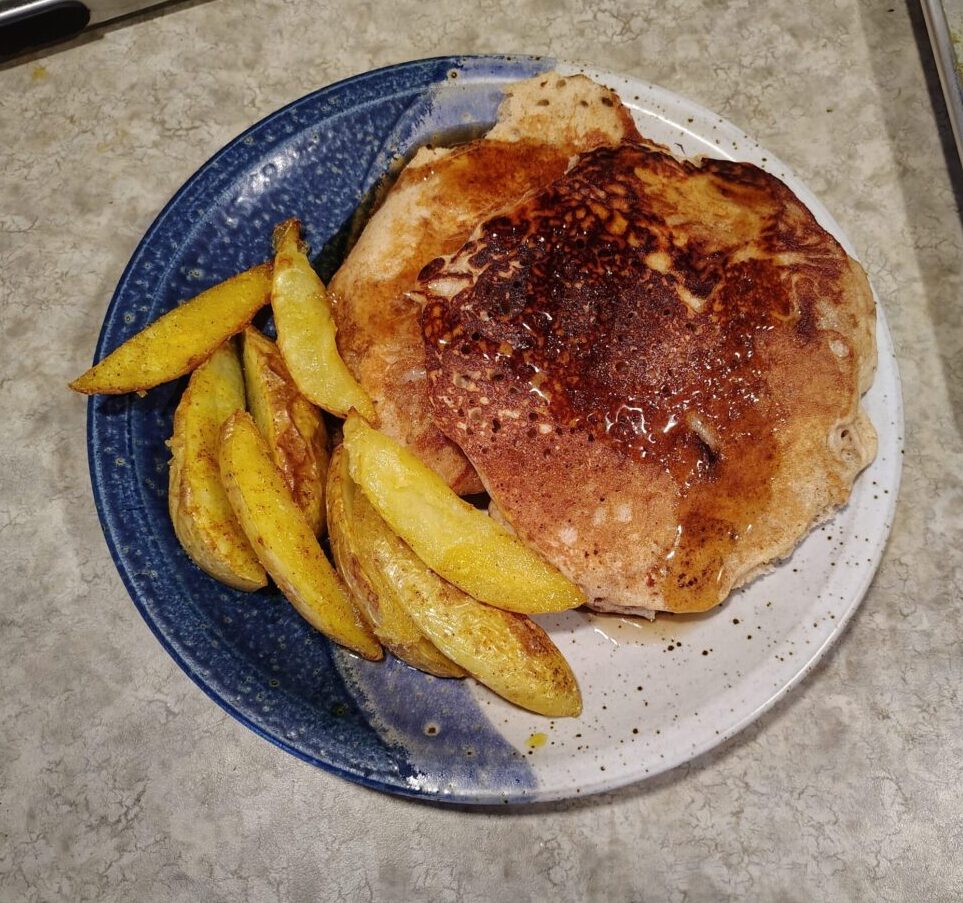
- I have some buckwheat flour that I have been trying to find more uses for so I tried out this pancake recipe and it was good. I roasted some potatoes to accompany it (also good).
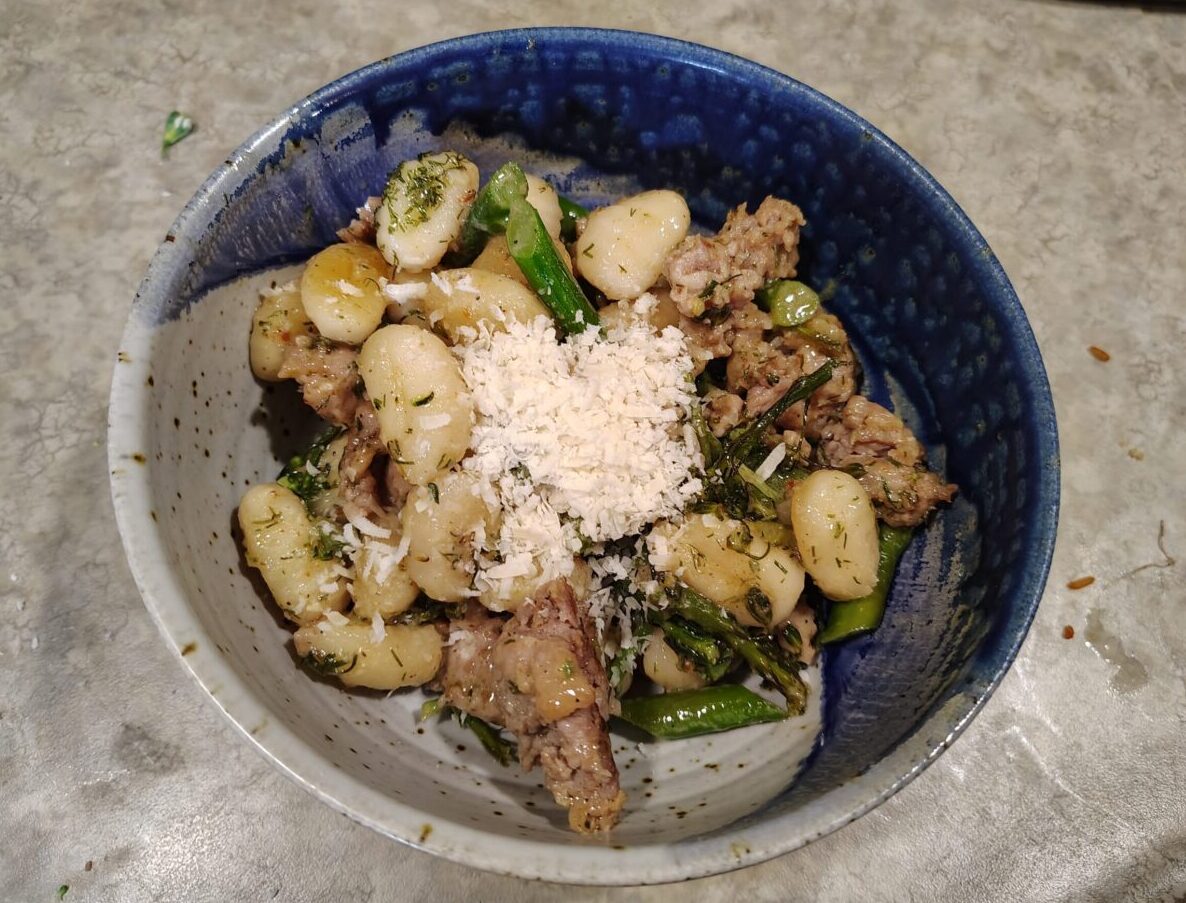
- To use some sausage that we had knocking around the fridge and some more broccolini, I adapted the NYT recipe for crisp gnocchi with sausage and peas, swapping the peas for the aforementioned broccolini. We liked this a lot and frankly I think it’s better than the original version.
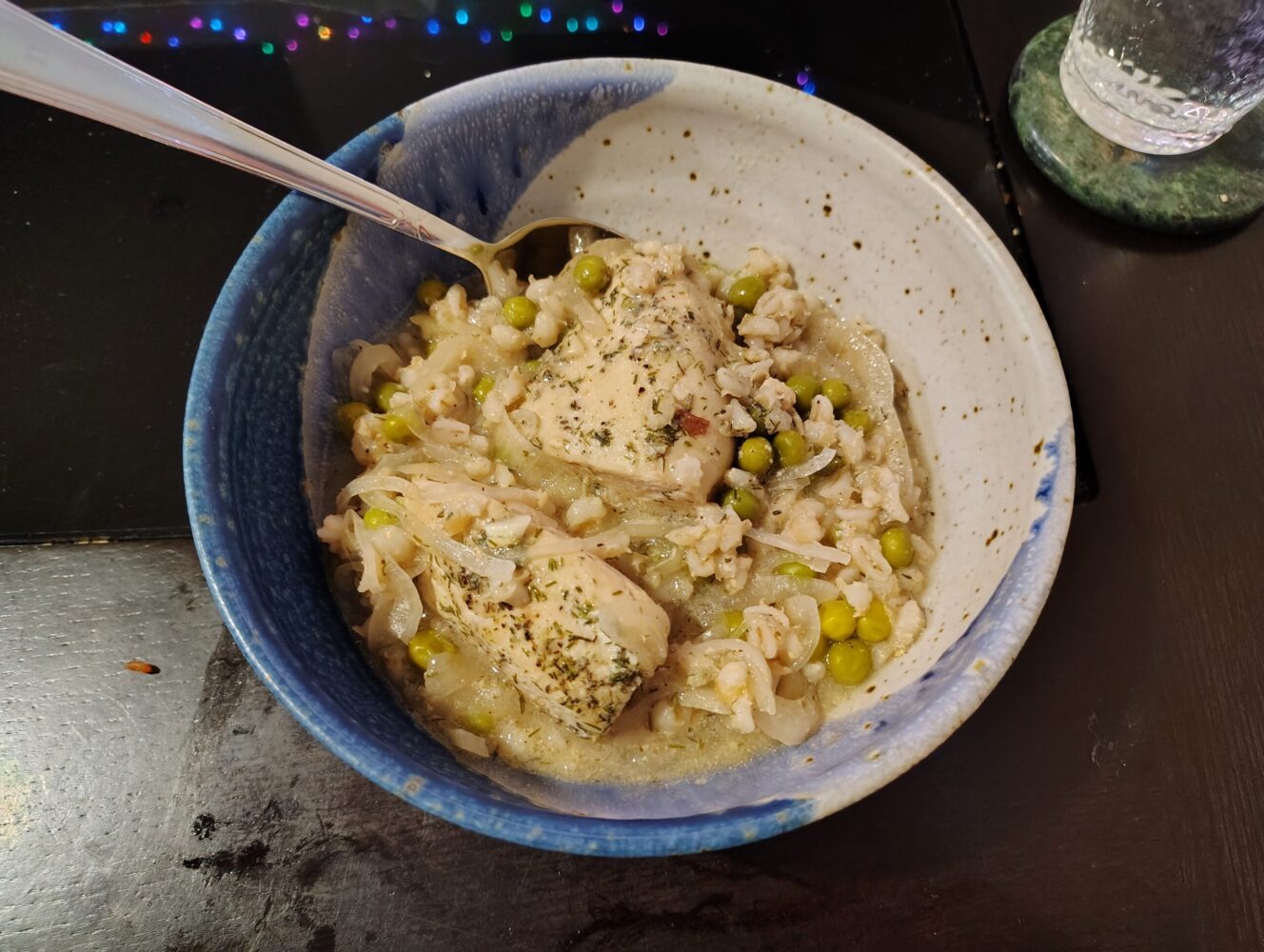
- In an attempt to use some of the large amount of fresh garlic I had, I made this slow-cooker garlic chicken with barley. I did not like it. Kirk declared it “edible” and did, in fact, eat a bowlful. I need to remember to never listen to a recipe that calls for throwing slices of onion into the slow cooker because I never like the results, although that was far from my only objection to this dish.
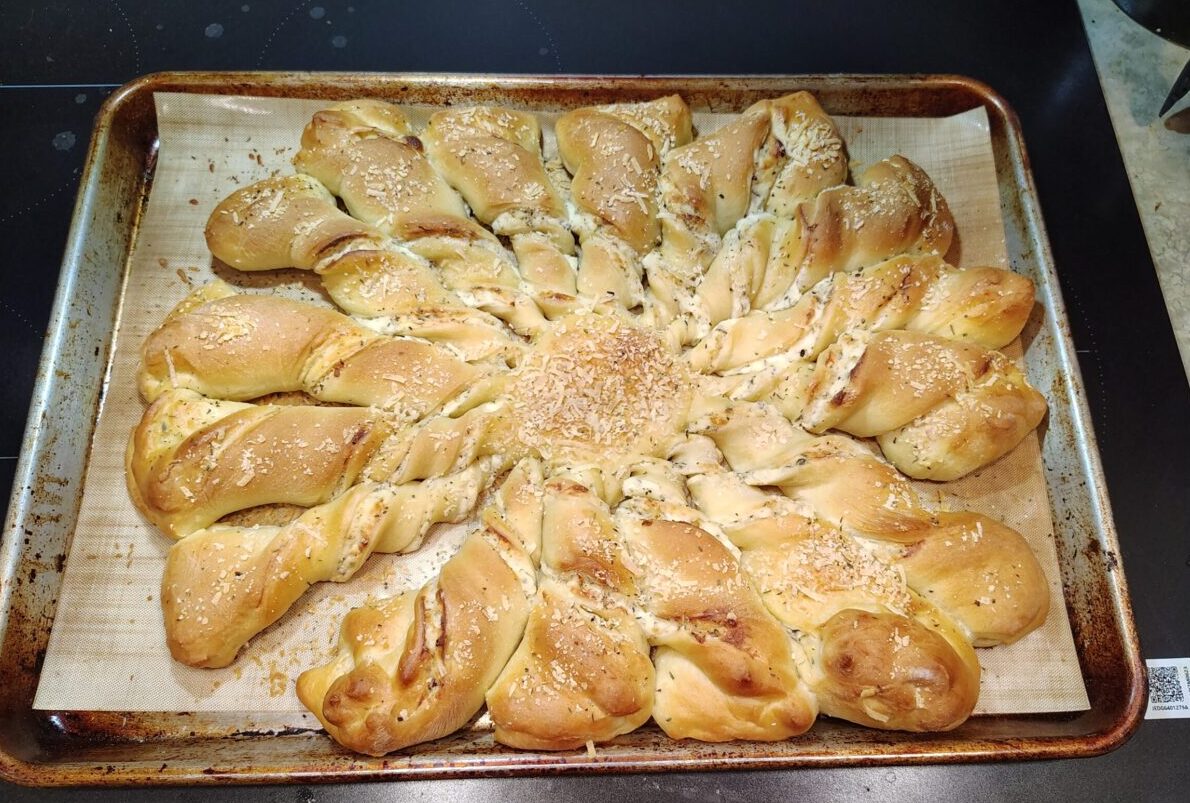
- By request, I made this garlic and herb sun bread (much better use for my quantity of fresh garlic), which we had with pasta e fagioli soup (another one from The Bean Book). I threw in some extra zucchini and that was a welcome addition.
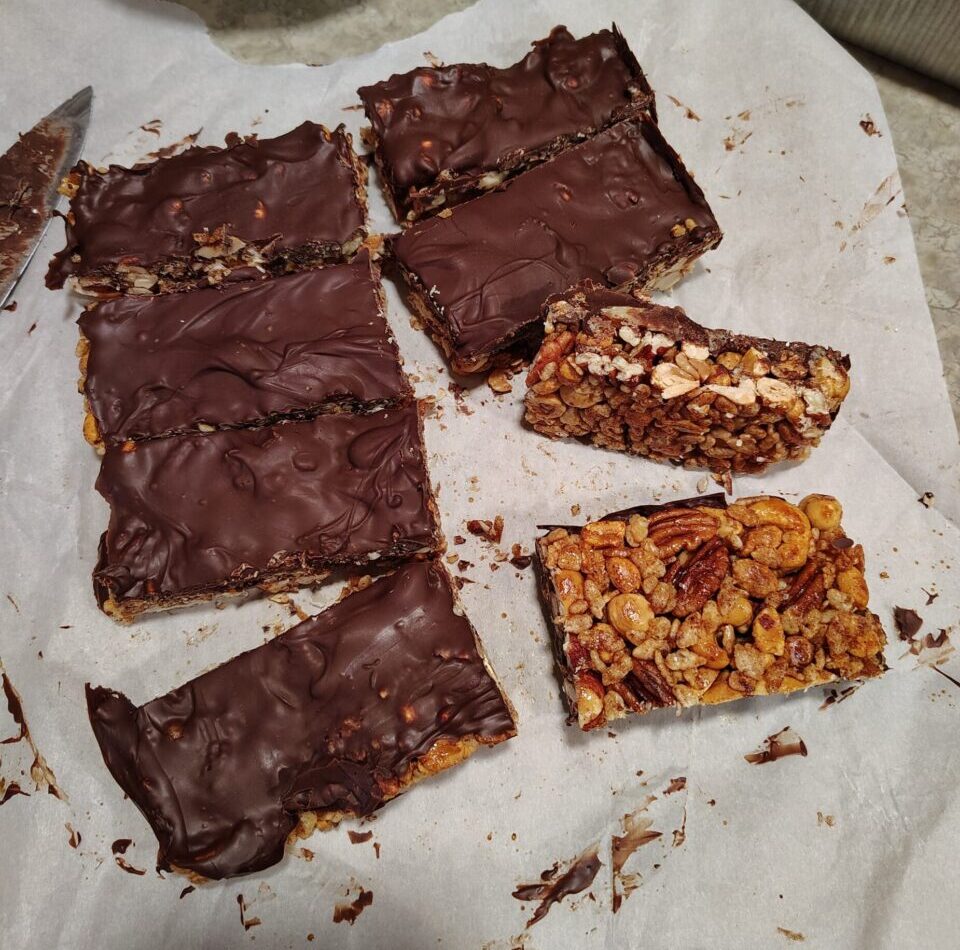
- I finally mastered the dark chocolate and sea salt nut bars. The first two times I made them, I just ended up with a blob. It was a tasty blob but I was going for bar. I doubled the quantity of rice krispies because it seemed like I kept ending up with too much honey compared to the stuff it needed to stick to. I also poured the chocolate on top of the bars, cut them once the chocolate had set somewhat, then left them in the fridge overnight. I don’t really know what the people who wrote this recipe are doing to make it all stick like that, but this method worked for me.


Cat Therapy
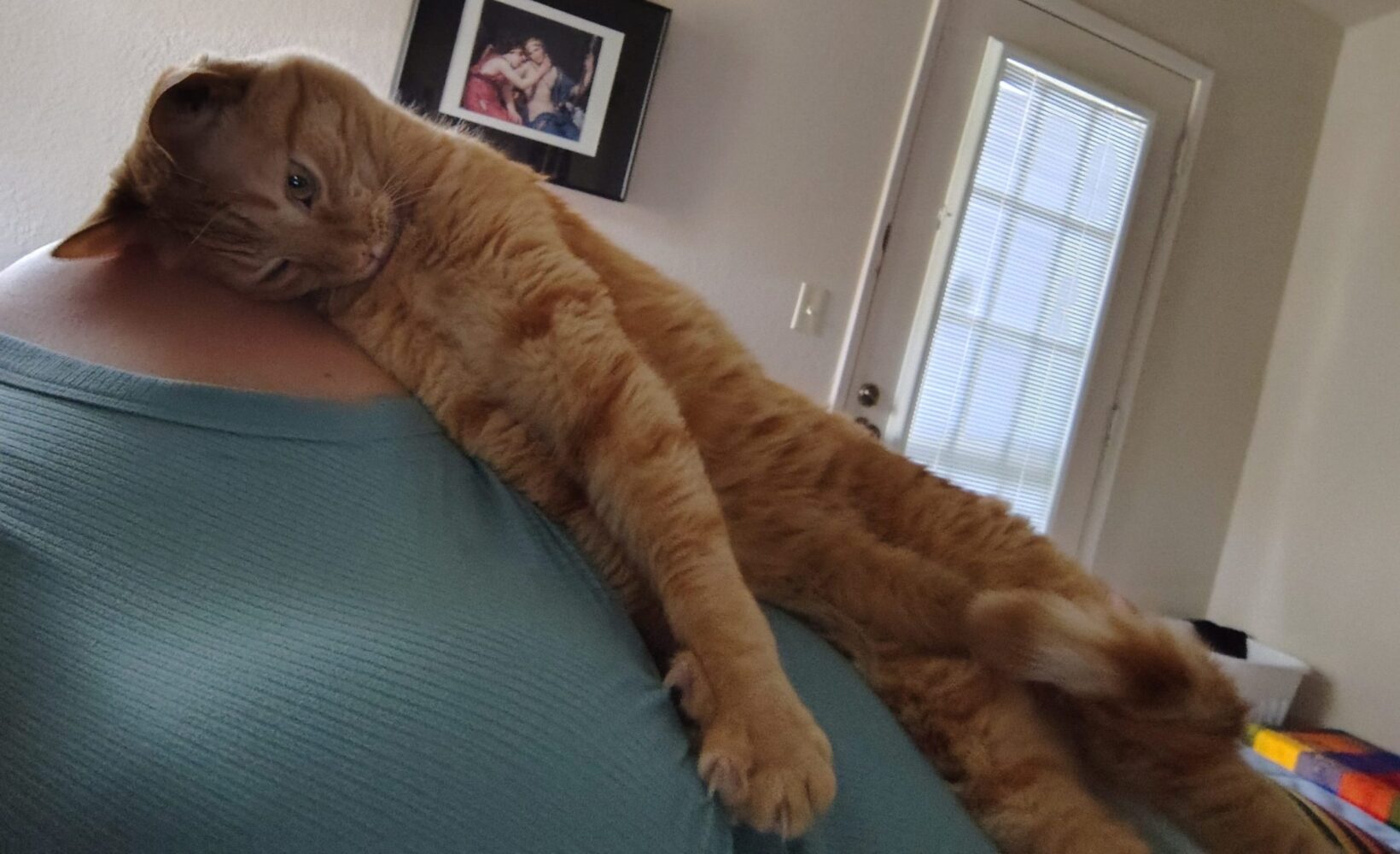
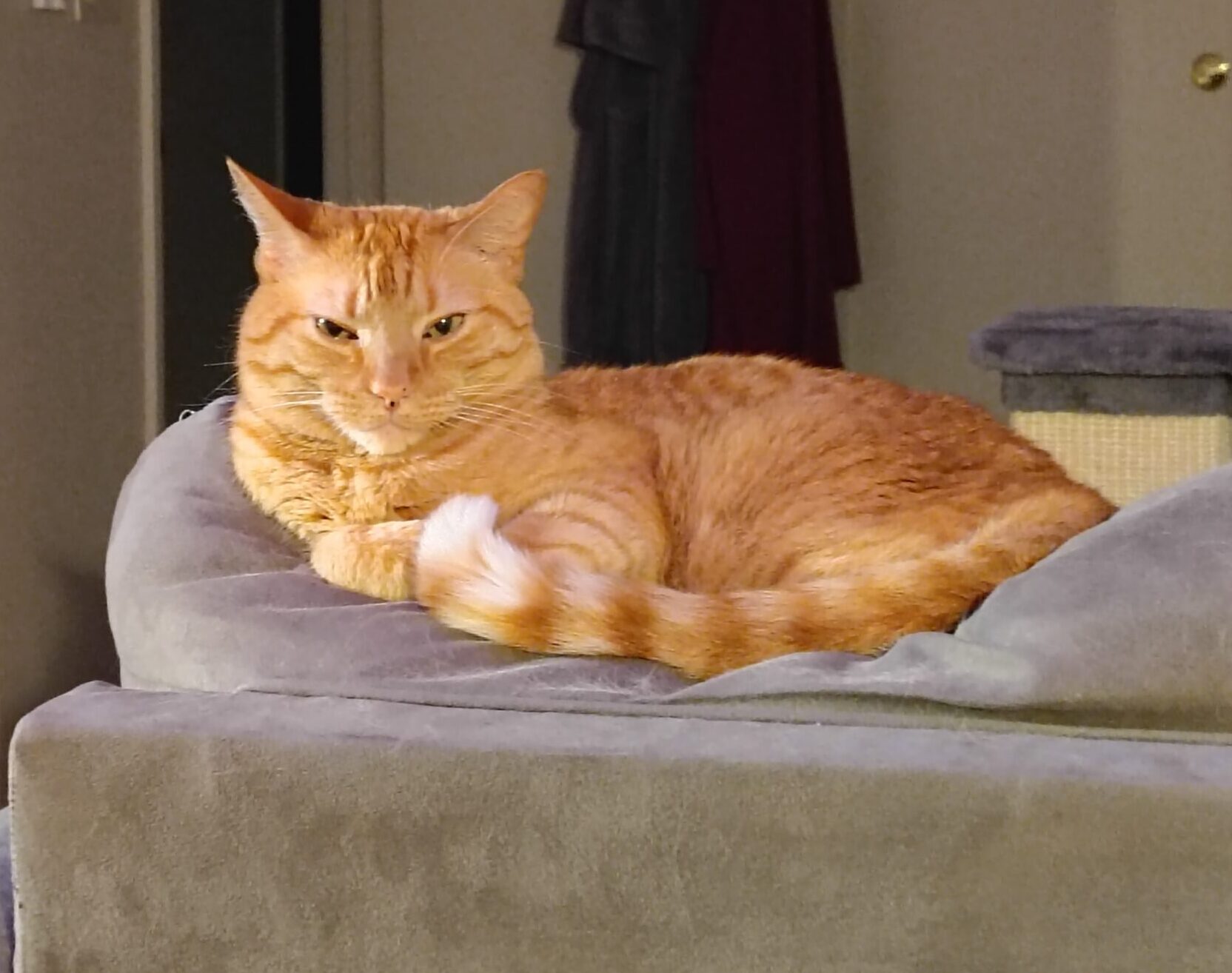
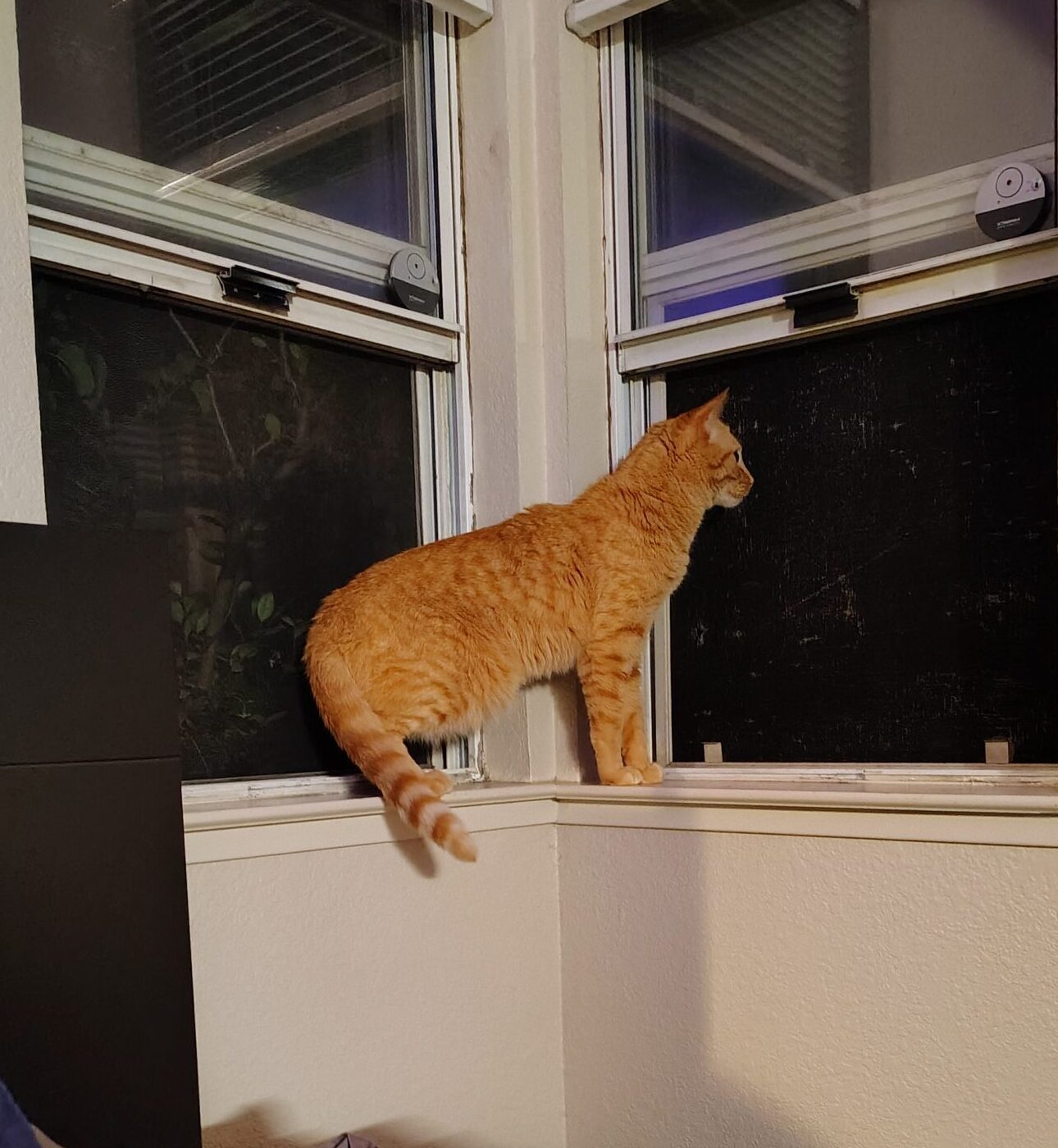
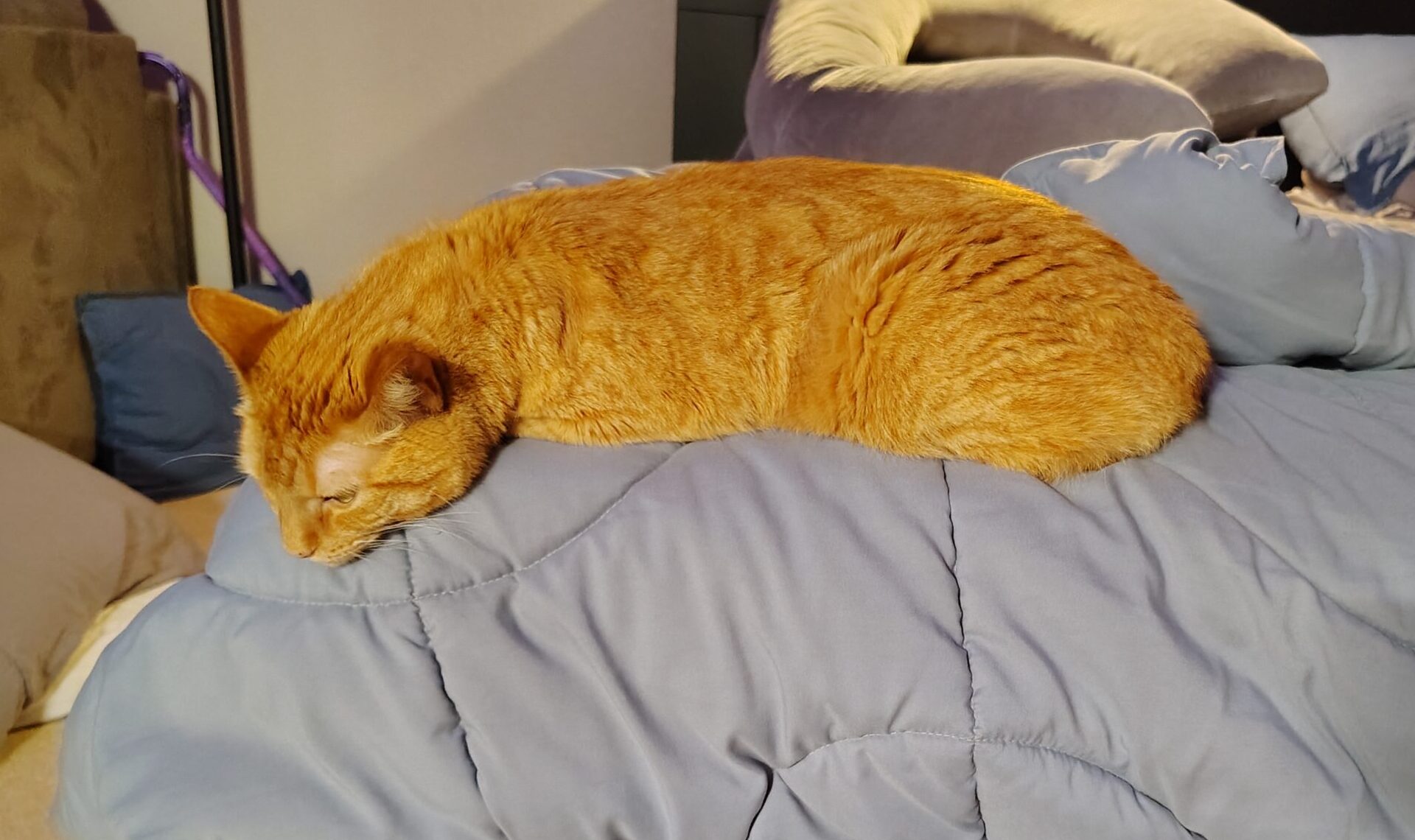
Finally, here are some cat photos for your nerves.


1 Comment
Comments are closed.